How to Properly Clean Your Ears

If your ears are bothering you and you’re ready to grab a cotton swab — think again. Cotton swabs condense and impact earwax deeper into the ear canal — and you may be risking your hearing each time you reach for a swab. In fact, many do-it-yourself ear-cleaning methods do more harm than good. Although unpleasant, earwax has nothing to do with personal hygiene and the ear canal naturally cleanses itself through your body’s everyday movements.
Here are a few simple tips to help you properly clean ears without damaging this delicate sense organ:
- Dampen a soft washcloth with warm water to clean the outside of your ear.
- Clean the outside of your ear with cotton balls, but do not insert them into your ear canal.
- Use an earwax softener to make removal easier.
- Ask your doctor’s office to remove wax during your regular exam.
If you must remove earwax, remember these safety tips:
- Do not clean your ears with bobby pins, twisted napkin corners, or other long pointed objects.
- Do not insert cotton balls or cotton swabs into the ear canal. They will merely push the wax deeper into the ear canal, possibly causing a blockage.
- Do not use ear candles. The Food and Drug Administration issued a public warning in 2010 that the use of ear candles can lead to serious injuries.
Clogged Ears and How to Relieve Them

Four Common Causes of Plugged Ears
Plugged ears can be caused by a few different things. The reasons include fluid in the ear, changes in atmospheric pressure, excessive ear wax, or even small objects blocking the eardrum. Each cause has a different treatment, and it's important to get a professional opinion. Possible reasons your ears may feel plugged:
- Fluid in the Ear - Plugged ears can be a result of swelling in the auditory tube, also known as the eustachian tube. This tube in your ear normally equalizes pressure in the middle ear. Sometimes, though, the tube can become plugged and the fluid gets trapped in the middle ear.
- Altitude Changes - Plugged ears can be caused by rapid pressure changes in the environment. This may affect the eustachian tube and cause what's known as barotrauma.
- Excessive Ear Wax - Sometimes, plugged ears can be caused by too much ear wax. This is not common since the ears normally have their own built-in cleaning system. Some people may produce too much ear wax or don't efficiently clear it. This problem usually occurs without a known cause. Don't try to remove excess ear wax by yourself.
- Foreign Object - It is not uncommon for young children to put things in their ears. This may happen out of curiosity or a dare from a friend, as is often the case with foreign object nasal obstructions.
How can you unclog your ears? Sometimes you can clear your ears by swallowing, chewing, or yawning. A decongestant or antihistamine may help if you have a cold or allergies. If you have excessive ear wax or an object in your ear, your doctor can use special tools to clear it out safely.
Earache - Causes & Treatment

Cross-section of the ear
Earache, or pain in the ear, is very common. It is particularly common in children. There are many causes of earache but the most common cause is infection. This often clears up on its own without any treatment. However, if it is not getting better or if you have other more serious symptoms, you may need to see a doctor.
The ear is involved in our hearing and our balance. So, problems with the ear may cause other symptoms such as loss of hearing, dizziness or a ringing in the ear:
- Structure and functions of the ear - The ear is roughly divided into three parts, the outer (external) ear, the middle ear & the inner ear.
- What are the causes of earache? - There are many causes of earache. Some of the more common ones are middle ear infection (otitis media), infection in the ear canal (otitis externa), Wax, a common cold, foreign bodies, trauma or injury, flying and diving, boils, spots and pimples, pain coming from somewhere else (referred pain), & shingles,
- What should I do if I have earache? - If you feel well in yourself and have an earache, you may be able to treat yourself with simple painkillers. Paracetamol or ibuprofen, if you can take it, usually works well for ear pain.
- Other ear problems - Discharge from the ear, Glue ear, Tinnitus & Hearing loss (deafness).
Ear Ache vs. Ear Infection: What's the Difference?

Ear pain can range from a minor nuisance to a major source of agony. Ear pain is a common problem, especially in children, and can have a number of causes – some of which have nothing to do with the ear.
But how to know whether it’s an ear ache or an ear infection? And when is it serious enough to seek medical help:
- Ear Infections - Ear infections are the most common cause of ear pain. It’s especially common in children and is the most common reason parents bring their child to a doctor. In fact, five out of six children will have at least one ear infection by their third birthday.
- Ear Ache - Ear aches are not always caused by an ear infection. Other conditions also can cause ear ache or ear pain, especially in adults. Ear ache is often described as a feeling of pressure in the ear.
- When To See a Doctor - Ear infections don’t always need to be treated with antibiotics. “Sometimes, we observe and initiate antibiotic therapy if signs and symptoms worsen or fail to improve after 48 to 72 hours,”
5 causes of sharp pain in the ear
A sharp pain in the ear is a common sensation. It is not usually harmful, though it can cause concern.
The medical name for ear pain is “otalgia.” If the pain comes from within the ear, doctors call it primary otalgia. If it originates outside the ear, the term is secondary otalgia.
Causes and their accompanying symptoms:
- Sinus infections - A sharp pain in the ear can sometimes result from an infection in the sinuses — a network of air-filled cavities in the skull.
- Otitis - This, an infection in the inner or the outer ear, is one of the most common causes of ear pain. An infection of the inner ear affects the eustachian tube, which connects the middle ear to the back of the nasal cavity and the upper throat. This usually has a viral cause and is most common among children.
- Temporomandibular disorder - Temporomandibular disorder (TMD) is a musculoskeletal condition that primarily affects the joints that connect the jawbone to the skull. People with TMD may experience sharp or dull jaw pain that radiates to the ears and temples.
- A foreign object in the ear - A foreign object may become stuck in the ear canal. Children, for example, prone to inserting objects into their ears out of curiosity.
Causes of Sudden Muffled Hearing in One Ear
If you feel like you have something clogging your ear and it sounds like you’re hearing everything from behind a curtain, you might have muffled hearing. You’ll also probably have the desire to yawn to unclog it. Some cases of muffled hearing can last a few hours while others can last a lifetime. Learn what causes sudden muffled hearing and how you can prevent it.
What Causes Muffled Hearing:
- Middle Ear Infection - If your ear feels clogged and muffled, you may have a Middle Ear Infection, also known as Otitis Media.
- Sinus Infection/Cold - Some of the most common causes of muffled hearing are colds and sinus infections.
- Ménière’s Disease - Ménière’s disease is rather rare with less than 200,000 cases every year, though it is one of the more serious causes of muffled hearing in one ear. Ménière’s disease usually develops in patients between 40 and 60 years old, and hearing loss can become permanent as the disease itself can last for years.
- Presbycusis - Presbycusis is age-related hearing loss and occurs crucial nerve hair cells begin to erode.
- Ear Blockage - Ear Blockage occurs when an object (such as an insect or water) is lodged in the ear canal. Ear blockage is most common in children and it can usually be treated at home. Symptoms include immediate muffled hearing in one ear and there should not be any bleeding or discharge from the ear.
Ear Pain: Diagnosing Common and Uncommon Causes
Otalgia (ear pain) is a common presentation in the primary care setting with many diverse causes. Pain that originates from the ear is called primary otalgia, and the most common causes are otitis media and otitis externa.
Examination of the ear usually reveals abnormal findings in patients with primary otalgia. Pain that originates outside the ear is called secondary otalgia, and the etiology can be difficult to establish because of the complex innervation of the ear. The most common causes of secondary otalgia include temporomandibular joint syndrome and dental infections. Primary otalgia is more common in children, whereas secondary otalgia is more common in adults.
History and physical examination usually lead to the underlying cause; however, if the diagnosis is not immediately clear, a trial of symptomatic treatment, imaging studies, and consultation may be reasonable options. Otalgia may be the only presenting symptom in several serious conditions, such as temporal arteritis and malignant neoplasms. When risk factors for malignancy are present (e.g., smoking, alcohol use, diabetes mellitus, age 50 years or older), computed tomography, magnetic resonance imaging, or otolaryngology consultation may be warranted.
What You Need to Know About Earaches
Earaches usually occur in children, but they can occur in adults as well. An earache may affect one or both ears, but the majority of the time it’s in one ear. It may be constant or come and go, and the pain may be dull, sharp, or burning. If you have an ear infection, fever and temporary hearing loss may occur. Young children who have ear infections tend to be fussy and irritable. They may also tug or rub their ears.
Injury, infection, irritation in the ear, or referred pain may cause earaches. Referred pain is pain felt somewhere other than the infection or injured site. For example, pain that originates in the jaw or teeth may be felt in the ear. Causes of earaches can include:
- Ear infections
- change in pressure, such as when flying on a plane
- earwax buildup
- a foreign object in the ear
- strep throat
- sinus infection
- shampoo or water trapped in the ear
- use of cotton swabs in the ear
- temporomandibular joint (TMJ) syndrome
- perforated eardrum
- arthritis affecting the jaw
- infected tooth
- impacted tooth
- eczema in the ear canal
- trigeminal neuralgia (chronic facial nerve pain)
Treating earaches at home:
- Apply a cold washcloth to the ear.
- Avoid getting the ear wet.
- Sit upright to help relieve ear pressure.
- Use over-the-counter (OTC) ear drops.
- Take OTC pain relievers.
- Chew gum to help relieve pressure.
- Feed an infant to help them relieve their pressure.
5 Natural Remedies for Ear Infections

Having ear pain from an ear infection doesn’t always mean you need antibiotics. Instead, try these at-home strategies to feel better
Ear infections aren’t just painful — they can also take one to two weeks to fully heal, according to the American Academy of Family Physicians. And taking a wait-and-see-approach — meaning, without antibiotics — is recommended for many children and adults with ear infections. This is based on guidelines published in the journal Otolaryngology — Head and Neck Surgery in February 2016. Natural remedies can also help.
“There’s no scientific data to support home remedies [for ear infections], but they may be soothing, and there could be a placebo effect,” says otolaryngologist Matthew Bush, MD, an assistant professor of otolaryngology, head and neck surgery with University of Kentucky Health Care in Lexington.
The good news about these strategies? They won’t harm you — and they might do just the trick:
- Ear “popping - ” Close your mouth, hold your nostrils, and try to breathe out through your nose
- A moist compress - To make a warm compress, soak a washcloth in warm water, squeeze out the excess water, fold it into a rectangle, and hold it over your ear. The warmth and moisture can help loosen congestion in your ear. You can also use cold water for a cool compress if you have a fever.
- Steam - Similar to moist heat, steam is especially effective at clearing up congestion. Try taking a steamy shower or bath or inhaling the steam from a large bowl of water. (Put a towel over your head to make a tent as you lean over the bowl.)
- Gargling with saltwater - Since ear pain can occasionally be related to a sore throat, gargling with warm saltwater could help ease your symptoms, Rose says. Mix 1 teaspoon of salt with 8 ounces of warm water, the American Academy of Family Physicians recommends.
- Vinegar and rubbing alcohol - If you have swimmer’s ear, this mixture can help reduce the pain, Dr. Bush says. Prepare a solution of half vinegar and half rubbing alcohol and use a dropper to put the liquid into your ear canal. (Just be sure you don’t have a tympanostomy tube or a hole in your eardrum and that you stop if you feel discomfort.) This mix is also useful to prevent swimmer’s ear if you use it after getting out of the pool, according to the American Academy of Otolaryngology – Head and Neck Surgery.
Ear Pain Home Remedies
Can Home Remedies Help Your Ear Pain? You may think of ear infections as something only kids get. Ear infections are less common in grown children and adults, but they can still happen. Ear infections often go away on their own and don’t need medical attention. There are things you can try to ease ear pain at home.
Home Care to Relieve Ear Pain:
- A cool or warm compress - Soak a washcloth in either cool or warm water, wring it out, and then put it over the ear that's bothering you. Try both temperatures to see if one helps you more than the other.
- A heating pad - Lay your painful ear on a warm, not hot, heating pad.
- Over-the-counter ear drops with pain relievers - If they help at all, it’s only briefly. You shouldn’t use these drops if your eardrum has a tear or hole, so check with your doctor first.
- Pain reliever - Acetaminophen, ibuprofen, or naproxen can often relieve the pain of an earache. Ask your doctor which is right for you.
- Chew gum - If you’re on an airplane or driving at high altitudes and your ear pain is from the change in air pressure, chew some gum. It can help lower that pressure and ease your symptoms.
- Sleep upright - While it may sound strange, resting or sleeping sitting up rather than lying down can encourage fluid in your ear to drain. This could ease pressure and pain in your middle ear. Prop yourself up in bed with a stack of pillows, or sleep in an armchair that’s a bit reclined.
Earache, No Infection (Adult)
Earaches can happen without an infection. They can occur when air and fluid build up behind the eardrum. They may cause a feeling of fullness and discomfort. They may also impair hearing. This is called otitis media with effusion (OME) or serous otitis media. It means there is fluid in the middle ear. It is not the same as acute otitis media, which is often from an infection. OME can happen when you have a cold if congestion blocks the passage that drains the middle ear. This passage is called the eustachian tube. OME may also occur with nasal allergies or after a bacterial infection in the middle ear. Other causes are:
- Trauma
- Improper cleaning of wax from the ear
- Bacterial infection of the mastoid bone (mastoiditis)
- Tumor
- Jaw pain
- Changes in pressure, such as from flying or scuba diving
These home-care tips will help you take care of yourself:
- You may use over-the-counter medicine as directed by your healthcare provider to control pain, unless medicine was prescribed. If you have chronic liver or kidney disease or ever had a stomach ulcer or GI bleeding, talk with your healthcare provider before using any medicines.
- Aspirin should never be used in anyone younger than age 18 who has a fever. It may cause severe liver damage.
- Ask your healthcare provider if you may use over-the-counter decongestants such as phenylephrine or pseudoephedrine. Keep in mind they are not always helpful.
- Talk with your healthcare provider about using nasal spray decongestants. Don't use them for more than 3 days, or as directed by your healthcare provider. Longer use can make congestion worse. Prescription nasal sprays from your healthcare provider don't often have such restrictions.
- Antihistamines may help if you are also having allergy symptoms.
- You may use medicines such as guaifenesin to thin mucus and help with drainage.
15 effective options for treating earache
Although having an earache can be annoying, it’s not usually a sign of any serious health issue. Home remedies using natural ingredients may provide some relief. However, there is no scientific evidence for their usefulness compared with over-the-counter medications. If an earache lasts for longer than 24-48 hours, it is best to see a doctor. They can check if there is an underlying problem that is causing the pain.
Even if an earache is part of a larger issue, it is possible to reduce pain with both natural and medical methods. Here are 15 remedies for reducing earache:
- Ice pack - Holding an ice pack or cold, damp washcloth to the ear for 20 minutes may help numb ear pain and reduce any potential inflammation that is causing it.
- Garlic - Garlic is a natural remedy for earache that has been used for thousands of years. Allicin, a compound in garlic, is said to be helpful in fighting bacterial infections that may be causing an earache.
- Heating pad - A heating pad or hot cloth held against the ear for 20 minutes may be helpful for temporary pain relief. While cold temperatures can help numb pain and reduce inflammation, a heating pad may relax the muscles and help improve blood flow.
- Ear drops - Over-the-counter (OTC) remedies can be successful for some people, especially those that have tried natural methods.
- Pain relievers - Pain relievers like ibuprofen or other NSAIDS can help control pain caused by earache.
- Sleep in an upright position - Sleeping in an upright position is often advised to help reduce the build up of pressure in the ear.
- Chewing gum - If an earache occurs during or after plane travel or moving to higher elevations, chewing gum may help “pop” the ears and reduce pressure.
- Distraction - One of the best methods for reducing the feeling of pain, particularly among children, is to distract the mind from the earache. Games, television, or exercise can help reduce attention on earache.
- Chiropractic - One earache remedy is chiropractic, an alternative health approach. Chiropractic seeks to reduce pain and other health conditions by working with the muscles and bones.
- Tea tree oil - Tea tree oil is used in a range of ways. A couple of warmed drops in the ear per day may ease earache. However, before use in the ear, it is important to do a skin test to check for allergies.
- Olive oil - This method is old, but lacks any backing by scientific evidence. However, the American Academy of Pediatrics says that adding a couple of drops of warmed olive oil is safe and could be moderately effective.
- Neck exercises - Sometimes, earache can be caused by tense muscles around the ear canal, exerting pressure on the area. If this is the case, some simple neck exercises might ease the discomfort. For instance, slowly rotate the neck and head, and lift the shoulders up toward the ears; repeat throughout the day
- Hydrogen peroxide - Hydrogen peroxide has been used as a natural remedy for earache for a long while. Insert 5-10 drops, then lie on your side for around 10 minutes with the painful ear facing up. Then, drain over the sink and rinse with cold water.
- Ginger - Ginger is considered to have natural anti-inflammatory properties. Applying ginger juice (shredded ginger in warmed olive oil and strained), around the outer ear canal can relieve pain. Ginger has anti-inflammatory properties.
- Hair dryer - After a bath, set the hair dryer to a low heat and hold it a distance from the ear. Continue for no more than 5 minutes. Take care not to burn your ear.
Earwax build-up
Earwax is produced inside your ears to keep them clean and free of germs. It usually passes out of the ears harmlessly, but sometimes too much can build up and block the ears. A build-up of earwax is a common problem that can often be treated using eardrops bought from a pharmacy. If pharmacy treatment doesn't work, contact your GP surgery. They may suggest having your ears washed out. If these treatments don't help, your GP may refer you to an ear, nose and throat (ENT) department for specialised treatment.
What can cause an earwax build-up? Some people regularly get blocked ears because they naturally produce a lot of earwax. Other factors that can increase the risk of too much earwax include:
- producing naturally hard or dry earwax
- having narrow or hairy ear canals (the tube between the opening of the ear and the eardrum)
- being elderly, as earwax becomes drier with age
- bony growths in the outer part of the ear canal
Symptoms of an earwax build-up - A build-up of earwax in your ear can cause:
- earache
- hearing loss
- tinnitus (hearing sounds from inside your body)
- itchiness in or around the ear
- vertigo (a spinning sensation)
- ear infections
Got an ear full? Here's some advice for ear wax removal

Some earwax is good for your ears, so often the best policy is to leave it alone. And a few drops of water may be all you need to get rid of a blockage.
Earwax, a bodily emanation that many of us would rather do without, is actually pretty useful stuff — in small amounts. It's a natural cleanser as it moves from inside the ear canal outward, gathering dead skin cells, hair, and dirt along the way. Tests have shown that it has antibacterial and antifungal properties. If your ears don't have enough earwax, they're likely to feel itchy and uncomfortable.
But for many people, earwax is manifestly too much of a good thing. An ear canal plugged up with earwax can cause earaches, infections, and other problems. If it gets lodged in a certain way, earwax can cause a cough by stimulating the branch of the vagus nerve that supplies the outer ear. And, not surprisingly, an excess of earwax can result in some loss of hearing.
Earwax Buildup and Blockage
What is earwax buildup? Your ear canal produces a waxy oil called cerumen, which is more commonly known as earwax. This wax protects the ear from dust, foreign particles, and microorganisms. It also protects ear canal skin from irritation due to water. In normal circumstances, excess wax finds its way out of the canal and into the ear opening naturally, and then is washed away. When your glands make more earwax than necessary, it may get hard and block the ear. When you clean your ears, you can accidentally push the wax deeper, causing a blockage. Wax buildup is a common reason for temporary hearing loss. You should take great caution when trying to treat earwax buildup at home. If the problem persists, visit your doctor. Treatment is generally quick and painless, and hearing can be fully restored.
Causes of earwax buildup:
- Some people are prone to produce too much earwax. Still, excess wax doesn’t automatically lead to blockage. In fact, the most common cause of earwax blockage is at-home removal. Using cotton swabs, bobby pins, or other objects in your ear canal can also push wax deeper, creating a blockage.
- You’re also more likely to have wax buildup if you frequently use earphones. They can inadvertently prevent earwax from coming out of the ear canals and cause blockages.
Signs and symptoms of earwax buildup:
- sudden or partial hearing loss, which is usually temporary
- tinnitus, which is a ringing or buzzing in the ear
- a feeling of fullness in the ear
- earache
How to get rid of excess earwax? You should never attempt to dig out earwax buildup yourself. This can cause major damage to your ear and lead to infection or hearing loss. However, you’ll often be able to get rid of the excess earwax yourself. Only use cotton swabs on the outer portion of your ears if necessary. To soften earwax, you can purchase over-the-counter drops made specifically for this purpose. You can also use the following substances:
- mineral oil
- hydrogen peroxide
- carbamide peroxide
- baby oil
- glycerin
Earwax blockage
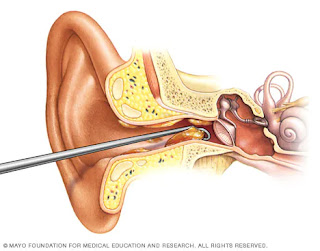
Earwax blockage occurs when earwax (cerumen) accumulates in your ear or becomes too hard to wash away naturally. Earwax is a helpful and natural part of your body's defenses. It cleans, lubricates and protects your ear canal by trapping dirt and slowing the growth of bacteria. If earwax blockage becomes a problem, you or your doctor can take simple steps to remove the wax safely.
Signs and symptoms of earwax blockage may include:
- Earache
- Feeling of fullness in the affected ear
- Ringing or noises in the ear (tinnitus)
- Decreased hearing in the affected ear
- Dizziness
- Cough
Causes:
- The wax in your ears is secreted by glands in the skin that lines the outer half of your ear canals. The wax and tiny hairs in these passages trap dust and other foreign particles that could damage deeper structures, such as your eardrum.
- In most people, a small amount of earwax regularly makes its way to the opening of the ear, where it's washed away or falls out as new wax is secreted to replace it. If you secrete an excessive amount of wax or if earwax isn't cleared effectively, it may build up and block your ear canal.
- Earwax blockages commonly occur when people try to clean their ears on their own by placing cotton swabs or other items in their ears. This often just pushes wax deeper into the ear, rather than removing it.
Earwax Buildup & Blockage

Earwax, also called cerumen, is made by the body to protect the ears. The ear wax has both lubricating and antibacterial properties. Untreated buildup can lead to hearing loss, irritation, pain in the ear, dizziness, ringing in the ears and other problems. Earwax can be removed in several ways; some of these methods can be done at home.
Symptoms of earwax buildup and blockage:
- A feeling of fullness in the ear.
- Pain in the ear.
- Difficulty hearing, which may continue to worsen.
- Ringing in the ear (tinnitus).
- A feeling of itchiness in the ear.
- Discharge or odor coming from the ear.
- Dizziness.
How can I prevent earwax buildup and blockage? Don’t stick anything into your ears to clean them. Use cotton swabs only on the outside of the ear. If you have to have your earwax removed by a healthcare provider more than once a year, you should ask them what they suggest to stop earwax from building up.
Earwax build-up
Earwax normally just falls out on its own. When it's blocking your ears, a pharmacist can help. Symptoms of earwax build-up include:
- hearing loss
- earache or a feeling that your ears are blocked
- ringing or buzzing in your ears (tinnitus)
- vertigo (feeling dizzy and sick)
How you can treat earwax build-up yourself:
- Do not use your fingers or any objects like cotton buds to remove earwax. This will push it in and make it worse.
- Earwax usually falls out on its own. If it does not and blocks your ear, put 2 to 3 drops of medical grade olive or almond oil in your ear 3 to 4 times a day. Do this for 3 to 5 days.
- It is recommended you use a dropper while lying your head on one side for a few minutes to let the oil work its way through your ear canal(s).
- You may find it easier to do this first thing in the morning and then just before you go to sleep.
- Over about 2 weeks, lumps of earwax should fall out of your ear, especially at night when you're lying down.
- There's no evidence that ear candles or ear vacuums get rid of earwax.
What you need to know about earwax
Earwax is a yellowish, waxy material inside the ear that comes from the sebaceous gland in the ear canal. It is also known as cerumen. Earwax lubricates, cleans, and protects the lining of the ear canal. It does this by repelling water, trapping dirt, and ensuring that insects, fungi, and bacteria do not get through the ear canal and harm the eardrum.
Earwax consists primarily of shed layers of skin. If too much earwax builds up and becomes hard, it can form a plug that blocks the ear. A blocked ear may be painful and can affect hearing. An earwax blockage may cause the following symptoms:
- an earache
- an ear infection
- itchiness
- tinnitus, which is a ringing in the ear
- a feeling of fullness in the ear
- vertigo, or a sense of being unbalanced that can lead to dizziness and nausea
- a cough, due to pressure from the blockage stimulating a nerve in the ear
An excessive buildup of earwax is the reason behind many hearing-aid faults. It is essential never to put anything in the ear when trying to clear earwax. Placing cotton swabs and other objects in the ear can push the earwax further down into the canal and make the problem worse.
What is impacted earwax?
Earwax is a waxy, yellowish substance that lines the inside of your ear canal. The ear canal is the tube that runs from your outer ear to your eardrum. The wax helps protect your canal from water, infection, injury, and foreign objects. But too much wax buildup can cause problems. This buildup is called impacted earwax.
What causes impacted earwax? Earwax buildup happens when your ear makes earwax faster than your body can remove it. This can happen with many health conditions, such as:
- Bony blockage (osteoma or exostoses)
- Infectious disease, such as swimmer’s ear (external otitis)
- Skin disease (such as eczema)
- Autoimmune disease (such as lupus)
- Narrowed ear canal (from birth, chronic inflammation, or injury)
- Making too much earwax due to injury
What are the symptoms of impacted earwax? Earwax often doesn't cause any symptoms, unless it builds up a lot. These are the most common symptoms of impacted earwax:
- Hearing loss
- Earache
- Sense of ear fullness
- Itching in the ear
- Dizziness
- Ringing in the ears
- Cough
Why cleaning your ears might do more harm than good

Hands up, if you enjoy scraping out your ears and seeing the amount of wax extricated. I’ll admit, I belong to the club, even though I know better than to insert anything into my ears.
There’s something relaxing about the sensation when you gently drag a scraper down the ear canal. Like a light massage for your ears, if you will, or an ASMR experience that sends tingles up and down your spine.
"It's like scratching an itch," said Dr Lim Keng Hua, consultant ear, nose and throat surgeon from Mount Elizabeth Medical Centre’s Ear Nose Throat, Head & Neck Surgery – Singapore ENT Specialist Clinic. "The more you scratch, the itchier and more satisfying it feels." Even more satisfying is seeing what the scraper scoops out. And I’m sure I’m not alone in this.
A constant ringing in your ears

Do you sometimes hear a ringing, buzzing, humming or hissing that no one else seems to be bothered by? It may be constant or it may come and go. The noise can be so loud that it interferes with your ability to concentrate or hear the sounds around you.
As enigmatic and frustrating as it is, this phantom sound is very real and it is what the experts call tinnitus.
“It appears to affect those aged 40 to 55 years most,” said Joyce Lim, a senior tinnitus counsellor at Changi General Hospital (CGH). Globally, it affects 40 per cent of the population and like hearing loss, tinnitus increases with age.
related: