22/12/2025

Winter Solstice 2025 夏至 Xià Zhì

Winter Solstice
We often think of the winter solstice as an event that spans an entire calendar day, but the solstice actually lasts only a moment. Specifically, it’s the exact moment when a hemisphere is tilted as far away from the Sun as it can be

The December solstice, also known as southern solstice and Midwinter, is the moment in time when the Sun reaches its southernmost position in the sky as seen from Earth. In the Northern Hemisphere (North and Central America, Europe, Northern Africa, Asia) it is the winter solstice, while in the Southern Hemisphere (South America, Southern Africa, Australia and New Zealand) it is the summer solstice.


The December solstice occurs every year between December 20 and December 23. The dates given on this page are based on Coordinated Universal Time (UTC), which for practical purposes is equivalent to Greenwich Mean Time (GMT). While the December solstice occurs at the same moment in time all over the world, the date and local time differ from place to place depending on the year and a location's time zone. For locations that are ahead of UTC (further east) it may fall on the day after, and for locations that are behind UTC (further west) it may fall on the day before. To find out the exact date and time of the December solstice 2019 in your area use this seasons calculator.

The December solstice marks the last day of autumn (fall)and the first day of winter in the Northern Hemisphere and the last day of spring and the first day of summer in the Southern Hemisphere. It is one of four days (two equinoxes and two solstices) throughout the year that mark the beginning of a new season. The other days are the March equinox, the June solstice and the September equinox.

read more

What is a Solstice?

A solstice is one of the two times of the year when the positioning and tilt of Earth relative to the sun results in the most amount of daylight time or the least amount of daylight time in a single day. There are two solstices during the year: one that occurs around June 20–22 (usually June 20 or 21) and one that occurs around December 20–23 (usually December 21 or 22).

The solstices are traditionally considered to mark the start of summer and winter. But which season begins with each solstice depends on which hemisphere you’re in. In the Northern Hemisphere, the summer solstice occurs in June and the winter solstice occurs in December. In the Southern Hemisphere, it’s the opposite. The summer solstice results in the longest day of the year, meaning it has the most time of daylight, and the winter solstice results in the shortest day of the year, meaning it has the longest period of darkness.

In contrast, an equinox is one of the two times of the year when the amount of daylight and nighttime hours are just about of equal length. The two equinoxes occur around March 20–21 and September 22–23. In the Northern Hemisphere, the vernal equinox (or spring equinox) occurs in March and the autumnal equinox occurs in September. In the Southern Hemisphere, it’s the opposite.


read more

Dongzhi 冬至 Winter Solstice Festival 2025

Tangyuan (湯圓)

In the West, the general population usually equates the yin yang with balance, harmony and unfortunate ankle tattoos. However, his curvy black and white symbol has the honor of being a prominent figure in the Chinese Dongzhi Winter Solstice Festival.

What’s the yin yang/solstice connection? Well, balance and harmony are indeed a big part of it, but according to the Chinese the yin yang also represents the flow of energy, warmth and light. Each year when winter solstice rolls around (generally December 21 or 22, the shortest day of the year) the warm, positive energy -which had apparently turned cold, dark and lazy throughout the fall – revs back up again and sets its sights on spring. Put simply, winter solstice opens up the floodgates of happiness, joy, optimism and all those other fuzzy feelings.

How the locals do Dongzhi - Back in the day, the Dongzhi winter solstice festival literally brought the country to a halt. Soldiers were brought in from their posts, farmers and fishermen kicked up their boots and everyone indulged in some much needed post-harvest R&R. Emperors staged elaborate ancestral-honoring ceremonies, while the common folk simply used the break for spending time with family and friends, honoring the dearly departed and eating their weight in special Dong Zhi dishes.

read more

How To Make Glutinous Rice Dumplings (Tang Yuan)

When it’s time to celebrate the winter solstice during the Dongzhi Festival, it’s most traditional to eat the glutinous rice dumplings known as tang yuan. These small, round dumplings symbolize family unity, an important theme during a time of year when the seasons begin to tilt toward the warmth of spring.

Though tang yuan are served with myriad fillings, the dumplings eaten during the Dongzhi Festival are typically plain. The dumplings are normally dyed bright colors and are served in a bowl of sweet ginger-infused syrup. While you can buy tang yuan at the store, they’re a snap to make at home. The dumpling dough takes just a few minutes to prepare and rolling the tang yuan balls is a fun family activity that young chefs will love. Set up around the kitchen table and put some music on in the background.

While glutinous rice dumplings are silky smooth and pleasantly chewy, they’re relatively tasteless themselves and act as a vessel for the flavor of their filling or the broth they’re served in. If you live in a colder region of the United States, I’m sure you’ll enjoy eating a bowl of tang yuan in a warming ginger syrup during the heart of winter.


Malaysian Chinese Kitchen posted a video to the playlist Malaysian Chinese Kitchen Cooking Show. 18 hrs

Kuih Ee is a dessert of glutinous rice balls in syrup eaten as a symbol of unity and togetherness during Tang Chek, weddings, birthdays, and the Chinese New Year.

10/12/2025

Human Rights Day 2025

Human Rights Day

Human Rights Day is celebrated on December 10, 2016. The date was chosen to honor the United Nations General Assembly's adoption and proclamation on 10 December 1948, of the Universal Declaration of Human Rights (UDHR), the first global enunciation of human rights and one of the first major achievements of the new United Nations.

Human Rights Day is normally marked both by high-level political conferences and meetings and by cultural events and exhibitions dealing with human rights issues. In addition, it is traditionally on 10 December that the five-yearly United Nations Prize in the Field of Human Rights and Nobel Peace Prize are awarded. Many governmental and nongovernmental organizations active in the human rights field also schedule special events to commemorate the day, as do many civil and social-cause organisations.

The Declaration of Human Rights arose directly from the experience of the Second World War and represents the first global expression of rights to which all human beings are inherently entitled. It consists of 30 articles which have been elaborated in subsequent international treaties, regional human rights instruments, national constitutions and laws. The Guinness Book of Records describes the UDHR as the "Most Translated Document" in the world.

read more

19/11/2025

International Men’s Day 2025

Men Leading By Example

On November 19 International Men’s Day celebrates worldwide the positive value men bring to the world, their families and communities.

International Men’s Day encourages men to teach the boys in their lives the values, character and responsibilities of being a man. Mahatma Gandhi said, “We must become the change we seek.”  It is only when we all, both men and women, lead by example that we will create a fair and safe society which allows everyone the opportunity to prosper.

International Men’s Day is an opportunity for people everywhere of goodwill to appreciate and celebrate the men in their lives and the contribution they make to society for the greater good of all.

International Men’s Day is annually held on November 19 to improve gender relations and promote unity

World Toilet Day 2025

WHO CARES ABOUT TOILETS?
Here are nine reasons to thank your toilet. Can you think of more?

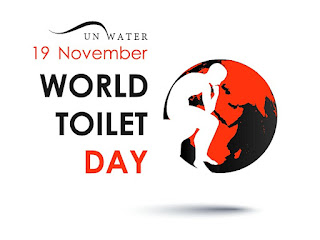
World Toilet Day is all about celebrating toilets for everything they do for us – from taking away our waste to protecting our health, safety and dignity.

Billions of people still don’t have a safe toilet. If you’re lucky enough have one, say thanks and give it some love!

Show us how much you care about toilets by joining the #WorldToiletDay conversation on social media.


Singapore's first UN resolution adopted; now, every Nov 19 is World Toilet Day

The United Nations (UN) has agreed to mark World Toilet Day on Nov 19, thanks to a Singapore initiative.

Singapore had tabled the resolution, Sanitation for All, to raise awareness of the global challenge of sanitation and toilets.

It is the first time Singapore, since it became a UN member 48 years ago, had put a resolution before the UN's General Assembly of 193 members. The resolution was supported by 120 countries, said the the Ministry of Foreign Affairs and Ministry of the Environment and Water Resources in a joint statement on Wednesday.


World Toilet Day

World Toilet Day (WTD) is an official United Nations international observance day on 19 November to inspire action to tackle the global sanitation crisis. Worldwide, 4.2 billion people live without "safely managed sanitation" and around 673 million people practice open defecation.  Sustainable Development Goal 6 aims to "Ensure availability and sustainable management of water and sanitation for all". In particular, target 6.2 is to "End open defecation and provide access to sanitation and hygiene". When the Sustainable Development Goals Report 2020 was published, United Nations Secretary-General António Guterres said, "Today, Sustainable Development Goal 6 is badly off track" and it "is hindering progress on the 2030 Agenda, the realization of human rights and the achievement of peace and security around the world".

World Toilet Day exists to inform, engage and inspire people to take action toward achieving this goal. The UN General Assembly declared World Toilet Day an official UN day in 2013, after Singapore had tabled the resolution (its first resolution before the UN's General Assembly of 193 member states). Prior to that, World Toilet Day had been established unofficially by the World Toilet Organization (a Singapore-based NGO) in 2001. UN-Water is the official convener of World Toilet Day. UN-Water maintains the official World Toilet Day website and chooses a special theme for each year. In 2020 the theme was "Sustainable sanitation and climate change". In 2019 the theme was 'Leaving no one behind', which is the central theme of the Sustainable Development Goals. Themes in previous years include nature-based solutions, wastewater, toilets and jobs, and toilets and nutrition. World Toilet Day is marked by communications campaigns and other activities. Events are planned by UN entities, international organizations, local civil society organizations and volunteers to raise awareness and inspire action.

Toilets are important because access to a safe functioning toilet has a positive impact on public health, human dignity, and personal safety, especially for females. Sanitation systems that do not safely treat excreta (feces) allow the spread of disease.Serious soil-transmitted diseases and waterborne diseases such as cholera, diarrhea, typhoid, dysentery and schistosomiasis can result.