03/05/2023

“Little Thailand” in Golden Mile closed after 38 years


Goodbye Golden Mile: Moving the 4-faced Buddha Statue

After two decades in a shrine in front of the Golden Mile Complex, the statue of Phra Phrom – better known to Singaporeans as the four-faced Buddha statue – was moved on April 20. It is now at the Leong San See Temple in Race Course Road, where it can be viewed by the public.

The move involved more than a simple seven-minute drive from its old home to the new. To prepare for it, Thai Buddhist monks at Wat Ananda Metyarama Thai Buddhist Temple were consulted. Phra Phrom is the god of good fortune and protection in Thailand. Mr Chao Khun Rian, 56, the deputy chief abbot at the temple, said: “The boss of the Leong San See Temple came to meet me and asked for a consultation. They wanted to know what to do (when moving a four-faced Buddha statue).”

The move began with a ritual at Golden Mile Complex performed by monks and attended by more than 50 devotees. The statue was then placed into a van and driven to Wat Ananda Metyarama, where it underwent some touch-ups. Its rough edges were sanded down and dents filled in before it was gilded in gold leaf. In the meantime, a new shrine to house the statue was shipped in from Thailand.


Golden Mile Complex: A final look at Singapore’s ‘Little Thailand’
Thai Supermarket, a mainstay at the complex since 1985, photographed in 2018. The supermarket will move to Aperia Mall in Kallang Avenue in May 2023

What gives this architectural icon in Beach Road character and personality? Is it its bold design or unique Thai identity?

Tenants at “Little Thailand”, as Golden Mile Complex has come to be known, are bidding it adieu as the building is set for redevelopment. A popular hangout for the Thai community and local residents for its array of Thai goods, eateries and bars among the mixed bag of tenants that included tour agencies and bus operators, Golden Mile will be vacated by May.

The iconic building, designed by local architects Gan Eng Oon, William Lim and Tay Kheng Soon and completed in 1973, was one of Singapore’s first high-rise mixed-use developments and is gazetted for conservation.


Thai Supermarket moves to Aperia in April
Aperia in Kallang will soon be the home of Thai Supermarket and Nana Thai restaurant, which are relocating from Golden Mile Complex. ST PHOTO: RYAN CHIONG

After almost 40 years of doing business in Golden Mile Complex, Thai Supermarket is relocating to Aperia, bringing a little piece of Little Thailand to the mall in Kallang. The current supermarket will close on April 9 and is likely to reopen at the end of April or early May in the new location. Renovations, costing a seven-figure sum, have already started.

Tenants at the 50-year-old Golden Mile Complex, a landmark on Beach Road, have been relocating after a successful collective sale in May last year. It went for $700 million to a consortium comprising Far East Organization, Perennial Holdings and Sino Land. The sale dismantles Singapore’s Little Thailand, with its concentration of Thai grocery and clothing shops, hair and nail salons, restaurants and bars.

At the centre of the action has been Thai Supermarket, set up in 1985 by the five Loh brothers. One of them, Mr Loh Yuen Seng, 59, had been doing business in Golden Mile Complex since 1985, when he sold trousers in a tailor shop. In the beginning, he and his brothers catered to Thai workers from construction sites in the area, who would shop and eat at the complex.


End of 'Little Thailand': Tenants to move out of Golden Mile Complex before May 2023

Tenants of Golden Mile Complex will have to vacate the premises before the building is handed over to the developers come May 2023, following a successful en bloc sale.

The commercial area in the building has amassed a majority of Thai eateries, grocery stores, and bars, among other businesses. It has become a community over time, attracting Thai folks in Singapore who either work at or frequent the shops, as well as locals who enjoy patronising the businesses there.

Over the years, these added to the character of Golden Mile Complex, christened "Little Thailand" by patrons. With the coming redevelopment of the building, tenants and patrons alike expressed sadness at the loss of a rare communal gem, Shin Min Daily News reported.


“Little Thailand” No More… Rejuvenation of Golden Mile Complex

In the late sixties, the Singapore government launched several urban renewal projects at the city and downtown areas. The land between Beach Road and Nicoll Highway, dubbed as the Golden Mile, was one of the options for development.

By 1973, a new uniquely-shaped building Woh Hup Complex – better known as Golden Mile Complex – was completed at the site. The $18-million Woh Hup Complex was often lauded as an architectural wonder – its stepped terraces, designed to increase ventilation and natural light within the building, created a distinctive image of a sloping façade from far and made it a prominent landmark along Beach Road.

With more and more Thai stalls and shops popped up, food critics praised the dining and shopping experience at Golden Mile Complex as like being at Thailand’s famous bustling Pratunam. By the mid-eighties, Golden Mile Complex was nicknamed the “Little Thailand” or “Little Bangkok”, popularly known for its authentic and reasonably-priced Thai cuisine. It also became a gathering enclave for the Thai residents and workers in Singapore, who felt at home with their familiar Thai music, food and merchandise at the complex. In 1987, there were about 20,000 Thai workers in Singapore, which increased to 50,000 by the mid-nineties. In the 2000s and 2010s, mookata, a Thai barbeque steamboat, had rapidly garnered a following in Singapore. Golden Mile Complex, over the years, had numerous popular mookata restaurants and eateries occupying the first and second floor of the building.


Golden Mile Complex Eateries Prepared To Move Out After Building’s En Bloc Sale

One of Singapore’s most popular late-night makan spots is set to be shaken up after an announcement of a S$700 million en bloc sale. Golden Mile Complex was recently sold to a consortium - made up of Perennial Holdings, Far East Organization and Sino Land - after over 80 per cent of the strata-titled building’s owners agreed to the sale.

Due to its unique terraced Brutalist architecture, Golden Mile Complex was gazetted as a conserved building last year. CNA reports that the consortium intends to “sensitively restore” the 16-storey complex, with plans to transform it into a mixed-used development with retail, residential and office units. Which begs the question: What will happen to the building’s well-loved eateries?

At press time, some of Golden Mile Complex’s F&B owners tell 8days.sg that they are still unsure of what is to come. "We will continue operating, but it might not be in Golden Mile Complex as we're also not sure what's the building management's arrangement," says Yuang Somchua, 60, the owner of the famous Diandin Leluk Thai Restaurant which has been operating at Golden Mile since 1985. “For now the management and landlords have not revealed anything to us tenants,” shares Jaren Choong, 28, the owner of Thai pancake kiosk Baan Kanom Thai. He had set up shop within the building’s Thai Supermarket with his wife Fon C, 26, just in March this year.


Little Bangkok at the Golden Mile

ONE look at the Thai inscriptions on this sign and one* would think this is a taxi stand m Bangkok. But this quaint sign is found just outside Golden Mile Complex m Beach Road, right here m Singapore. Well-known to many Singaporeans as "Little Thailand"...


Golden Mile Complex sold for $700m, developers to restore building
The sale comes after more than 80 per cent of Golden Mile Complex owners agreed to take $700 million for the landmark building

Conservation landmark Golden Mile Complex has been sold for $700 million to a consortium comprising Perennial Holdings Private Limited, Sino Land and Far East Organization.

Announcing the sale in a joint statement on Friday (May 6), the consortium said this was the first collective sale of a large-scale strata-titled conserved building in Singapore.

It happened after more than 80 per cent of Golden Mile Complex owners agreed to take $700 million for the landmark building within "a record time of 15 days", the development's marketing agent, Edmund Tie & Company, said in a letter to owners on April 23.


The iconic Golden Mile Complex
Golden Mile Complex Tenants To Move Out By May 2023 Following Successful En Bloc Sale

Known for its Thai eateries, supermarkets, and night establishments, Golden Mile Complex has a special place in many Singaporeans’ hearts, especially for those who frequently head down for their late-night mookata fix.

But with the S$700-million en bloc sale finalised earlier this year, some feared that ‘Little Thailand’ may soon be no more. Recent developments have now proven this to be true. On 10 Aug, Edmund Tie & Company, the real estate firm in charge of the sale, announced that the building would be vacated and handed over to the developers by May 2023.

In other words, the renowned Thai establishments in the complex will soon have to move out of the iconic mall. While some stall owners plan on retiring, others plan on relocating. Regardless of their decisions, most of them will leave the iconic mall with feelings of nostalgia. Some Golden Mile Complex tenants mull retirement while others relocate.


related:

02/05/2023

The Death Penalty in Singapore

Update 29 Nov 2024: Singapore hangs 4th person in three weeks

Singapore hanged a 35-year-old Singaporean-Iranian man for drug trafficking on Friday, its fourth in less than a month, despite appeals from Tehran to "reconsider" his execution. The United Nations and rights groups say capital punishment has no proven deterrent effect and have called for it to be abolished, but Singaporean officials insist it has helped make the country one of Asia's safest. Masoud Rahimi Mehrzad, a Singaporean citizen born in the city-state to a Singaporean mother and an Iranian father, was convicted in 2013 for drug trafficking.

His execution was the fourth in three weeks in Singapore. Rosman Abdullah, 55, was hanged on November 22 and two men – a 39-year-old Malaysian and a 53-year-old Singaporean – were hanged on November 15 all for drug offences.

So far this year, there have been nine executions by the Singaporean government – eight for drug trafficking and one for murder. According to an AFP tally, Singapore has hanged 25 people since it resumed carrying out the death penalty in March 2022 after a two-year halt during the Covid-19 pandemic. The UN this month reiterated its call on Singapore to review its position on capital punishment.


Singapore hangs drug trafficker, third such execution in a week
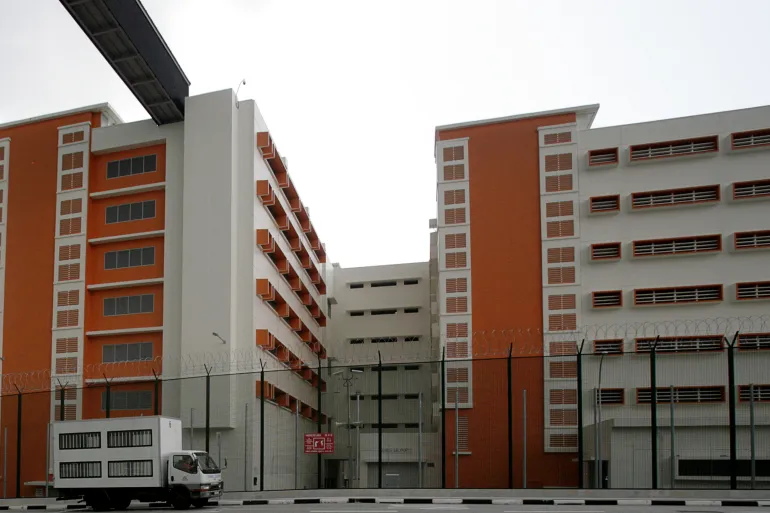
The cell blocks at Singapore's Changi Prison

Singapore has carried out its third hanging of a convicted drug trafficker in a week despite appeals for clemency from the United Nations. Rosman Abdullah, 55, was executed for trafficking 57.43 grams of heroin into the Southeast Asian city-state, Singapore’s drug enforcement agency said on Friday. Rosman, a Singaporean, was “accorded full due process under the law, and was represented by legal counsel throughout the process,” the Central Narcotics Bureau said in a statement.

“Capital punishment is imposed only for the most serious crimes, such as the trafficking of significant quantities of drugs which cause very serious harm, not just to individual drug abusers, but also to their families and the wider society,” the CNB added. UN experts had called on Singaporean authorities to spare Rosman, arguing that the death penalty does little to deter crime and that authorities had not made proper accommodations for his intellectual disabilities. “We are gravely concerned that Mr. Rosman bin Abdullah does not appear to have had access to procedural accommodations, including individualised assistance, for his disability during his interrogation or trial,” the experts said in a statement released by the Office of the UN High Commissioner for Human Rights on Wednesday. Amnesty International had condemned Rosman’s scheduled execution as “chilling” and “extremely alarming”.

Rosman’s hanging at Singapore’s Changi Prison comes exactly a week after the execution of a 39-year-old Malaysian and a 53-year-old Singaporean for drug trafficking. Despite its reputation as a modern city-state and international business hub, Singapore ranks among only a handful of countries, including China and North Korea, that impose the death penalty for drug offences. Under the country’s laws, anyone trafficking more than 500 grams of cannabis or 15 grams (0.5 ounces) of heroin faces mandatory capital punishment. Since resuming executions in March 2022 following a hiatus due to the COVID-19 pandemic, Singaporean authorities have carried out 24 executions, including eight so far this year. Singapore’s government, which keeps a tight rein on public protest and the media, has defended the death penalty as a deterrent against drug abuse, citing surveys that show most citizens support the law.


Singapore hangs drug trafficker in second execution of 2024

Singapore on Friday hanged a convicted drug trafficker, authorities said, in the city state’s second execution this year.

The 45-year-old Singaporean man was executed at Changi prison for trafficking 36.93 grams (1.3 ounces) of pure heroin, more than twice the 15 grams that merits the death penalty in the strict city state, the Central Narcotics Bureau (CNB) said. Rights groups declined to give details about the convict’s identity and his case, as the family has requested privacy.

Singapore has some of the world’s toughest anti-narcotics laws: trafficking more than 500 grams of cannabis can result in the death penalty.


Singapore Executes First Woman Convict in Nearly 20 Years for Drug Trafficking

In a rare execution, Singapore hanged a 45-year-old Singaporean woman, Saridewi Binte Djamani, for drug trafficking.  She was convicted of possessing over 30.72 grams of pure heroin, which is more than twice the threshold for the death penalty under the country’s strict drugs legislation. The execution marks the city-state’s first female execution in nearly 20 years.

“The capital sentence of death imposed on Saridewi Binte Djamani was carried out on 28 July 2023,” the Central Narcotics Bureau (CNB) said in a statement. Singapore’s Narcotics Bureau said that the capital punishment was carried out on the stipulated date after Saridewi exhausted all legal avenues, including an appeal that was dismissed in October 2022. Her petition for clemency was also unsuccessful. Singapore’s strict drug laws include the death penalty for drug trafficking offenses involving significant quantities of drugs. Capital punishment is seen as a critical component of Singapore’s comprehensive harm prevention strategy, targeting both drug demand and supply.

The execution of Saridewi has sparked debates on the effectiveness and ethics of capital punishment, especially for drug-related offences. The latest case highlights Singapore’s firm stance on combating drug trafficking and its commitment to enforcing stringent laws to deter drug-related crimes. This comes a few days after 57-year-old Mohd Aziz bin Hussain was hanged on Wednesday after being convicted of trafficking approximately 50 grams of heroin. Human rights groups, including Amnesty International, called on the government to halt the practice, arguing that there was no evidence to support the death penalty’s effectiveness as a deterrent to crime. Singapore’s stance on capital punishment for drug-related offenses places it alongside China, Iran, and Saudi Arabia as one of the four countries that executed prisoners for such crimes last year.

Singapore hangs first woman in 19 years after she was convicted of trafficking 31 grams of heroin

Singapore conducted its first execution of a woman in 19 years on Friday and its second hanging this week for drug trafficking despite calls for the city-state to cease capital punishment for drug-related crimes.

Activists said another execution is planned next week. Saridewi Djamani, 45, was sentenced to death in 2018 for trafficking about 31 grams (1 ounce) of diamorphine, or pure heroin, the Central Narcotics Bureau said. It said the amount was “sufficient to feed the addiction of about 370 abusers for a week.”

Singapore’s laws mandate the death penalty for anyone convicted of trafficking more than 500 grams (17.6 ounces) of cannabis and 15 grams (0.5 ounces) of heroin.


Singapore hangs a man for drug trafficking. It will hang a woman on Friday — the first in 19 years

Singapore executed a man Wednesday for drug trafficking and is set to hang a woman Friday — the first in 19 years — prompting renewed calls for a halt to capital punishment.

Mohammed Aziz Hussain, 56, was hanged at Singapore’s Changi Prison and has been buried, said activist Kirsten Han of Transformative Justice Collective, which advocates for abolishing the death penalty in Singapore. A citizen of the city-state, he was sentenced to death in 2018 for trafficking around 50 grams (1.75 ounces) of heroin, Han said.

Saridewi Djamani, a 45-year-old Singaporean woman, is due to be hanged Friday after she was convicted and sentenced in 2018 for trafficking around 30 grams (1.05 ounces) of heroin, the group and other human rights organizations said. Han said the last woman known to have been hanged in Singapore was 36-year-old hairdresser Yen May Woen, also for drug trafficking, in 2004.


Singapore hangs drug trafficker in resumption of executions

A Singaporean man on death row for drug trafficking was hanged Wednesday in the first execution in the city-state in over two years, rights activists said. Singapore, which has harsh anti-drug laws, had halted executions due to the COVID-19 pandemic and last meted out capital punishment in November 2019.

Abdul Kahar Othman, 68, was hanged early Wednesday, anti-death penalty activist Kirsten Han said. The execution occurred despite pleas from rights activists, including the U.N. Human Rights office, to commute Kahar's sentence to life imprisonment. Han and several others held a small vigil outside the prison late Tuesday for Kahar. Kahar, who came from a poor family and had struggled with drug addiction since he was a teenager, spent more time behind bars than as a free man, Han said. He was released from prison in 2005 after a decade of preventive detention.

In 2013, Kahar was convicted of drug trafficking and sentenced to death two years later. Kahar’s incarcerations without proper rehabilitation had made it difficult for him to walk new paths, Han said. Han, along with the U.N. and other rights groups, have expressed concerns that executions might be accelerated in the city-state after a two-year halt.


Singapore: Rights experts call for moratorium on the death penalty
UNICEF/Josh Estey Only in exceptional circumstances and with incontrovertible evidence of intentional murder does international law permit the death penalty. (file)

Experts appointed by the UN Human Rights Council on Friday called for Singapore to impose an immediate moratorium on capital punishment, denouncing the Government’s continued use of the death penalty for drug-related crimes. They strongly condemned the execution this week of Tangaraju s/o Suppiah, who was convicted of conspiring to traffic cannabis from Malaysia to the country in 2013.

Mr. Suppiah, a 46-year-old Tamil from Singapore, was hanged on Tuesday despite claims that he had not been provided with adequate interpretation during police interrogations. “The death penalty can only be carried out after a legal process with every possible safeguard that ensures a fair trial, including legal representation at every stage of proceedings and necessary interpretation in all oral proceedings,” the experts said.

They added that the rate of execution notices for drug-related offences in Singapore was “highly alarming”. Mr. Suppiah reportedly was the 12th person to be hanged since March 2022, according to the UN human rights office, OHCHR, which had urged the Government not to go ahead with his execution, citing concerns around due process and respect for fair trial guarantees. The UN experts said States that have not yet abolished the death penalty may only impose capital punishment for the most serious crimes. “Under international law, only crimes of extreme gravity involving intentional killing can be considered as ‘most serious’. Drug offences clearly do not meet this threshold,” they argued. The rights experts also voiced concerns about discriminatory treatment of people from minority groups, such as Mr. Suppiah, as well as reports of reprisals against their lawyers.


Singapore says UN Human Rights statement on death penalty 'glossed over' serious harms that drugs cause
People who are sentenced to capital punishment are accorded full due process under the law, including convicted drug trafficker Tangaraju Suppiah, says the Singapore Permanent Mission to the UN.

A recent statement by the UN High Commissioner for Human Rights on Singapore's death penalty for drug offences "glossed over the serious harms that drugs cause", said the country's Permanent Mission to the United Nations on Friday (Apr 28). "This is regrettable," said the mission, adding that countries have the sovereign right to choose the approach that best suits their own circumstances.

The UN statement from the spokesperson for the High Commissioner for Human Rights was published on Apr 25, a day before death row convict Tangaraju Suppiah was set to be hanged for trafficking cannabis. The statement urged the government to "urgently reconsider" the execution and expressed "concerns around due process and respect for fair trial guarantees". Singapore said on Friday that people who are sentenced to capital punishment here are accorded full due process under the law.

Tangaraju was tried in the High Court and convicted of abetting the trafficking of about 1kg of cannabis before being sentenced to capital punishment. His appeal against his conviction and sentence was later dismissed by the Court of Appeal. "Throughout the process, Tangaraju had access to legal counsel," said Singapore's Permanent Mission to the UN. Singapore’s law provides for the death penalty if the amount of cannabis trafficked is more than 500g. Tangaraju, a Singaporean, had his capital sentence carried out on Wednesday morning.


Singapore rebuts UN Human Rights Office comments on drug trafficker’s hanging
All persons sentenced to capital punishment in Singapore are accorded full due process under the law, said Singapore's Permanent Mission to the UN. ST PHOTO: KUA CHEE SIONG

All persons sentenced to capital punishment in Singapore are accorded full due process under the law, and capital punishment has helped to deter serious crimes, said the Permanent Mission of Singapore to the United Nations in Geneva in a statement on Friday. It added that countries have the sovereign right to choose the approach that best suits their own circumstances, and Singapore will continue to implement evidence-based measures that have worked well for it in the fight against drugs.

The permanent mission was responding to comments from the United Nations Human Rights Office on the execution of convicted drug trafficker Tangaraju Suppiah, who was hanged on April 26. The 46-year-old Singaporean was convicted in 2018 of abetting the trafficking of 1,017.9g of cannabis – an amount that is more than twice the capital threshold. During a press briefing on April 25, UN High Commissioner for Human Rights spokesman Ravina Shamdasani had urged Singapore’s authorities not to proceed with Tangaraju’s execution, and raised concerns around “due process and respect for fair trial guarantees”. She called on the Singapore Government to adopt a formal moratorium on executions for drug-related offences, and to ensure the right to a fair trial for all defendants in line with its international obligations.

On Friday, the permanent mission responded that all persons sentenced to capital punishment in Singapore are accorded full due process under the law, and that a capital sentence is imposed only after a rigorous legal process with stringent safeguards. Every capital sentence imposed must be examined and confirmed by the Court of Appeal, regardless of whether the convicted person appeals against the conviction or sentence, it said. On the issue of the death penalty as a deterrence, it added that capital punishment has worked to discourage drug traffickers from bringing in large amounts of drugs. It cited a 2021 public perception survey commissioned by the Ministry of Home Affairs, which polled more than 7,200 people from countries in the region where most of the drug traffickers arrested by Singapore authorities originated. The study reported that 87 per cent of respondents believed capital punishment makes people not want to traffic substantial amounts of drugs into Singapore; and 83 per cent believed that capital punishment is more effective than life imprisonment in discouraging people from trafficking drugs into Singapore. The permanent mission said that Ms Shamdasani’s comments “glossed over” the serious harms that drugs cause, which is “regrettable”. It pointed out that drug abuse is a pervasive problem with severe consequences for individuals and entire societies, including social, economic and health-related issues. “Singapore cannot afford such a high cost to our society and our people,” it said.


Why Tangaraju Suppiah doesn’t deserve to die

I have long spoken up against the death penalty and its continued use around the world. In the coming days, Singapore is planning to carry out yet another execution, a case as egregious as previous ones I have followed. If the state gets its way, Tangaraju Suppiah will be hanged on Wednesday at Singapore’s Changi Prison, convicted under more than dubious circumstances for conspiracy to smuggle about one kilo of cannabis. In fact, Singapore may be about to kill an innocent man.

Tangaraju’s case is shocking on multiple levels. Singapore has a long and troubled history of executing drug offenders, following mandatory sentencing laws that proscribe the death penalty for certain threshold amounts of drugs. The country’s government has repeatedly claimed that its draconian laws serve as an effective deterrent of drug-related crime. However, Singaporean authorities have repeatedly failed to provide any tangible evidence for that assertion. Killing those at the lowest rungs of the illicit drug supply chain, often minorities living in poverty, is hardly effective in curbing an international trade worth hundreds of billions every year. Killing people for allegedly smuggling cannabis is particularly cruel and misguided, given that more countries are now introducing sensible drug policy by decriminalising and regulating both medicinal and recreational cannabis, using revenues to advance education, prevention, and harm reduction. From the vantage point of the Global Commission on Drug Policy, of which I am a member, Tangaraju’s execution will not make Singapore any safer than it already is, and it will do absolutely nothing to stop the flow of illicit drugs into the city state.

Equally, if not more disconcerting about this case is that Tangaraju was actually not anywhere near these drugs at the time of his arrest. This was largely a circumstantial case that relied on inferences. Investigators and prosecutors acted on the fact that his mobile numbers were stored on the actual drug traffickers’ phone, interpreting phone records and text messages as “proof” of his involvement. Tangaraju’s alleged co-conspirator – who was actually caught in possession of the drugs – pleaded guilty to a non-capital offence. The other three people connected to the case were “discharged not amounting to an acquittal” by the prosecution. Tangaraju himself has maintained his innocence from the very beginning of his ordeal.


Singapore hangs prisoner for trafficking 2lbs of cannabis despite Sir Richard Branson joining international pleas for city state to call off execution
Branson (pictured), a member of the Geneva-based Global Commission on Drug Policy, wrote Monday on his blog that Tangaraju was 'not anywhere near' the drugs at the time of his arrest and that Singapore may be about to put an innocent man to death

Singapore hanged a prisoner today after he was convicted of conspiracy to smuggle two pounds of cannabis, despite rights groups decrying 'many flaws' in the case. Tangaraju Suppiah was hanged in defiance of a plea by the United Nations Human Rights Office for Singapore to 'urgently reconsider' and calls by British tycoon Richard Branson to halt it. The Asian financial hub has some of the world's toughest anti-narcotics laws and insists the death penalty remains an effective deterrent against trafficking. 'Singaporean Tangaraju Suppiah, 46, had his capital sentence carried out today at Changi Prison Complex,' a spokesman for the Singapore Prison Service said. Tangaraju was convicted in 2017 of 'abetting by engaging in a conspiracy to traffic' 2.24 pounds of cannabis, twice the minimum volume required for a death sentence in Singapore, the spokesman said. He was sentenced to death in 2018 with the Court of Appeal later upholding the decision, but rights groups have claimed there were several problems with the case.

Human Rights Watch deputy Asia director Phil Robertson said the evidence 'was far from clear cut - since he never actually touched the marijuana in question, was questioned by police without a lawyer, and denied access to a Tamil interpreter when he asked for one.' He added the hanging 'raises serious concerns that Singapore is launching a renewed spree to empty its death row in a misguided effort of deterrence.' Amnesty International Deputy Regional Director Ming Yu Hah said there were 'many flaws' in the case and that the hanging showed 'the staggering failure of Singapore's stubborn embrace of the death penalty.' Singapore authorities have maintained that Tangaraju was given due process and that his guilt had been proven beyond a reasonable doubt. The Ministry of Home Affairs said 'the evidence clearly showed that he was the person coordinating the delivery of drugs, for the purpose of trafficking.' Branson, a member of the Geneva-based Global Commission on Drug Policy, wrote Monday on his blog that Tangaraju was 'not anywhere near' the drugs at the time of his arrest and that Singapore may be about to put an innocent man to death.

On Tuesday, the ministry slammed Branson, saying that the billionaire showed 'disrespect for Singapore's judges and our criminal justice system with such allegations.' In some parts of the world - including neighbouring Thailand - cannabis has been decriminalised, with authorities abandoning prison sentences. Rights groups have been heaping pressure on Singapore to abolish capital punishment, and the United Nations has said the practice has not proven to be an effective deterrent globally and is incompatible with international human rights law. Singapore resumed executions in March 2022 after a hiatus of more than two years. Wednesday's hanging was the city-state's first in six months and 12th since last year. Among those hanged was Nagaenthran K. Dharmalingam, whose execution sparked a global outcry, including from the United Nations and Branson, because he was deemed to have a mental disability.


Singapore slams Virgin’s Richard Branson over death penalty criticism, UN urges against execution
[Branson showed] disrespect for Singapore’s judges and our criminal justice system with such allegations Singapore’s Home Affairs Ministry statement

A United Nations human rights office spokesperson said on Tuesday that Singapore is poised to carry out a hanging for a drug offence, urging it to refrain from doing so. “The UN Human Rights Office has received information concerning the imminent hanging of Tangaraju Suppiah for allegedly using his phone to coordinate trafficking of cannabis,” said Ravina Shamdasani at a UN briefing. “We have concerns around due process and respect for fair trial guarantees,” she added.

The UN comments come on the same day the Singapore government criticised British billionaire Richard Branson on Tuesday for saying authorities “may be about to kill an innocent man” over one kilogram of cannabis. Singaporean Tangaraju Suppiah, 46, is expected to be hanged on Wednesday after being convicted of conspiracy to traffic 1,017.9 grams (35.9 ounces) of cannabis, twice the minimum amount that merits the death sentence under the city state’s tough drug laws.

Branson, a member of the Geneva-based Global Commission on Drug Policy, urged Singapore on his blog on Monday to halt the execution, saying Tangaraju was “not anywhere near” the drugs at the time of his arrest. He warned that Singapore might be about to put an innocent man to death. “This is patently untrue,” Singapore’s Home Affairs Ministry said in a statement, adding that Tangaraju’s guilt had been proven beyond reasonable doubt. Branson showed “disrespect for Singapore’s judges and our criminal justice system with such allegations”, it said. It will be Singapore’s first execution in six months and the 12th since last year.

Richard Branson disrespecting S’pore’s judicial system with death penalty allegations: MHA
This is not the first time Mr Richard Branson has criticised Singapore’s stance towards capital punishment. PHOTO: AFP

British billionaire Richard Branson has shown disrespect for Singapore’s judicial system by making allegations about a court case involving a drug trafficker, said the Ministry of Home Affairs (MHA). “It is regrettable that Mr Branson, in wanting to argue his case, should resort to purporting to know more about the case than Singapore’s courts, which had examined the case thoroughly and comprehensively over a period of more than three years.

“He shows disrespect for Singapore’s judges and our criminal justice system with such allegations,” MHA added on Tuesday. Mr Branson had commented on the use of the death penalty in Singapore in a blog post on Monday titled “Why Tangaraju Suppiah doesn’t deserve to die”. He was referring to the impending execution of the 46-year-old Singaporean who was convicted in 2018 of abetting the trafficking of 1,017.9g of cannabis. The ministry said: “Mr Branson claimed that Tangaraju’s conviction did not meet the standards for criminal conviction and that ‘Singapore may be about to kill an innocent man’.

This is patently untrue.” MHA noted that the Misuse of Drugs Act provides for the death penalty if the amount of cannabis is more than 500g and that the amount Tangaraju was convicted for is more than twice the capital threshold. This is sufficient to feed the addiction of about 150 abusers for a week, added MHA.


Richard Branson disrespecting Singapore’s judges, criminal justice system with death penalty allegations: MHA

Singapore's Ministry of Home Affairs (MHA) on Tuesday (Apr 25) said British billionaire Richard Branson's views on a Singaporean on death row showed "disrespect" for the country's judges and criminal justice system. Tangaraju Suppiah, a 46-year-old Singaporean, was convicted of abetting the trafficking of more than 1kg of cannabis and was sentenced to death on Oct 9, 2018. He is scheduled to be hanged on Wednesday.

On Monday, Mr Branson wrote a blog post entitled "Why Tangaraju Suppiah doesn't deserve to die", claiming that Tangaraju's conviction did not meet standards and that "Singapore may be about to kill an innocent man". In response, MHA said this was "patently untrue"; and that it was "regrettable that Mr Branson, in wanting to argue his case, should resort to purporting to know more about the case than Singapore’s Courts, which had examined the case thoroughly and comprehensively over a period of more than three years".

The ministry said that contrary to Mr Branson's suggestion that Tangaraju was "actually not anywhere near" drugs at the time of his arrest, the evidence clearly showed that he was coordinating the delivery of drugs for trafficking. "Tangaraju was involved in a case with two others, where his phone numbers were used to communicate with the two others involved in the delivery of the cannabis," said MHA. "Tangaraju’s defence was that he was not the person communicating with the two others involved in the case. However, the High Court found Tangaraju’s evidence unbelievable, and found that he was communicating with the two others and was the one coordinating the delivery and receipt of cannabis to himself, through the two others."


Death Penalty in Singapore: Is It Time to Abolish It?

In Singapore, there are 32 offences that could potentially warrant death sentences. 4 of these call for the mandatory death penalty, where the death penalty must be given and judges are not able to take into consideration mitigating circumstances when sentencing:
  • Murder
  • Drug trafficking
  • Terrorism
  • Possession of unauthorised firearms, ammunition or explosives
However, since an amendment to the law in 2012, the mandatory death penalty for the offences of murder and drug trafficking has been lifted in certain conditions and the courts can decide to impose life imprisonment instead. Specifically, for drug trafficking, the trafficker must have:
  • Only played the role of courier (i.e. transport, send or deliver) for a controlled drug; and
  • Either cooperated with the Central Narcotics Bureau in a significant way that has disrupted drug trafficking activities within or outside Singapore; or had a mental disability that impaired their judgement of the severity of their actions in relation to the offence
Since the amendment, there have been a couple of cases where prisoners escaped the death sentence where they otherwise would not have. People charged with capital offences will also be given free legal representation under the Legal Assistance for Capital Offences (LASCO).


S'pore's death penalty for drug trafficking saves lives, Shanmugam tells BBC
The entrance gate of Changi Prison. Law and Home Affairs Minister K. Shanmugam said Singapore's deterrent penalties have "saved thousands of lives". PHOTO: ST FILE

Critics of Singapore's mandatory death penalty for convicted drug traffickers miss the point that it saves lives and protects Singaporeans, Law and Home Affairs Minister K. Shanmugam has said.

In an interview on the BBC's HARDtalk programme that aired on Wednesday (June 29), he noted that the BBC focused on the hanging of one drug trafficker, but not on the severe drug situation in South-east Asia, and the thousands of lives at stake. "To misquote a well-known quote, a single hanging of a drug trafficker is a tragedy; a million deaths from drug abuse is a statistic. That's what this shows," he said. Presenter Stephen Sackur had asked the minister whether he had any doubts that the mandatory death penalty for drug trafficking was the right policy.

Mr Shanmugam replied that capital punishment is imposed because there is clear evidence that it is a serious deterrent for would-be drug traffickers. "The trafficker wants to make money. He, you know, is damaging the lives of drug users, their families - damaged, often seriously destroyed," he said. He cited a 2021 report by the World Health Organisation that showed there were 500,000 deaths linked to drug abuse in just one year.


Findings from Recent Studies on the Death Penalty in Singapore

The Ministry of Home Affairs (MHA) conducted or commissioned the following three studies on the use of the death penalty in Singapore, to better understand the views of Singapore residents and the perceptions of residents in regional cities:
  • Survey on Singapore Residents’ Attitudes towards the Death Penalty, conducted by the MHA Research and Statistics Division in 2021 (“RSD 2021”).
  • Study on Attitudes towards the Use of Capital Punishment, commissioned by MHA in 2019 and conducted by Dr Carol Soon and Shawn Goh, Institute of Policy Studies (“IPS 2020”); and
  • Perception of Residents in Regional Cities on Singapore’s Crime Situation, Law and Safety, commissioned by the MHA Home Team Behavioural Sciences Centre and conducted in two phases in 2018 and 2021 respectively (“HTBSC 2021”).
The reports for these three studies can be found at MHA’s website under the ‘Publications’ section, or accessed via the URL links found in the Annex below. Key Findings - Very Strong Support for the Use of the Death Penalty for the Most Serious Crimes. The studies show that there is very strong support in Singapore among Singapore citizens and Permanent Residents (PRs), for Singapore’s use of the death penalty as punishment for the most serious crimes, such as intentional murder, use of firearms, and trafficking a significant amount of drugs.


Singapore: Fifth execution in under four months carried out

Responding to the reported execution of Nazeri bin Lajim in Singapore today, Amnesty International’s death penalty expert Chiara Sangorgio said:
“Five people have been hanged this year in Singapore, in a period of less than four months. This relentless wave of hangings must stop immediately. The use of the death penalty in Singapore, including as mandatory punishment for drug-related offences, violates international human rights law and standards.” 
“Everyone executed in Singapore in 2022 has been sentenced to the mandatory death penalty for drug-related offenses. Rather than having a unique deterrent effect on crime, these executions only show the utter disregard the Singaporean authorities have for human rights and the right to life.”

“We call on governments, the United Nations Office on Drugs and Crime, and the International Narcotics Control Board to increase pressure on Singapore so that international safeguards on the death penalty are respected and drug control policies are rooted in the promotion and protection of human rights. Singapore’s highly punitive approach does neither.”


Singapore Executed Another Drug Offender: Why the Country Clings to the Death Penalty—and Why Advocates Say It’s Wrong

Amid protests and growing international attention, Singapore executed another man on Wednesday for a drug offense. Tangaraju Suppiah, a 46-year-old of Tamil descent who had been on death row since 2018, was hanged at dawn in Singapore’s Changi Prison after being convicted in 2018 of abetting the smuggling of 1.02 kilograms (2.2 pounds) of cannabis back in 2013. Tangaraju’s execution is the first in the country this year, though it’s unlikely to be the last. Singapore executed 11 people in 2022, all for narcotics-related offenses. As is customary, Tangaraju’s family only received one week’s notice before his execution.

Advocates estimate there to be at least 50 others awaiting their own turn at the gallows. (Singapore has not made public the exact number of its prisoners on death row). Activists in Singapore and around the world unsuccessfully appealed to the Singapore government to stay Tangaraju’s execution - highlighting specific issues with the case and generally appealing for mercy. “There are many ways to seek justice,” Tangaraju’s sister Leelavathy told reporters on Sunday. “Just don’t take someone’s life.”

But Singapore, a Southeast Asian city-state of 5.7 million people, takes pride in sentencing drug offenders to death—it’s one of just 35 countries that maintain the death penalty for drug offenses, according to a report by Harm Reduction International, and one of only eight in the world to regularly hand out such a sentence. Singapore’s Ministry for Home Affairs, which did not respond to specific questions from TIME but provided background documents and links to past statements, has called capital punishment “an essential component” of its justice system that has been “effective in keeping Singapore safe and secure.” Increasingly, however, activists are questioning whether that’s true. “[The government says] ‘we are doing this to prevent harm, to protect people,’” says Kirsten Han, a member of the Singaporean anti-death penalty group Transformative Justice Collective. “But look at Tangaraju … The system was not protecting him. The system jailed him over and over again for his whole life. And then when he finally was charged for something high enough, this system has decided that he’s disposable enough that he can be executed. I don’t see who is being protected here.”

Capital punishment in Singapore
Changi Prison, where Singapore's death row is located

Capital punishment in Singapore is a legal penalty. Executions in Singapore are carried out by long drop hanging, and they usually take place at dawn. Thirty-three offences—including murder, drug trafficking, terrorism, use of firearms and kidnapping—warrant the death penalty under Singapore law.

In 2012, Singapore amended its laws to exempt some offences from the mandatory death sentence. In a survey done in 2005 by The Straits Times, 95% of Singaporeans believe that their country should retain the death penalty. The support steadily fell throughout the years due to the increasing liberal opinions of society. Despite the decline, a large majority of the public remains supportive of the use of the death penalty, with more than 80% of Singaporeans believing that their country should retain the death penalty in 2021. The most recent execution to be conducted in Singapore was on 26 April 2023, when 46-year-old Singaporean man Tangaraju Suppiah, convicted of a drug trafficking charge was executed at dawn. This is the first execution to have taken place in Singapore in 2023.

Section 316 of the Criminal Procedure Code states that the death penalty in Singapore is to be conducted by hanging. Hangings always take place at dawn and are conducted by the long drop method. The Singapore government has affirmed its choice of execution by hanging in favour of other methods. It is a normal practice for everyone present in the courtroom to stand and remain silent before the death sentence is passed. The judge will then proceed to announce the death sentence on the accused, who has been found guilty and convicted of the capital offence. The condemned will be given notice at least four days before execution. In the case of foreigners sentenced to death, their families and diplomatic missions or embassies will be given one to two weeks' notice.


Drug Couriers May Escape Singapore Gallows
AFP News - Yong Yun Leong (left) and Yong Yun Chung (centre), the brothers of convicted Malaysian drug trafficker Yong Vui Kong, leave the High Court with lawyer M Ravi, in Singapore on April 4, 2011. Yong Vui Kong, on death row for drug trafficking had what could be his final appeal thrown out on Wednesday by the city-state's highest court.

Two drug mules on death row in Singapore were given the chance to escape the gallows on Wednesday after helping in anti-narcotics efforts.

The Attorney-General’s Chambers said on Wednesday that public prosecutors would certify that Singaporean Subashkaran s/o Pragasam and Malaysian Yong Vui Kong have “substantively assisted” the Central Narcotics Bureau (CNB) “in disrupting drug trafficking activities within and outside of Singapore".

Subashkaran, 29, and Yong, 24, who face the death penalty for drug trafficking, could therefore find their sentences reduced.