09/10/2021

S$2,906 a ‘reasonable’ starting point for a living wage in Singapore


The “reasonable starting point” for a living wage in Singapore is S$2,906 a month, according to a study by the Lee Kuan Yew School of Public Policy. This figure is based on the average budget for a couple with two children, assuming both parents are employed full-time. The figure is also adjusted for taxes and all universal and major means-tested benefits.

“The median work income among all workers in 2020 exceeded this amount by 50 per cent, but the current PWM (Progressive Wage Model) wages fall significantly below,” said the school in a media release on Friday (Oct 8). The Progressive Wage Model aims to lift the salaries of workers by various sectors through upgrading their skills and improving productivity.

The study found that the costs of education and care “dominated” the budgets for children’s needs. “While some costs associated with children decline with age, others increase sharply. As current measures supporting education and care taper off for older children, parents are likely to face greater financial strain as their children grow up.” Researchers also found that current public housing policies "effectively double” housing costs for single parents who have never married, compared to partnered, widowed or divorced parents.


Family of four needs $6,426 a month for basic standard of living in S'pore, says study
The average wage per working parent needed to meet the basic standards of living is $2,906 per month. PHOTO: ST FILE

A family of four, with parents, a pre-teen and a teenager, needs at least $6,426 a month to afford a basic standard of living, a study on household budgets has found.

A family of two, with a single parent and a toddler or pre-schooler, meanwhile, needs $3,218 a month. But a substantial and concerning proportion of working households in Singapore - about 30 per cent - do not earn enough to meet these needs.

The study was done by National University of Singapore Lee Kuan Yew School of Public Policy (LKYSPP) and Nanyang Technological University (NTU). Its findings were released in the report Minimum Income Standards For Households In Singapore (2021), and were disputed by the Ministry of Finance (MOF) in a statement on Friday (Oct 8).


Parents with 2 children need to earn about S$5,800 to $6,400 monthly for basic standard of living: Study
The Ministry of Finance has criticised the study, done by the Lee Kuan Yew School of Public Policy

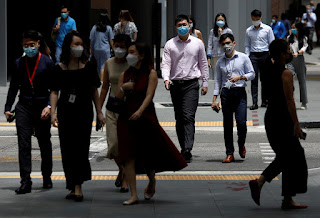
A study by a team of researchers has suggested that for households to reach the incomes they need for a basic standard of living, working parents with two children aged two to 12 will need to each earn $2,906 a month.

The study, titled What People Need in Singapore: A Household Budgets Study, also deduced that married couples with two children aged seven to 18 will need at least S$6,426 a month to meet their household’s basic needs. For a single parent with a young child aged two to six, they will need at least S$3,218 a month to meet theirs.

The study was done by the Lee Kuan Yew School of Public Policy (LKYSPP) at the National University of Singapore (NUS), Associate Professor Teo You Yenn, part of the six-person research team, said that the study defined a basic standard of living as having food, clothing and housing but also more than just these.


Report on minimum income standards not an accurate reflection of basic needs: Finance Ministry
The amount of government subsidies and financial support reflected in the report are what the median earner - not low-income families - receives. PHOTO: ST FILE

The Ministry of Finance (MOF) has flagged issues with a report by several academics on minimum income standards for households, saying those reading it should bear in mind the limitations of the approach researchers used.

"The conclusions may not be an accurate reflection of basic needs largely due to assumptions used," the ministry said in a statement on Friday (Oct 8). It pointed out that the methodology used to arrive at the Minimum Income Standard (MIS) is highly dependent on group dynamics and the profile of the participants. "With most participants having post-secondary education and 15 per cent living in private properties, the findings expressed may not be reflective of the circumstances of the lower-income families," MOF added.

The study on household budgets, by a group of researchers from the National University of Singapore's Lee Kuan Yew School of Public Policy (LKYSPP) and Nanyang Technological University (NTU), found that a family of four, with parents, a pre-teen and a teenager, needs at least $6,426 a month to afford a basic standard of living. But a substantial and concerning proportion of working households in Singapore - about 30 per cent - do not earn enough to meet these needs, it noted.


52,000 Singaporeans earn less than S$1,300 a month
The Workers' Party recently argued in Parliament for a minimum wage of S$1,300 to be implemented in Singapore, but the Government rebutted that this could lead to higher unemployment as businesses here may face unsustainable higher costs

The issue of a minimum wage came up again in Parliament on Tuesday (Nov 3), this time with Minister of State for Manpower Zaqy Mohamad and Workers’ Party Member of Parliament Jamus Lim crossing swords over the amount of S$1,300.

Dr Lim, an MP for Sengkang Group Representation Constituency (GRC), had asked how many Singaporeans earn S$1,300 or less a month on a take-home basis, excluding employer and employee central provident fund (CPF) contributions and other deductions of income.

In response, Mr Zaqy said it was not meaningful or accurate to provide the number, as payouts from the CPF is also part of one’s income.


How can anyone survive on less than $1,300 in Singapore?

Dr Ho Ting Fei wrote a letter to ST Forum which was published today asking how can anyone survive on less that $1,300 in today’s Singapore (‘Forum: How can anyone survive on less than $1,300?‘, 21 Oct). With regard to the current debate between PAP and WP MPs on setting a minimum wage in Singapore, Dr Ho said, “The priority should not be to defend the statistics and policies on why there should not be a minimum wage level.” “Instead, one should first consider how any one individual or family can survive on less than $1,300 a month when the cost of living in Singapore is notoriously high,” she added.

She shared that there are currently 32,000 or so full-time workers who urgently need help. They should not be tossed around as statistics whenever the topic of minimum wage is raised, she opined. “$1,300 a month would not solve all their daily needs but it is a good start to give them some hope,” she said. “If we do not lift these 32,000 workers out of the pit of low wages, it is futile to talk about upgrading their skills. If we cannot help them put food on the dinner table or provide for their basic needs, it is futile to talk about increasing productivity.”

She asked the government to be “practical and realistic”. “These are our fellow Singaporeans who are poor and desperate. These are people we should not ignore regardless of the number,” she added. “The question is whether we give them the dignity and respect they deserve.”


Elderly in Singapore need S$1,379 a month

An older person above 65 years old needs S$1,379 a month to meet his or her basic needs, according to a team of researchers from the Lee Kuan Yew School of Public Policy (LKYPP).

This precise figure came from a study by the team led by Assistant Professor Ng Kok Hoe from LKYPP, National University of Singapore (NUS). They revealed their findings in a media release on Wednesday (May 22).

The household budgets necessary to meet basic needs were S$1,379 per month for single elderly households, S$2,351 per month for elderly couples, and S$1,721 per month for a person aged 55 to 64 years old, the study said.


Singapore’s Elderly Working Poor

A video of an elderly Singaporean, who appears to have difficulty walking, clearing tables at a food court is going viral online. The video, which was published on social media last week by Facebook user Melvin Tan, has already accumulated over 270,000 views.

In the video, an elderly man can be seen moving slowly and shuffling forward while he pushes a tray that holds dirty dishes. In the crowded food court, he can be seen approaching a table and clearing a coconut drink that a patron left behind. Sharing that the video shows “the elderly in Singapore working hard,” Mr Tan indicated that he felt emotional at seeing the senior citizen doing such work in his twilight years.

Netizens responding to the post were also heartbroken and said that it is devastating to see older Singaporeans having to work so hard instead of being able to rest and retire.

related:
1,000 street homeless found in Singapore
The Surprising Truth About The Homeless In Singapore
Tent Village: Singapore’s nomad families
Singapore: Best Place to Live and Work
Plight Of The Tissue Peddlers
Have you ever Spoken to a Cardboard Uncle or Aunty?
Singapore’s Story: What comes next
Singapore at 50: From swamp to skyscrapers
Singapore Good Old Times
The Poor & Homeless in Singapore
Support for the Needy and Elderly
The Singapore Story
Other Side of The Singapore Story

Chasing The Singapore Dream
To Be Or Not To Be Singaporeans
Longing for the good old days
Singapore: A Sampan or a Cruise ship?
Singapore at 50: From swamp to skyscrapers
Singapore is ‘World’s Costliest City To Live In’
Coping with Inflation & Cost Of Living
COL goes Up, Up, Up!
Singapore “Swiss” Standard of Living
Tackling poverty the 'kuih lapis' way
Callings for a Poverty Line
Setting a poverty line may not be helpful
A minimum wage for Singapore?

No homeless,destitute starving people in S'pore:Poverty eradicated
Growing Up With Less
Singapore Is The World’s Most Expensive City
Singapore still the best country for expats

08/10/2021

Teochew 潮州 People and Their Culture


A Shout-out to the Gaginan

Residing in South China for about 1,700 years, the Teochew (Chaoshan in Mandarin) people are one of three ethnic groups who have lived in these lands for generations. Though they have long shared the region with the Cantonese and Hakka, they still maintain their own language and have inherited a unique culture.

According to modern Chinese geography, the Chaoshan region generally refers to the cities of Chaozhou, Shantou, Jieyang and Shanwei, located in the southeastern part of Guangdong province. People from this area refer to each other as gaginan (Teochew transliteration), or ‘my own people’ in English. 

One of the foremost characteristics ascribed to the Teochew is an instinct for trade and business, no matter if it’s a neighborhood grocery store or a global corporation. Amongst a long list of well-known Teochew entrepreneurs, the most notable are Li Ka-shing, formerly the richest man in China, and Ma Huateng, founder of Tencent, the company that created the almighty WeChat and QQ.


Singaporean woman on how she found her way back to her Teochew roots
Her then-three-year-old daughter’s fixation on Teochew opera led Eileen Hair on a path to rediscovering her roots

For younger Chinese Singaporeans, joining a clan association is something not many would consider. Especially taking into account that many of us can barely hold a conversation in our dialect.

But for Eileen Hair, who is the section head of the event management course at ITE College Central, joining the Teochew clan association in 2018 was like fulfilling her calling. However, what prompted the 43-year-old’s quest for membership at Teochew Poit Ip Huay Kuan wasn’t because she was encouraged to do so by her grandparents, nor was it out of a need to network with other businessmen in the clan.

It was her then-three-year-old daughter’s unexpected interest in Teochew opera at the 2016 Teochew Festival that encouraged Hair to dig deeper into her roots.


Teochew Festival moves into virtual village with beauty pageant and over 100 hours of opera
The website features over 100 hours of Teochew opera, nursery rhymes, and excerpts from operas, performed by both local and foreign troupes. PHOTO: TEOCHEW.SG

This year's Teochew Festival will occupy an entire village, albeit an online one.

The village has 12 virtual zones showcasing and teaching elements of Teochew culture like opera, arts and crafts, language learning and tradition.

Organised by the Teochew Poit Ip Huay Kuan and music and drama association Nam Hwa Opera, the virtual village opened on Friday (Nov 5) with Deputy Prime Minister Heng Swee Keat as the guest-of-honour.

07/10/2021

Some of the oldest Chinese temples in Singapore

Built in the early tumultuous years
Clockwise from top left: Ying Fo Fui Kun temple, Lian Shan Shuan Lin Monastery, Thian Hock Keng temple and Fuk Tak Chi temple

A tiny country bursting with diverse cultures, Singapore is home to more than 1,000 Taoist and Buddhist temples mainly dedicated to its large Chinese community, with one of the earliest built not long after the British established a port here in the early 1800s.

The Fuk Tak Chi temple, for example, was built in the 1820s by a group of Cantonese and Hakka-speaking Chinese settlers in the middle of what is now Singapore’s business district. The temple’s signature architectural style, which includes floral roof motifs, is reminiscent of temples in Fujian, China, and stands out among the row of shophouses along Telok Ayer Street near Chinatown. Taken together, the city’s tapestry of Chinese temples are easily mistaken for a mismatched and motley collection of competing styles. But look deeper and find they speak to the identities of those who made Singapore home, bringing their architecture and preferences with them to be shaped by a common community sometimes at odds with itself. We talked to a temple guru about their history, why they differ architecturally, how they came to be, and where to find them today.

Beyond being places of worship, these elaborately decorated monuments are also places for people to socialize within the different Chinese groups and clans. Singapore is predominantly made up of Chinese, whose predecessors came from families that spoke different dialects, with Hokkien being the most common, followed by Teochew, Cantonese, Hakka, and many others. Different dialects have different tones and pitches, with Mandarin having four tone levels, while Hokkien and Teochew have eight, Hakka six, and Cantonese nine.


Thian Hock Keng
158 Telok Ayer Street, Singapore 068613

Thian Hock Keng (天福宫, ‘Palace of Heavenly Happiness’) is one of Singapore’s oldest Hokkien temples. It is located near Al-Abrar Mosque, Former Nagore Dargah, and Telok Ayer Chinese Methodist Church, standing on what used to be the shoreline of Telok Ayer Basin. In addition to its religious function, Thian Hock Keng is also a standing monument to the community spirit of Chinese pioneers in Singapore.

A Temple for All Tangren (唐人) - The temple’s history began when the first Chinese immigrants disembarked on the shore of Telok Ayer Basin, which lay along the present-day Telok Ayer Street. Upon their arrival, the Chinese – many from Fujian Province, China – visited a little shrine just in front of the shoreline to give thanks to Mazu (妈祖), Goddess of Seas, for their safe voyage. As the number of Chinese immigrants increased over the years, it was decided that a permanent temple should be built to replace the makeshift shrine.

Construction of the new temple began in 1839 and was completed three years later. All the building materials were imported from China, and the intricate carvings and decorations were all crafted by artisans who hailed from Fujian Province. The total building cost was estimated to be 30,000 Spanish dollars. Donations came mainly from wealthy Hokkien businessmen and community leaders. Inscribed on a granite tablet set in the wall of the entrance hall is a list of donors who contributed to the construction. Tan Tock Seng (陈笃生), a Malaccan-born pioneer and well-known philanthropist, was recorded to have given a handsome sum of 3,000 Spanish dollars and was the largest contributor of funds. While Thian Hock Keng is largely associated with the Hokkien community, it is evident from the same stele that the founding committee had desired it to be a temple for all tangren (唐人), that is, Chinese from all dialect groups.


Yueh Hai Ching Temple
30B Philip Street, Singapore 048696

Dwarfed by modern skyscrapers in the heart of the Central Business District is one of Singapore’s oldest Chinese temples, Yueh Hai Ching Temple (粤海清庙). Also known as Wak Hai Cheng Bio in Teochew, the temple serves as a reminder of the contributions of Teochew Chinese pioneers who arrived in Singapore shortly after the arrival of the British in 1819.

Teochew Temple - Teochew immigrants hailed from the Chaoshan region in South China, located in the easternmost Guangdong Province and bordering Fujian Province. When they first arrived in Singapore, the Teochew immigrants set up a small wood-and-attap shrine on what is known as Philip Street today, and offered prayers in thanksgiving to Mazu (妈祖), Goddess of the Seas, for her protection and blessings during the treacherous sea voyages from China. This explains the name of the temple, which in English means ‘Temple of the Calm Sea of the Guangdong (Yue) People’. It is believed that a man named Lin Pan (林泮) built a proper temple on the site of the makeshift shrine in 1826. Like other places of worship in Singapore, the temple also functioned as a social centre for immigrants.

Ngee Ann Kongsi (义安公司), which was established in 1845 to look after the religious needs and welfare of the Teochew community in Singapore, took over the management of the temple the same year. During its incipient years, the Kongsi was led by Seah Eu Chin (佘有进), a wealthy Teochew pepper and gambier merchant. Yueh Hai Ching Temple was subsequently rebuilt between 1852 and 1855 with funds collected from the growing Teochew community in Singapore. Some building materials were specially imported from China.


Fuk Tak Chi Museum
76 Telok Ayer Street, Singapore 048464

Visit Singapore’s first street museum – Fu Tak Chi Museum lovingly restored by craftsman from China and Malaysia to recreate the spirit of that era. Built in 1824 by the Hakka, Singapore’s oldest temple was dedicated to Tua Pek Kong catering to the religious needs of both the Confucianists and Taoists.

In 1998, the building was restored and converted into a museum featuring rich Chinese history and culture with artefacts on the lives of early Chinese migrants in Singapore.

Visit Fuk Tak Chi Museum's website for more information


Ying Fo Fui Kun Ancestral Temple
9 Commonwealth Lane, Singapore 149551

Resembling a land out of time, the cemetery and Ancestral Temple of Ying Fo Fui Kun (双龙山嘉应五属义祠) along Commonwealth Lane is Singapore’s last remaining Hakka burial ground. It was established by Singapore’s oldest Hakka Clan Association Ying Fo Fui Kun (应和会馆), located at 98 Telok Ayer Street, whereby the Association was started in 1822 by the Hakka immigrants from five districts of the Jia Ying county (Mei Xian, Jiao Ling, Wu Hua, Xing Ning, and Ping Yuan) in Guangdong province, China.

Once spanning an impressive 40 hectares, the cemetery and Ancestral Temple were established in 1887 as a final resting place for the family of clansmen from the Association. This was made possible with the efforts of Khek leaders and financial support from local and overseas clansmen.

The Ancestral Temple was designed in the traditional Chinese architectural style. A gabled roof topped with a ridge of ceramic tiles, and a sky well with enclosing halls on four sides allows temperature to be regulated.


Lian Shan Shuang Lin Monastery (Former Siong Lim Temple)
184 Jalan Toa Payoh, Singapore 319944

The traditional architecture of Lian Shan Shuang Lin Monastery (莲山双林寺) – or ‘Twin Grove Monastery on Lotus Hill’ – stands out amidst the modern high-rise apartment blocks in the Toa Payoh neighbourhood. The monastery complex houses one of Singapore’s oldest Buddhist temples and testifies to the spread of Mahayana Buddhism in the region.

Mystical Dream - The founding of Lian Shan Shuang Lin Monastery is attributed to Low Kim Pong (刘金榜), a successful merchant from Fujian Province, China, who made a fortune in Singapore through his herbal and private banking businesses. One night in 1898, Low dreamt of a bright golden light emanating from the west on the sea. The next morning, he was amazed to learn that his son had a similar dream. Seeing this as an omen, Low and his son spent their day waiting at the waterfront. Just before sunset, a boat approached the shore. Twelve Buddhist monks and nuns, who were on their return journey to China from a six-year pilgrimage to India, Ceylon (today’s Sri Lanka), and Burma (or Myanmar), disembarked from the boat. Low saw this as a fulfilment of his dream. He was so inspired that he pleaded with the clergy to stay, even pledging to construct a Buddhist monastery for their use.

On 7 May 1900, Low conveyed 12 acres of his land in Toa Payoh to Venerable Xian Hui (贤慧), one of the monks on the boat, and invited him to be the abbot of the new monastery. Construction began once the building plans were approved by the authorities. While Low bore much of the building cost, he also invited members of the public to make donations to the project.


Hong San See
31 Mohamed Sultan Road, Singapore 238975

Hong San See (凤山寺, ‘Temple on Phoenix Hill’), perched on the side of Institution Hill off Mohamed Sultan Road, was established by Hokkien immigrants from Nan’an (南安, or Lam Ann) County in Fujian Province, China. It exemplifies the spirit of solidarity and organisation of the early Hokkien community in Singapore and bears testimony to their contributions.

Temple for Immigrants from Nan’An - Led by Neo Lim Kwee (梁壬癸), a group of Hokkien pioneers from Nan’an established and constructed the original Hong San See on Tras Street in Tanjong Pagar in 1836. Neo was the father of Neo Chan Guan (梁赞元), a founding member of Keng Teck Whay. Hong San See, which shares the same name as its parent temple in Nan’an, also served as a social centre for early immigrants from Nan’an to mingle and seek help.

In 1907, the colonial government evicted the temple from Tras Street and acquired its land, offering its trustees 50,000 Straits dollars in compensation. The trustees then obtained a new site on Mohamed Sultan Road and constructed the present Hong San See between 1908 and 1913. Lim Loh (林路), also known as Lim Chee Gee (林志义) and Lim Hoon Leong (林云龙), was appointed to design and supervise the construction project. His son Lim Bo Seng (林谋盛) was recognised as Singapore’s war hero during the Second World War; a memorial was erected in his honour.


Leong San See Temple
371 Race Course Road Singapore 218641

Leong San See Temple (“Dragon Mountain Temple” in Mandarin) is one of Singapore’s most ornate Buddhist temples. It was established by Reverend Chun Wu in 1917, who arrived in Singapore in 1913 with only an urn and a statue of Guan Yin, the Goddess of Mercy. The temple was initially named Leong San Lodge and consisted of a few huts where Reverend Chun took care of the sick, with the central hut housing the Goddess of Mercy.

The present temple, a conserved building, was constructed in 1926 with building materials imported from China and funds contributed by prominent merchant and philanthropist Tan Boon Liat. The reconstructed temple has an altar with an image of Confucius, which is popular with parents who bring their children to pray for intelligence and filial piety. On certain days, free vegetarian food is served to devotees in the ancestral hall. The abbot of the temple in the 1950s, Venerable Sek Kong Hiap, had planned for a new temple next to Leong San See Temple. However, he realised that there was a more pressing need for a school and founded Leong San School within the temple compound in 1954. The school started with only four classrooms and provided free classes in Mandarin.

Enrolment at the school grew rapidly and eventually a plot adjacent to the temple was acquired. The Mee Toh School (with mee toh meaning “eternal brightness” in Mandarin) was built there, and its students often visited the temple to pray. In 2004, the school shifted to its new premises in Punggol, though it continues to be closely linked to the Leong San See Temple.


Hougang Tou Mu Kung
779A Upper Serangoon Rd

Hougang Tou Mu Kung (后港斗母宫) is the oldest temple in Singapore dedicated to the Nine Emperor Gods. The deities are known in Hokkien as Kew Ong Yah, which also gives rise to believers referring to the temple as the Kew Ong Yah temple (九皇大帝庙). The temple started in 1902 as a shrine at Lim Loh Village (present-day Wolskel Road), with incense ash brought from another Nine Emperor Gods temple in Penang. The temple’s early records showed that its worshippers were from various Chinese dialect groups including Hokkien, Teochew, Hainanese and Hakka.

In 1919, businessman Ong Chwee Tow donated the present site for the building of a new temple. The temple was completed in 1921 and originally designed in traditional Hokkien architectural style, with features such as pronounced curvatures of the roof ridges. Teochew architectural features such as straighter roof ridges were added in subsequent renovations and a permanent opera stage was erected in 1925. The temple is known for its Nine Emperor Gods festival held during the ninth month of the Chinese lunar calendar when the deities are believed to descend from the heavens to earth. The festival begins on the last day of the eighth lunar month with a procession from the temple to Sungei Serangoon to invite the deities into the temple. The deities would be sent off at the river with a grand procession on the last day of the festival.

In 2005, Hougang Tou Mu Kung was gazetted as a National Monument in recognition of its historical and social significance for both Hougang and the nation. Extensive works were launched in 2016 to preserve the building’s heritage and to better serve its worshippers. The main temple building was restored while new annexes, including a multi-storey block and an underground carpark, were added.


Chongyang Jie 重陽節 (Double Ninth Festival) 2021

The Chongyang Festival (or Chung Yeung Festival) is also known as the Double Ninth Festival as it falls on the ninth day of the ninth lunar month this year (Oct 7). According to the ancient Chinese divination text I Ching, this Double Ninth day has too much yang (active energy) and is therefore a“potentially dangerous day”.

Traditionally, people climb mountains, drink chrysanthemum wine, and carry the zhuyu (dogwood) plant for protection. Folks also go to parks to enjoy the beauty of chrysanthemums as the flower symbolises longevity. Drinking chrysanthemum wine is believed to ward off evil and block off disasters. The scent of the chrysanthemums and zhuyu is also said to repel insects and keep out the cold.

Although this annual festival is not celebrated in Malaysia, it is a traditional holiday celebrated in China, Hong Kong and Taiwan. In China, nine has a similar pronunciation to the word “forever”, which symbolises longevity.

read more

05/10/2021

Singapore passes FICA law to counter foreign interference


Update 8 Oct 2021: MHA asks 9 to correct false statements, apologise for misrepresenting minister's remarks on rule of law
Mr K Shanmugam's comments came towards the end of the 10-hour long debate where he was responding to MPs' remarks on the role of the judiciary in overseeing Fica. PHOTO: MCI

The Ministry of Home Affairs (MHA) has issued letters to nine entities, asking them to correct false statements and apologise for misquoting what Home Affairs and Law Minister K. Shanmugam had said on the rule of law in Parliament on Monday (Oct 4). These misrepresentations were also published by news website Mothership in its article on Wednesday (Oct 6).

As at Thursday (Oct 7) night, seven have corrected their posts and apologised for what they did, MHA said in a statement. Checks show the seven are activists Andrew Loh, Kirsten Han, Martyn See, Julie O'Connor, Kokila Annamalai and Lynn Lee, and Facebook page Wake Up Singapore. The other two are Peoples Voice chief Lim Tean and activist Jolovan Wham.

Mothership has also published an editor's note to clarify and correct the misrepresentation, the ministry added.


Singapore passes controversial law to counter foreign interference
Critics of the new law have raised concerns over its broad scope and limits on judicial review

Singapore has passed a controversial law aimed at countering foreign interference, in a move that critics say could be used to stifle dissent. It allows authorities to order social media sites and Internet providers to disclose user information or block content that could be carried out by foreign entities or local proxies.

Singapore says such a law is needed to counter "serious threats". The law was passed on Monday after 10 hours of heated parliamentary debate. But the broad scope of the Foreign Interference (Countermeasures) Act, also known as Fica, has sparked concern. "Today's passage of FICA constitutes a human rights disaster for community activists, independent media, and opposition politicians because it hands arbitrary power to the Singaporean government to punish anyone based on vague allegations of involvement with foreigners," Phil Robertson, deputy Asia director at Human Rights Watch, said in a statement.

"Using this law, the government can ... shut down viewpoints it doesn't like. Once again, Singapore demonstrates how little faith it has in its democracy by resorting to political measures better suited to authoritarian regimes that don't trust their people."


Singapore passes ‘most powerful’ foreign interference law amid fears of ever-shrinking space for dissent
Reporters record a speech by Singapore Prime Minister Lee Hsien Loong that was streamed on Facebook Live in July 2020 as votes in the general election were counted. (Roslan Rahman/AFP/Getty Images)

Singapore’s Parliament has passed a law aimed at countering foreign interference that is potentially so powerful rights groups and legal experts worry it could crush public debate in a city-state where authorities are already frequently accused of curbing civil liberties.

The law, approved late Monday after a 10-hour session, would allow authorities to compel Internet service providers and social media platforms to provide user information, block content and remove applications used to spread content they deem hostile. Groups and individuals involved in local politics can also be designated “politically significant persons,” which would require them to disclose foreign funding sources and subject them to other “countermeasures” to reduce the risk of overseas interference.

Legal experts say the law risks capturing legitimate civil activities undertaken by Singaporeans. The move is the latest in a series of legislation that critics say has reduced space for public debate. In 2019, the government targeted “fake news” with another far-reaching law; in a separate incident, a prominent anti-establishment news website went offline in September after its license was suspended.


EXPLAINED: 'Toy Gun' Or 'Totalitarian Leanings'? Why Singapore Law On Foreign Meddling Has Sparked Debate
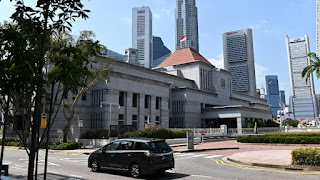
The Singapore Parliament. The FICA legislation was debated for 10 hours by Singapore lawmakers before it was passed

According to the words of the legislation, it is intended to “protect the public interest by counteracting acts of foreign interference". Singapore’s Law and Home Affairs Minister K Shanmugam said the aim is to “address a serious threat that concerns our national security and sovereignty".

The Act hands sweeping powers to designated authorities in Singapore to employ “countermeasures" targeted at preventing online publication and circulation of material deemed to be in violation of its terms and also requires individuals and entities regarded as being in a position to exert political influence to make disclosures of any foreign associations.

With a view to clamping down against ‘hostile information campaigns’, authorities can invoke FICA to order internet and social media companies to share user information, block content and also take down any app that is deemed to be exerting a subversive influence in Singapore’s political discourse, a threat that the government said was immediate and palpable.


Singapore passes law to tackle 'foreign interference,' giving authorities the power to block internet content

Singapore's Parliament has approved a law giving broad powers to the government to deal with foreign interference -- sparking concern from the opposition and experts about its wide scope and limits on judicial review. The small and open city-state, which says it is vulnerable to foreign meddling, targeted fake news with a far-reaching law in 2019.

The bill, formally known as the Foreign Interference Countermeasures Act (FICA), was passed late Monday local time with 75 members voting in favor, 11 opposition members objecting and two abstaining, local media reported.

Among the measures, FICA allows authorities to compel internet and social media service providers, as well as website operators, to provide user information, block content and remove applications. Those deemed or designated as "politically significant persons" under the law will have to comply with strict rules relating to donations and declare their links to foreign entities. Instead of court, an independent tribunal -- chaired by a judge -- will hear appeals against the minister's decisions, a move the government says is necessary to protect national security.


Singapore parliament approves law to tackle foreign interference

Singapore's parliament has approved a law that gives broad powers to the government to deal with foreign interference that has sparked concern from the opposition and experts about its wide scope and limits on judicial review.

The small and open city-state, which says it is vulnerable to foreign meddling, targeted fake news with a far-reaching law in 2019, and joins nations such as Australia and Russia that have passed laws in recent years to deter foreign interference.

The bill, formally known as the Foreign Interference Countermeasures Act (FICA), was passed late on Monday with 75 members voting in favour, 11 opposition members objecting and two abstaining, local media reported. Among the measures, FICA allows authorities to compel internet, social media service providers and website operators to provide user information, block content and remove applications.


Singapore passes law to counter foreign interference after 10-hour Parliament debate
The Fica Bill was passed with 75 MPs saying "yes", 11 MPs from the WP and PSP objecting, and two NMPs abstaining. PHOTO: ST FILE

A law against foreign interference was on Monday (Oct 4) passed by Singapore's Parliament after a 10-hour airing in the House, three years after it was first raised and three weeks after the extensive, hotly debated legislation was tabled.

"This Bill is intended to address a serious threat that concerns our national security and sovereignty," said Law and Home Affairs Minister K. Shanmugam.

"And these are important to ensure that Singaporeans continue to make our own choices on how we should govern our country and live our lives."


‘The most powerful law’ in Singapore: Foreign Interference bill brings concerns for civil society
The Fica bill will allow authorities to demand user information from internet companies and target people deemed to be collaborating with foreign actors

With Singapore imposing fresh Covid-19 restrictions in recent days amid surging new cases, the vaccine pacesetter’s stuttering approach to adhering to its once-vaunted “living with the virus” blueprint has been the talk of the town.

In all likelihood, that topic – heatedly being debated by residents on social media, online forums and sparsely occupied coffee shops – will be on the back burner when the country’s parliament convenes on Monday.

Instead, political observers expect the main action to come during the second reading debate on the draft foreign interference bill. Described by veteran political commentator Eugene Tan as having “the makings of being the most powerful law on our statute books”, the 249-page Foreign Interference (Countermeasures), or Fica, bill was introduced for a first reading on September 13.


Singapore Passes Contentious Law to Counter Foreign Interference
Law gives government new powers to block ‘harmful’ content

Singapore’s parliament passed a bill preventing foreign entities or individuals from influencing politics in the country, amid criticism from the opposition and rights groups who said the new law gives the government sweeping powers to target dissent online.

The Foreign Interference (Countermeasures) Bill, gives officials the authority to order social media platforms like Facebook Inc. and Internet service providers to disclose information behind harmful content they suspect may be carried out by foreign actors or entities. The government has long defended the need for such laws, saying Singapore is especially vulnerable to fake news and hostile information campaigns given that it is a financial hub with a multiethnic, international population that enjoys widespread Internet access.

“The threat we face, as I said, is people armed with bazookas and I describe this legislation as a toy gun. Singapore believes in the law, so we give ourselves legal powers,” Law and Home Affairs Minister K. Shanmugam said in parliament on Monday during a ten-hour debate. “But in reality the kind of threats we face, the kind of adversaries and the resources they have in terms of manpower, are far greater than what we have,” he added.


Singapore passes foreign interference law allowing authorities to block internet content
Experts have raised alarm the bill is a tool to crush dissent, with media watchdog saying it carries ‘the seeds of the worst totalitarian leanings’

After a marathon sitting, Singapore has passed a bill aimed at preventing foreign interference in domestic politics.

Singapore’s parliament has passed a law aimed at preventing foreign interference in domestic politics, which the opposition and activists have criticised as a tool to crush dissent.

The law, approved after a marathon session that stretched to near midnight on Monday, would allow authorities to compel internet service providers and social media platforms to provide user information, block content and remove applications used to spread content they deem hostile.


Parliament passes Bill to deal with foreign interference after 10-hour debate
A screenshot of Law and Home Affairs Minister K Shanmugam speaking during a debate on the Foreign Interference (Countermeasures) Bill in Parliament on Monday (Oct 4)

Legislation designed to counter foreign interference was passed in Parliament on Monday (Oct 4), with a majority of 75 to 11.

The Foreign Interference (Countermeasures) Bill (FICA), tabled in Parliament three weeks ago, seeks to prevent, detect and disrupt the use of hostile information campaigns and local proxies by foreign entities intending to interfere in domestic politics.

All People’s Action Party (PAP) MPs present voted for the Bill, as did four Nominated Members of Parliament (NMPs), while 10 Workers’ Party (WP) MPs and Non-Constituency Member of Parliament Leong Mun Wai from Progress Singapore Party (PSP) voted against it. Two NMPs abstained.


'Wholly incongruous' that govt did not seek public feedback on FICA: Pritam
Leader of the Opposition Pritam Singh addresses Parliament. (SCREENSHOT: Ministry of Communications and Information/YouTube channel)

It is "wholly incongruous" that the government did not seek public feedback on the controversial Foreign Interference (Countermeasures) Bill before introducing it in Parliament, said Leader of the Opposition (LO) Pritam Singh on Monday (4 October).

Addressing Parliament during the second reading of the Bill, Singh alluded to Prime Minister Lee Hsien Loong's remarks at the 36th People's Action Party (PAP) Conference last November, when he acknowledged that Singaporeans had expressed a desire for greater checks and balances, and that the PAP government must change and respond to these desires and expectations.

In this regard, said the Workers' Party chief, "it is wholly incongruous for the government to accept that the public of today desires greater checks and balances but then omits to seek public feedback on a Bill that does away with substantive judicial review." He added, "What is more perplexing is that we know the government had been mulling the introduction of this Bill for many months – why was it so difficult to undertake a period of public consultation before it was tabled for first reading?"


Singapore ruling party defends ‘foreign interference’ bill
The law, approved after a marathon session that stretched to near midnight, would allow authorities to compel internet service providers and social media platforms to provide user information, block content and remove applications used to spread content they deem hostile

Singapore’s ruling party late Monday passed a law aimed at preventing foreign interference in domestic politics, which the opposition and activists have criticised as a tool to crush dissent.

The law, approved after a marathon session that stretched to near midnight, would allow authorities to compel internet service providers and social media platforms to provide user information, block content and remove applications used to spread content they deem hostile.

Groups and individuals involved in local politics can be designated as “politically significant persons”, which would require them to disclose foreign funding sources and subject them to other “countermeasures” to reduce the risk of overseas meddling. Violators risk prison terms and hefty fines on conviction.


Shanmugam rubbishes claims that foreign interference bill is meant to make him 'most powerful man' in S'pore

During the debate on the proposed Foreign Interference (Countermeasures) Bill on Monday (Oct. 4), Minister for Law and Home Affairs K Shanmugam refuted several claims made by critics of the Bill.

Speaking in Parliament, Shanmugam brought up two people specifically: PJ Thum, Managing Director of socio-political site New Naratif, and freelance journalist Kirsten Han, the site's co-founder and former Editor-in-chief.

In his speech, Shanmugam also rubbished claims made in a recent commentary by Thum, who claimed that the bill could theoretically be used to launch a "stealth coup" organised by Shanmugam, in order to make the Home Affairs Minister the "most powerful man in Singapore".

related:


Cases where POFMA has been invoked
Health Minister orders POFMA correction directions to States Times Review, Facebook over COVID-19 post

Health Minister Gan Kim Yong has instructed that a correction direction be issued to Mr Alex Tan, the owner of the States Times Review (STR) Facebook page, said the Protection from Online Falsehoods and Manipulation Act (POFMA) Office on Friday (Feb 14). 

He also ordered that a targeted correction direction be issued to Facebook, which hosted the Feb 13 post by STR that is said to contain "multiple false statements" about the COVID-19 situation. STR's correction direction requires it to carry a correction notice alongside the article, while Facebook's targeted correction direction requires it to publish a correction notice on the relevant STR Facebook post.

Facebook had issued a correction notice last year for another STR post, in a first for the platform. According to a Factually article on the Gov.sg website, the COVID-19 post claimed five points that were "entirely false". 


An alternative way to curtail press freedom

Singapore has been coloured black on the World Press Freedom Index map since 2020, meaning the situation there is now is classified as “very bad”. Despite the “Switzerland of the East” label often used in government propaganda, the city-state does not fall far short of China when it comes to suppressing media freedom. Prime Minister Lee Hsien Loong’s government is always quick to sue critical journalists, apply pressure to make them unemployable, or even force them to leave the country.

The Media Development Authority has the power to censor all forms of journalistic content. Defamation suits are common and may sometimes be accompanied by a sedition charge that is punishable by up to seven years in prison. The political control is coupled with an economic straitjacket. Two business groups control all of Singapore’s print and broadcast media. One, MediaCorp, is owned by a state investment company. The other, Singapore Press Holdings, is supposedly privately-owned but the government appoints those who run it. As a result, self-censorship is widespread, including within the alternative independent media, which are intimidated by the judicial and economic pressure.

The red lines imposed by the authorities, known by Singapore’s journalists as “OB markers” (for out-of-bounds markers), apply to an ever-wider range of issues and public figures. After 2015, the authorities have also started sending bloggers emails threatening them with up to 20 years in prison if they don’t remove annoying articles and fall into line. Finally, the Orwellian provisions of the “anti-fake news” law adopted in 2019 forces all media outlets and digital platforms to post “corrections” to any content that the government may arbitrarily deem to be “incorrect”. This censorship bureau 2.0 has enabled the government to impose its own version on a range of subjects including the death penalty, the salary paid to the prime minister’s wife, and its handling of the Covid-19 crisis.


Full Coverage:
Singapore ruling party defends 'foreign interference' bill
Singapore parliament debates bill to tackle foreign interference
Foreign interference Law passed after long debate over its extensive powers
Singapore parliament approves 'foreign interference' bill
Singapore Passes Contentious Law to Counter Foreign Interference
WP chief Pritam Singh calls for more checks in law on foreign interference
Parliament debates proposed law to counter foreign interference
More checks and balances needed in proposed foreign interference law
Sun Xueling on Foreign Interference (Countermeasures) Bill
Shahira Abdullah on Foreign Interference (Countermeasures) Bill
Singapore’s racial mix 'easily exploitable' by different countries: Shanmugam
WP questions speed at which foreign interference Bill was tabled
S'poreans who join foreign political parties must declare under foreign interference
Pritam Singh on Foreign Interference (Countermeasures) Bill
Not true that FICA seeks to curtail 'normal interactions' with foreigners
Singapore parliament to debate ‘foreign interference’ law
Few Singaporeans aware of 'serious threat' of foreign influence operations
Proposed foreign interference law considered for over 3 years: Shanmugam
'Wholly incongruous' that govt did not seek public feedback on FICA: Pritam
Singapore parliament to debate bill to tackle foreign interference
Gerasimov Doctrine?Spamouflage Dragon?10 unusual terms from the Fica debate
Calls for public consultation and more accountability among objections to Fica
Separation of powers, rule of law fundamental principles,need to 'look at what works'
'No angels in this game': How foreign govts influenced politics in other countries
Law grants new extraterritorial powers to pursue overseas actors, online platforms
Spore’s foreign interference bill passed opposition calls for more judicial oversight
Foreign interference in Singapore extensively discussed since 2018
Foreign interference 'far greater risk' than rogue government abusing power
Following Australia, Singapore approves its own foreign interference law
Singapore passes law to counter foreign interference in domestic politics
Petition to delay Singapore's Foreign Interference Act fails to put off debate
Singapore ruling party defends 'foreign interference' bill
Singapore parliament to debate 'foreign interference' law
Parliament passes Bill to deal with foreign interference
Singapore passes law to counter foreign interference after 10
Spore’s foreign interference bill passed,opposition calls more judicial oversight

Anti-foreign interference Bill already has proportionality

‘The most powerful law’ in Singapore: Foreign Interference bill sparks concern
Zaqy Mohamad on petition on Foreign Interference
Sharael Taha on Foreign Interference (Countermeasures) Bill

Xie Yao Quan on Foreign Interference (Countermeasures) Bill

Liang Eng Hwa on Foreign Interference (Countermeasures) Bill

Anti-foreign interference Bill - 3 areas of concern, Opinion

Tan Yia Swam on Foreign Interference (Countermeasures) Bill

Zhulkarnain Abdul Rahim on Foreign Interference

Seah Kian Peng on Foreign Interference (Countermeasures)

Singapore's foreign interference bill – legal monstrosity

Parliament to debate proposed law to counter foreign

WP proposes changes to S'pore's draft anti-foreign

Darryl David on Foreign Interference (Countermeasures) Bill

Louis Ng on Foreign Interference (Countermeasures)

Singapore's draft anti-foreign interference law

Singapore Proposes Online Foreign Interference Bill

Singapore introduces bill to counter foreign interference

Singapore's main opposition party seeks changes to foreign

How real is the threat of foreign interference?

Workers' Party proposes amendments to foreign interference

Singapore parliament to debate bill to tackle foreign

Draft law doesn't bar meetings by groups with foreigners who
Spore tables new foreign interference law citing cases in Australia, EU
With New Law, Singapore Takes Aim at 'Foreign Interference'

Draft law upgrades S'pore's arsenal against foreign

Tan Cheng Bock: Foreign interference legislation shouldn't be

Maruah, Think Centre criticise draft foreign interference law

Singapore Introduces Proposed New Laws to Counteract

He Ting Ru quotes Pritam Singh on FICA checks & balances

How other countries have thwarted foreign interference

In new bill, designated 'Politically Significant Persons' must

FICA could affect perceptions of Singapore as global hub

Singapore Parliament to Debate Bill to Tackle Foreign Interference

Home Affairs Minister to get powers & tools to negate hostile
Spore's Newly Proposed Law Against Foreign Interference Includes Content

Spore government tabled the Foreign Interference (Countermeasures) Bill