Dabu County: The Ancestral Place of Lee Kuan Yew and Overseas Hakka

A trip to Dabu County of Meizhou Municipality in Guangdong Province, exploring the Hakka history, houses and heritage.
Why is the ancestral house of Lee Kuan Yew a Chaoshan-style house? Check out the video.
LKY already has a memorial to his name in Chinese region he has never visited

The Founders’ Memorial notwithstanding, there is already a memorial to the first Prime Minister of Singapore, Lee Kwan Yew. Mr Lee, on the other hand, had been known to say that he had no wish for a monument dedicated solely to himself. In Parliament on April 13, 2015, however, his son, now Senior Minister Lee Hsien Loong, called to honour his father but said that his father had been conscious that he had been part of a team that worked together to build the city-state. “One idea that has been suggested is to have a memorial for all of the founding fathers, perhaps coupled with an exhibition gallery to honour their legacy and educate future generations.
Indeed, Mr Lee himself had thought that there was value in such a memorial,” he said. The project broke ground last month and is set to open in 2028. The Business Standard reported two days after Mr Lee’s death on March 23, 2015, that many Chinese were coming to Mr Lee’s ancestral home in droves to pay homage to him. The report said that the village is located 500 kilometres away from Guangzhou “in search of a glimpse” into his life. It described the ancestral home as made of brick and wood, having been constructed in the traditional Chinese style in 1884 by Mr Lee’s great-grandfather, Li Muwen, with his earnings from Singapore. The home was called Zhonghandi. It also noted that the Lee family descended from the Hakka, a subgroup of China’s Han community, and came to Singapore in the middle of the 18th century. Local authorities refurbished the home and its surroundings between 2007 and 2008. Exhibitions of the Lee family tree, Mr Lee Kuan Yew’s family and political accomplishments, and an introduction to Mr Lee Kuan Yew were also set up within the structure.
In 2016, the year after Mr Lee passed away, authorities in Dabu County in Guangdong said that his ancestral home would be turned into a tourist attraction. Hong Kong’s Wen Wei Po daily reported at the time that the site would become an international rural tourist destination that incorporated Chinese Hakka cultural characteristics. A total of 40 million yuan, then equivalent to S$8.8 million, was allocated for the endeavor. Constructing the site had begun the previous year, and the first phase, Lee Kuan Yew Memorial Hall, was set for completion by the end of 2016.
A glimpse into the private life of Lee Kuan Yew

Lee Kuan Yew (back row, centre) outside his Norfolk Road home in 1936 with siblings (front, from left) Suan Yew, three; Monica, seven; Freddy, nine; and Dennis, 11; and parents Chua Jim Neo, 29; and Lee Chin Koon, 33
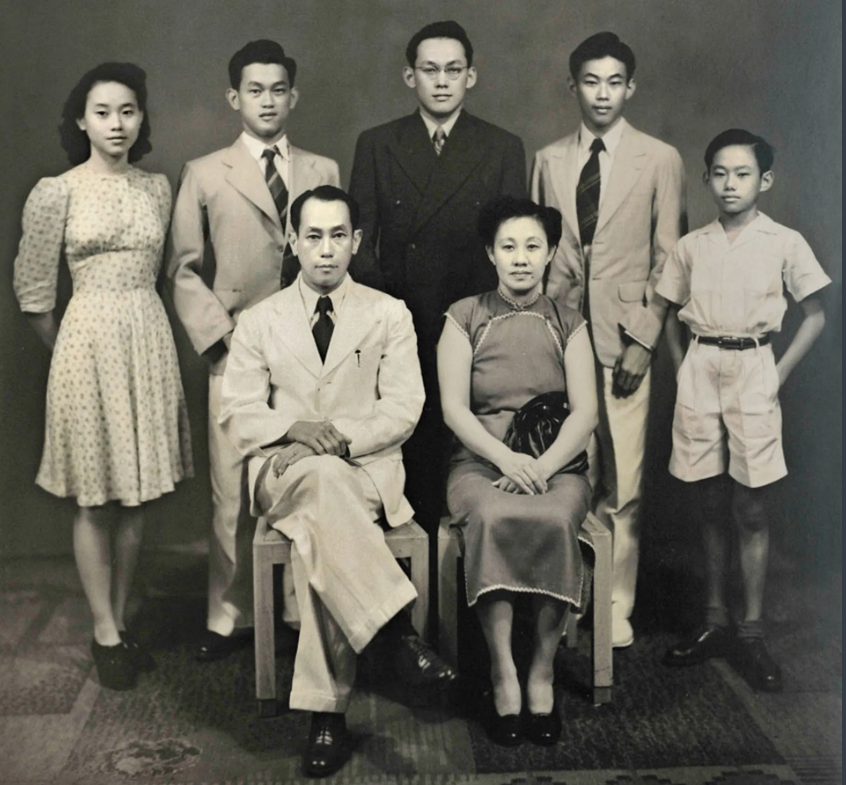
The night before Mr Lee (standing, centre) left for England, his family had a steak dinner at Pavilion Steakhouse in Orchard Road before walking to nearby Lloyd Studio for this family portrait, taken in 1946. (Clockwise from top left) Siblings Monica, Dennis, Freddy and Suan Yew, and parents Chua Jim Neo and Lee Chin Koon. Source: Lee Kuan Yew

Mr Lee asked his cousin Harold Liem to take photos of him and Ms Kwa together on Sept 5, 1946, in anticipation of the three years the couple would be apart while he studied law in England and she remained in Singapore

The couple, seen here in academic robes, graduated from Cambridge University on June 21, 1949, and was called to the Bar a year later

Mr Lee on a marine patrol boat named Tekong with (from left) Hsien Loong, Wei Ling, Hsien Yang and Mrs Lee on a Sunday outing in 1965. Source: Lee Kuan Yew
Growing up in colonial Singapore, Mr Lee Kuan Yew was like any typical child – footloose and fancy-free. The boy who would grow up to become prime minister would catch fighting fish from drains, fly kites and take leisurely swims in the sea. Born on Sept 16, 1923, to a wealthy Straits Chinese family, he was the eldest of five children of Shell Oil Company depot manager Lee Chin Koon and Mrs Chua Jim Neo. In 1935, he topped his school in an islandwide examination and clinched a place at the prestigious Raffles Institution. He was active in scouting, playing cricket and tennis, and debating.
Four years later, he came in first in Singapore and Malaya in the Senior Cambridge examinations, winning a scholarship to read English, economics and mathematics at Raffles College. His education was interrupted by World War II. A resourceful survivor, he found work as a clerk and an English-language editor for the Japanese propaganda department. He traded food on the black market, started a stationery gum business with Mr Yong Nyuk Lin in 1944, where he met Mr Yong’s sister-in-law, Ms Kwa Geok Choo, a former Raffles College classmate whom he started dating.
After the war, Mr Lee sailed for England in 1946 on his 23rd birthday. He enrolled in the London School of Economics to read law but transferred to the more idyllic Cambridge University the next year. Ms Kwa won the Queen’s Scholarship and joined Mr Lee at Cambridge in 1947 to read law. Eager to start their life together, Mr Lee and Ms Kwa married secretly on Dec 23, 1947, at Stratford-upon-Avon. Both Mr Lee and his wife graduated from Cambridge on June 21, 1949, with first class honours, with Mr Lee winning the only star for distinction on the final Law Tripos II honours list. A year later, they were called to the Bar at Middle Temple and returned to Singapore on Aug 1, 1950.
They held their official wedding at the Registry of Marriages on Sept 30, 1950, and began married life at the Lee family’s two-storey bungalow at 38 Oxley Road. Both found jobs as pupils at Laycock & Ong in Malacca Street. Five years later, they founded their own law firm, Lee & Lee, with Mr Lee’s brother Dennis.
Mr and Mrs Lee have three children, Hsien Loong, Wei Ling and Hsien Yang, and seven grandchildren. Mrs Lee died on Oct 2, 2010, at the age of 89, and Mr Lee on March 23, 2015, at the age of 91.
Lee Kuan Yew In His Own Words

Singapore's founding prime minister Lee Kuan Yew was a man equally at home whipping up a crowd at a rally or commanding attention on the international stage. Known for his acumen, foresight and wit, he held his own with the brightest minds and most powerful leaders and laid the foundation for the country's success.
To commemorate the 100th anniversary of his birth on Sep 16, CNA looks back at 10 of his more memorable quotes that were synonymous with the country's milestones and development:
- On separating from Malaysia - For me, it is a moment of anguish because all my life ... You see, the whole of my adult life ... I have believed in Malaysian merger and the unity of these two territories.
- On taking a long-term view for Singapore - I am calculating not in terms of the next election ... I am calculating in terms of the next generation; in terms of the next 100 years; in terms of eternity.
- On how Singaporeans are not a people who can be bullied - You know, some people think: Oh well you know, we are a small place - they can put the screws on us. It is not so easy. We are a small place in size yes, geography.
- On how governing Singapore is not simply a game - Whoever governs Singapore must have that iron in him or give it up. This is not a game of cards. This is your life and mine.
- On micromanaging people's private lives - I am accused often of interfering in private lives of citizens. And I say without the slightest remorse that we wouldn't be here, we would not have made the economic progress if we had not intervened on very personal matters
- On what it takes to be a good minister - Remember this: Good ministers are not just those who kiss babies and smile and have dialogue sessions; you can have endless sessions, it's very good, you keep on listening and so on.
- On how political leaders are judged - Political leaders are judged, first, by how effectively they have exercised their authority in the interests of their people.
- On being an ardent advocate for Singapore's success - Even from my sickbed, even if you are going to lower me into the grave and I feel that something is going wrong, I will get up.
- On saving and investing for a rainy day - They say we got enormous reserves. Yes, we do. But, you know, a few years of a recession, an economic setback, and all that will suddenly be depleted.
- On what he cherished most - I cannot say I planned my life. That's why I feel life is a great adventure - exciting, unpredictable, and at times exhilarating and sometimes excruciating.


Born: 16 September 1923 / Died: 23 March 2015
Lee Kuan Yew Doppelganger Spotted At Coffee Shop On 18 May 2022

Resemblance Leaves Internet Shook
The term doppelganger is used to describe someone who is a spitting image of another, although they are entirely biologically unrelated. While it’s incredibly rare to meet one in person, it’s not entirely impossible, as seen in this video posted on 18 May.
In the clip, a man resembling the late Mr Lee Kuan Yew chows down on a meal at a coffee shop. Perhaps it’s the camera’s angle, but the uncanny resemblance left the Internet shook. The video, which a Facebook user shared in the Singapore Incidents group, left commenters reeling from laughter, and they spared no expense when cracking jokes.
One joked that the man was the late Mr Lee’s body double. He had probably lost his job since the Minister Mentor (MM)’s passing. With the latest release of the CDC vouchers, another person suggested that he might be taking the opportunity to use them to pay for his lunch. Considering how eerie it must be to see the likes of someone who has passed, a Facebook user said the OP should count his lucky stars that the encounter happened in broad daylight.
Iving Iving May 18

I don't think Mr Lee would want us to grieve over his passing. I think he would expect us to keep that spirit alive, and carry on with the work of building this nation. He would hope that all of us continue to stay united and think long term; be courageous and bold to find new ways and to try and try again until we succeed; and to leave no one behind, and always do our best for one another and for Singapore."
Remembering Lee Kuan Yew

Photograph by Tara Sosrowardoyo, National Museum of Singapore Collection
Mr Lee Kuan Yew died on March 23, 2015 at the age of 91. In his long years as Singapore’s first Prime Minister, he spearheaded policies that not only changed the country but also shaped the Public Service to be what it is today. As a tribute to the man and his ideas, the Challenge team has produced a special edition to commemorate his impact on the Public Service.
“As a young civil servant, Mr Lee’s leadership left a deep impression on me and I had the great privilege of watching, from close up, the way he handled many important issues, such as relations with major countries, in both good and bad times. For Mr Lee, if something was worth doing for Singapore and Singaporeans, it was worth doing it very well. We saw this, for example, in his dedication to the cause of the trade unions, so that workers can have a share in the fruits of the nation’s progress; his promotion of home ownership so that every Singaporean has a stake in the country; his personal attention to the greening of Singapore which he saw as a means of gifting to every Singaporean, no matter his station in life, a very conducive urban environment. The list is endless. As we mourn the passing of a great leader, an astute statesman and an exceptional Singaporean, let us seek to emulate his passion and dedication in serving Singapore and Singaporeans. Let that be Mr Lee’s legacy to the public service.”
“Mr Lee embedded in us the psyche of survival and security when it comes to water, and it has been our guiding principle in PUB ever since. I recall the most critical afternoon meeting with him (in 2002) when my officer and I had to persuade him that our water master plan with NEWater is the answer to our water challenge. In the midst of the discussion, he fell strangely silent for some time, deep in thought. Suddenly he turned to me and pointedly asked me, as if cross-examining me in a court of law, whether we could deliver on our plan to wean Singapore out of water dependency on imported water. After spending so many afternoons with him, listening to his intense concern for water, how else could I respond except to give him a resounding “Yes”. A man of his vision and passion demanded and deserved nothing less. I remembered so well his reaction. He fell back into his chair, became silent again for a long while, and then to my amazement, he gave a smile the likes of which I have never seen before from him. With that, he rose and left the meeting. I knew he had decided we could make it. I was left in awe at the very calculated way he weighs the risks and takes a firm decision with no turning back.”
Commemorative coin, exhibition among initiatives to mark 100th anniversary of Lee Kuan Yew’s birth

Singapore's former prime minister Lee Kuan Yew waves as he attends an event in Tokyo in 2011
A commemorative coin will be launched this year, along with exhibitions and other ground-up initiatives, to mark the 100th anniversary of former Prime Minister Lee Kuan Yew’s birth.
The late Mr Lee, Singapore's founding Prime Minister and co-founder of the ruling People's Action Party, was born on Sep 16, 1923. He died on Mar 23, 2015, at the age of 91. Speaking in Parliament on Tuesday (Feb 7), Minister for Manpower Tan See Leng said some government agencies have planned initiatives to pay tribute to Mr Lee. For instance, the Monetary Authority of Singapore (MAS) will issue a commemorative coin later this year “as a reminder of Mr Lee’s values and vision”, he said.
The National Heritage Board has an ongoing travelling exhibition for the Founders’ Memorial, which will be developed to commemorate the legacy of Singapore's pioneers. Later this year, the agency will put together a more extensive exhibition at the National Museum on key historical milestones. “This year also marks the 60th year of Singapore’s greening journey since Mr Lee launched the first tree planting campaign in 1963 and NParks will have various activities to mark this milestone,” Dr Tan said. "As our founding Prime Minister, Mr Lee Kuan Yew holds a special place in Singapore’s history," he told the House, adding that many groups from the community have also come up with ideas to pay tribute to him.
“Not appropriate” to celebrate LKY’s 100th birth anniversary given ongoing family feud

Ms Henson asserted the view that Mr Lee Kuan Yew did want his house at 38 Oxley Road demolished after his death which was the main point of contention in the brothers' feud
Veteran journalist Bertha Henson has suggested that it may not be appropriate to celebrate founding Prime Minister Lee Kuan Yew’s centennial birth anniversary, given the ongoing feud between the late elder statesman’s children. Her comment comes just days after Senior Minister Teo Chee Hean revealed that Mr Lee’s son and daughter-in-law, Lee Hsien Yang and Lee Suet Fern, are being investigated by the police for allegedly lying in a legal proceeding relating to his last will. Mr Lee Hsien Yang subsequently hit out at the continued “persecution” against his family by the Singapore authorities.
The police probe marks what some have perceived to be an escalation of a longstanding and bitter dispute between Mr Lee Hsien Yang and his estranged elder brother, current Prime Minister Lee Hsien Loong. Calling the latest development “wranglings,” Ms Henson – a heavyweight editor who spent 26 years at Singapore Press Holdings – wrote on Facebook yesterday (3 Mar): “Do we really want to celebrate LKY’s 100th birth anniversary given all this wrangling going on? Not appropriate methinks. He needs to rest in peace.” Asserting her view that Mr Lee Kuan Yew did want his house at 38 Oxley Road demolished after his death – the main point of contention in the brothers’ feud – Ms Henson added, “In any case, I doubt he would have wanted a celebration, just like I don’t doubt he wanted his own house demolished.”
The Government announced last month that it is putting together initiatives to pay tribute to the late Mr Lee Kuan Yew on the occasion of his 100th birth anniversary. Alongside exhibitions, publications and even an education fund, the Government is also set to launch a commemorative coin later this year “as a reminder of Mr Lee’s values and vision.” At the time, Ms Henson said on Facebook: “I wonder what LKY would make of all this…”

Do we really want to celebrate LKY’s 100th birth anniversary given all this wrangling going on? Not appropriate methinks. He needs to rest in peace. In any case, I doubt he would have wanted a celebration, just like I don’t doubt he wanted his own house demolished.
Lee Hsien Yang & Lee Wei Ling say LKY would have “cringed” at hero worship in commemorative coin, exhibition to mark 100th anniversary of his birth

"Papa was dead set against a personality cult and any hint of cronyism... He is a rare politician and leader, who did what he had to do with no thought to any gain for himself", she wrote
Lee Hsien Yang was quick to point out his sister’s comments that their father Lee Kuan Yew would have cringed at the hero worship just one year after his death. The younger Mr Lee’s comment came in response to an article shared by former ST editor Bertha Henson. Ms Henson shared an article titled ‘Commemorative coin, exhibition among initiatives to mark 100th anniversary of Lee Kuan Yew’s birth’. In her post, Ms Henson wrote: “I wonder what LKY would make of all this…”
Some in the comments section had tagged Prime Minister Lee Hsien Loong’s younger brother. Responding to them, the younger Mr Lee commented: “My sister Ling never minces her words”. He also referenced a Mothership article ‘Lee Wei Ling says her dad “would have cringed at the hero worship just one year after his death”‘. A commemorative coin will be launched this year, along with exhibitions and other ground-up initiatives, to mark the 100th anniversary of former Prime Minister Lee Kuan Yew’s birth.
The late Mr Lee, Singapore’s founding Prime Minister and co-founder of the ruling People’s Action Party, was born on Sep 16, 1923. He died on Mar 23, 2015, at the age of 91. Speaking in Parliament on Tuesday (Feb 7), Minister for Manpower Tan See Leng said some government agencies have planned initiatives to pay tribute to Mr Lee. For instance, the Monetary Authority of Singapore (MAS) will issue a commemorative coin later this year “as a reminder of Mr Lee’s values and vision”, he said. A year after her father’s death, on Mar 25, 2016, Dr Lee Wei Ling wrote: “Lee Kuan Yew would have cringed at the hero worship just one year after his death”. “Papa was dead set against a personality cult and any hint of cronyism”, she wrote.
The Oxley Saga Hasn’t Ended

Overwhelming Grief & Support For Lee Hsien Yang As He Flees The Country
The Oxley Road saga is a controversial dispute among Lee Kuan Yew’s children, over the fate of their family home. Lee Kuan Yew had expressed in his will that he wanted the house to be demolished after his passing. This is to prevent it from becoming a place of worship or a political shrine. However, Lee Hsien Loong argued that the house should be preserved as a historical monument. Lee Hsien Yang noted that his brother had political motivations for preserving the house and accused him of abusing his power as Prime Minister to influence the decision. The dispute became public in 2017 when Lee Hsien Yang and Lee Wei Ling accused their brother of abusing his power and of not fulfilling their father’s wishes. The government formed a ministerial committee to examine the options for the house. However, the siblings noted that committee was biased and lacked transparency.
In 2020, the government announced that it would not demolish the house, but would instead preserve it and open it to the public for visits. However, they did not only continue to go against Lee Kuan Yew’s wishes. They also continued to prosecute Lee Hsien Yang and Lee Wei Ling. He has been his sister’s caregiver ever since the death of their father. Yet he is forced to leave the country because his family has been subjected to harassment and smear campaigns. Lee Hsien Yang expressed sadness that he is “unlikely ever to be able to see my sister face to face again”, and it pains him “beyond words”.
The famiLEE feud hots up over LKY's last will

Mr Lee Hsien Yang and his wife Mrs Lee Suet Fern left Singapore and remain out of the country during the police's investigations, says Senior Minister Teo Chee Hean
Mr Lee Hsien Yang and his wife, lawyer Lee Suet Fern, are being investigated by the police for potential offences of giving false evidence in judicial proceedings over Singapore’s founding Prime Minister Lee Kuan Yew’s will.
As part of the investigations, the police requested an interview with the couple, and they initially agreed to attend the interview, said Senior Minister and Coordinating Minister for National Security Teo Chee Hean in a written parliamentary answer on Thursday (Mar 2). But the couple later had a change of heart and refused to attend the interview, Mr Teo added. In response to CNA's queries, the police said on Thursday night that it started investigations against the couple following a referral in October 2021.
The police contacted both of them in June last year and asked them to assist in investigations by attending a police interview. "They agreed to assist but requested a different date. The police acceded to the request and scheduled an interview in July 2022 based on their availability," the Singapore Police Force (SPF) said. But the couple did not turn up on the agreed date and sent a letter via email stating that they would not take part in the investigation. The police have advised them to reconsider taking part in investigations, but they left Singapore and have remained out of the country, said Mr Teo. In a Facebook post on Thursday night, Mr Lee Hsien Yang responded to the latest developments by claiming that the "persecution of my family by Singapore authorities continues unabated" and that he "was the real target".
The famiLEE feud: PM Lee "I'm not sure that it is solved"
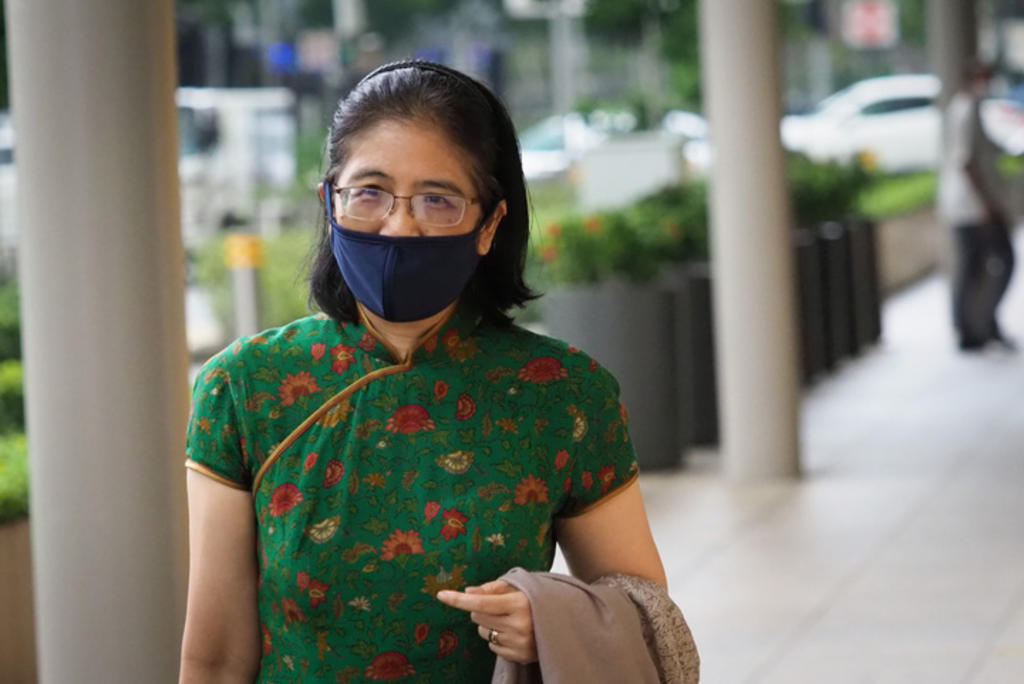
Ms Kwa Kim Li (pictured), a managing partner at law firm Lee and Lee, prepared the wills for the late Lee Kuan Yew
The siblings of Prime Minister Lee Hsien Loong are seeking the convening of a disciplinary tribunal to investigate the conduct of their cousin, Ms Kwa Kim Li, who prepared six wills for their late father Lee Kuan Yew. Ms Kwa, a managing partner at law firm Lee and Lee, prepared the wills for Lee Kuan Yew, Singapore’s founding prime minister, between Aug 20, 2011 and Nov 2, 2012.
Court documents obtained by TODAY showed that Dr Lee Wei Ling and Mr Lee Hsien Yang, who are executors and trustees of Lee Kuan Yew’s estate, filed the High Court application against the Law Society (LawSoc) on Sept 21 last year. The Lee siblings’ application states that an inquiry committee investigated Ms Kwa following three complaints made in 2019.
The application seeks an order from the High Court directing the LawSoc to apply to Chief Justice Sundaresh Menon “for the appointment of a disciplinary tribunal for a formal investigation into the conduct of Ms Kwa Kim Li” over three of the 2019 complaints.
MAS unveils commemorative S$10 coin to mark Lee Kuan Yew's 100th birth anniversary


The front of the coin features a dual latent image that shows the year 1923 when viewed from one angle and the year 2023 when viewed from another. (Image: Monetary Authority of Singapore)
A commemorative S$10 coin marking the 100th birth anniversary of Singapore's founding Prime Minister Lee Kuan Yew was unveiled by the Monetary Authority of Singapore (MAS) on Monday (May 15). Minted in aluminium bronze, the gold-coloured LKY100 coins will be available at face value by application. The coins will have a diameter of 30mm, making them about 22 per cent larger than the Third Series S$1 coins currently in circulation.
"The coin pays tribute to his strategic vision, boldness and indomitable spirit that transformed Singapore from a regional trading port to a global manufacturing, business and financial hub, creating opportunities for all Singaporeans," MAS said in a news release. "The design features a portrait of Mr Lee Kuan Yew, accompanied in the foreground by the Marina Barrage, representing Mr Lee's vision to build a freshwater reservoir in the city, strengthening Singapore's water resilience," the central bank added, describing the design on the coin's reverse.
"The backdrop is the skyline of the Raffles Place financial district, and two heritage buildings which have witnessed significant milestones in Singapore's history – Fullerton Hotel (formerly the Fullerton Building/General Post Office) and National Gallery Singapore (formerly the Supreme Court and City Hall)." In addition to the Singapore Coat of Arms, the front of the coin features Mr Lee's name, his years of birth and death, the words "100th Birth Anniversary" and a dual latent image that shows the year 1923 when viewed from one angle and the year 2023 when viewed from another. The coin was designed by local artist Weng Ziyan, whose previous works include banknotes commemorating Singapore's 50th year of independence, Singapore's bicentennial and the 50th anniversary of the Brunei-Singapore Currency Interchangeability Agreement.
Lee Kuan Yew medallion range to mark his 5th death anniversary “temporarily suspended” by Singapore Mint

Just hours after launching a series of medallions and busts dedicated to the founding prime minister Lee Kuan Yew, The Singapore Mint has decided to “temporarily suspend” the range. At around 12.45pm on Monday (2 March), The Singapore Mint revealed in a statement that it had released medallions with the face of founding prime minister Lee Kuan Yew’s face engraved on it, as well as busts resembling him to mark his fifth death anniversary.
Titled “The Pride of Singapore Lee Kuan Yew”, the series comprises of four commemorative gold, silver, and base-metal medallions, and made-to-order copper busts that come in two sizes. This latest range is part of the Singapore Salute collection. The ½ oz 999.9 fine gold and 1 oz 999 fine silver medallions in an oval shape are engraved with late Mr Lee portrait on it. The copper and nickel-plated zinc medallions also have pictures of sampans and Singapore’s skyline on the other side, showcasing the country’s development from its earlier days. As for the copper busts, they come in two different sizes – 110mm and 430mm.
Based on the Singapore Mint, the collection is “meticulously engraved and sculpted by the Singapore Mint’s master engravers with their skillful craftsmanship”, with a “dignified interpretation” of late Mr Lee’s image. “Mr Lee’s great foresight and determined pursuit of Singapore’s growth have played an important role in bringing Singapore to where it is today, and shaping the history of modern Singapore.” It continued, “The Pride of Singapore medallion range also seeks to remind Singaporeans to be resilient and indomitable to concur challenges and adversity in unity”. However, as of 7pm on the same day of the launch, the medallions and busts, priced between S$10 and S$1,888, were not available for orders anymore on The Singapore Mint’s website. The website has now a notice saying, “We have temporarily suspended this program until further notice.”
Parliamentary Statement by PM Lee Hsien Loong on calls to honour Mr Lee Kuan Yew, on 13 April 2015

During the month of Mr Lee Kuan Yew’s final illness, and the week of National Mourning after he passed away, Singaporeans experienced a tremendous outpouring of emotions – gratitude, sorrow, and solidarity. People prayed for, grieved over and paid their last respects to the founding father who had done so much to create today’s Singapore. Many wrote touching messages in condolence books and cards, and made special tribute books and items. During the Special Session of Parliament, Members spoke movingly about Mr Lee’s contributions, what he meant to them, and their personal experiences of him. I thank this House, and all Singaporeans, for their tributes to my father.
Those of us who lived through this special moment in our history, and experienced this sense of togetherness in our shared grief, will remember it for the rest of our lives. Mr Lee’s passing brought us closer together as one people and intensified our sense of nationhood. It was his last gift to us. How should we remember and honour him – his person, his contributions, his ideals? Members of the House and the public have made many suggestions. There were several questions on the Order Paper today. Ms Foo Mee Har and Dr Lily Neo suggested printing his image on our currency notes and coins; Mr Ang Wei Nang and Dr Lily Neo suggested re-naming Changi Airport after him; and Ms Foo Mee Har suggested designating a day to commemorate our founding fathers every year. And there are many more suggestions.
These are all good ideas. But we should not rush into making decisions on this matter, especially so soon after Mr Lee has passed away. We should allow some time to pass, consider the ideas carefully, and make calm, considered decisions which will stand the test of time. We want to honour Mr Lee, but we must do so in the right way:
- Ideals, not Monuments
- Currency Notes
- 38 Oxley Road
- A Founders’ Memorial

Lee Kuan Yew: I WILL GET UP!
related:
Remembering Lee Kuan Yew 2016
The famiLEE feud hots up over LKY's last will
The famiLEE tree
The famiLEE feud: PM Lee "I'm not sure that it is solved"
The famiLEE feud: AGC to start legal action on Li Shengwu for contempt
The famiLEE feud: AGC looking into FB post by Lee Hsien Yang's son
The famiLEE feud: Protest at Hong Lim Park
The famiLEE feud: Demolish the house, end the saga, let's move on
The famiLEE feud: LWL, LHY to stop presenting online evidence
The famiLEE feud: Lee Hsien Yang responds to Parliament Hearing
The famiLEE feud: Parliamentary Hearing on Oxley's Dispute
The famiLEE feud: PM Lee Hsien Loong's Ministerial Statement
The famiLEE feud: Why LHY is speaking up
The famiLEE feud: July 3 Parliament session a cover-up & whitewash?
The famiLEE feud: Not another minister on the Will again!
The famiLEE feud: Lee Hsien Yang & his wife in Hong Kong
The famiLEE feud: Rise of the 'First Lady'
The famiLEE feud: Govt 'Poking Nose' into Oxley's fate
The famiLEE feud: Will House Debate clear the air?
The famiLEE feud: PM apologises for family feud
The famiLEE feud: Sporeans sick tired of endless Oxley Rd allegations
The famiLEE feud: "Past three days"
The famiLEE feud: "Will of Wills"
The famiLEE feud hots up over LKY's last will
The famiLEE tree
The famiLEE feud: PM Lee "I'm not sure that it is solved"
The famiLEE feud: AGC to start legal action on Li Shengwu for contempt
The famiLEE feud: AGC looking into FB post by Lee Hsien Yang's son
The famiLEE feud: Protest at Hong Lim Park
The famiLEE feud: Demolish the house, end the saga, let's move on
The famiLEE feud: LWL, LHY to stop presenting online evidence
The famiLEE feud: Lee Hsien Yang responds to Parliament Hearing
The famiLEE feud: Parliamentary Hearing on Oxley's Dispute
The famiLEE feud: PM Lee Hsien Loong's Ministerial Statement
The famiLEE feud: Why LHY is speaking up
The famiLEE feud: July 3 Parliament session a cover-up & whitewash?
The famiLEE feud: Not another minister on the Will again!
The famiLEE feud: Lee Hsien Yang & his wife in Hong Kong
The famiLEE feud: Rise of the 'First Lady'
The famiLEE feud: Govt 'Poking Nose' into Oxley's fate
The famiLEE feud: Will House Debate clear the air?
The famiLEE feud: PM apologises for family feud
The famiLEE feud: Sporeans sick tired of endless Oxley Rd allegations
The famiLEE feud: "Past three days"
The famiLEE feud: "Will of Wills"
Social Media on the Late LKY’s children Online Squabble
Online squabble about "Hero-Worship" of the late Lee Kuan Yew
Family feud over how to mark LKY's death spills out online
New Law to Protect Lee Kuan Yew's Name and Image
Govt rebuts Lawyer's comments on QFLP scheme
Remembering Lee Kuan Yew 2016
LKY Passing: Good Intentions Gone Wrong
PM broke down in Parliament talking about his Dad
A State Funeral Service held for Mr Lee Kuan Yew
Former PM Lee Kuan Yew in the limelight
Lee Kuan Yew passes away on 23 Mar 2015
Lee Kuan Yew – The Man and his Legacy
Lee Kuan Yew in ICU with severe pneumonia
The Battle For Merger
Happy 91st Birthday Lee Kuan Yew from Singapore!
Singapore's Founding Father Hospitalised
Lee Kuan Yew turns 90
Lee Kuan Yew hospitalised: Suspected Transient Ischaemic Attack
Lee & Lee - The job has changed
"One World's View Of The Man"
Lee Kuan Yew on death: I want mine quickly, painlessly
A Post-LKY Singapore?
The politics of power dressing: Ho Ching
Li Hongyi & Li Shengwu: 2 latest Internet sensation from the Lee family
PM Lee’s Nephew Supports Pink Dot
Follow the rainbow: LKY’s grandson weds in South Africa
DBS branch in Hong Kong vandalised with vulgarities directed at PM Lee
S'pore PM Stirs Flap in Cambodia by Bringing up Vietnam’s 1979 Invasion
Online squabble about "Hero-Worship" of the late Lee Kuan Yew
Family feud over how to mark LKY's death spills out online
New Law to Protect Lee Kuan Yew's Name and Image
Govt rebuts Lawyer's comments on QFLP scheme
Remembering Lee Kuan Yew 2016
LKY Passing: Good Intentions Gone Wrong
PM broke down in Parliament talking about his Dad
A State Funeral Service held for Mr Lee Kuan Yew
Former PM Lee Kuan Yew in the limelight
Lee Kuan Yew passes away on 23 Mar 2015
Lee Kuan Yew – The Man and his Legacy
Lee Kuan Yew in ICU with severe pneumonia
The Battle For Merger
Happy 91st Birthday Lee Kuan Yew from Singapore!
Singapore's Founding Father Hospitalised
Lee Kuan Yew turns 90
Lee Kuan Yew hospitalised: Suspected Transient Ischaemic Attack
Lee & Lee - The job has changed
"One World's View Of The Man"
Lee Kuan Yew on death: I want mine quickly, painlessly
A Post-LKY Singapore?
The politics of power dressing: Ho Ching
Li Hongyi & Li Shengwu: 2 latest Internet sensation from the Lee family
PM Lee’s Nephew Supports Pink Dot
Follow the rainbow: LKY’s grandson weds in South Africa
DBS branch in Hong Kong vandalised with vulgarities directed at PM Lee
S'pore PM Stirs Flap in Cambodia by Bringing up Vietnam’s 1979 Invasion