Showing posts with label Mainstream Media. Show all posts

28/03/2025

DBS chief Piyush Gupta retires on 28 Mar 2025

DBS picks insider Tan Su Shan as first female CEO to succeed Piyush Gupta
Piyush Gupta, chief executive officer of DBS Group Holdings

DBS Group said on Wednesday that Tan Su Shan, the firm’s head of institutional banking, will succeed Chief Executive Piyush Gupta upon his retirement in March, making her the first female CEO of Singapore’s biggest bank. Tan, who joined the bank in 2010, will serve as the deputy CEO till then, DBS said in a statement.

CEO Piyush Gupta retires on 28 March 2025, when the bank hosts its next annual general meeting. The banking veteran spent her first three years in the firm building DBS’ wealth management and institutional banking businesses, which account for 90% of the company’s income. Tan’s appointment will also make her the first internal candidate to succeed as CEO, DBS Chairman Peter Seah told reporters in an earnings briefing on Wednesday.

The recent appointment ends a long period of conjecture about who would take over from 64-year-old Gupta, a prominent figure in Asian banking who has been at the helm of DBS for 14 years. Gupta has been instrumental in reshaping the bank’s culture and upgrading its technology to meet the challenges posed by emerging digital banking competitors.


Singapore's DBS chief Piyush Gupta to step down after 15 years
Tan Su Shan, right, was appointed DBS Group Holdings deputy chief executive on Aug. 7 and will replace Piyush Gupta, left, as CEO next year. They are pictured with DBS Chairman Peter Seah. (DBS Group Holdings)

DBS Group Holdings CEO Piyush Gupta, one of the highest profile bankers in Southeast Asia, will step down next year, the Singaporean lender said Wednesday, in what would be its first leadership change in 15 years. Gupta, 64, will be succeeded by Tan Su Shan when he retires at the next general meeting on March 28, DBS said. Tan was appointed deputy chief executive on Wednesday in addition to her current role as the group's head of institutional banking.

"Su Shan has worked closely with me for more than a decade to bring the bank to where it is today," Gupta said in a statement. "With her appointment, we can be assured that the trajectory of DBS' transformation will continue well into the future." Tan will become the first woman to lead Southeast Asia's largest lender by assets. With over 35 years of industry experience, the 56-year-old has also worked in other major financial centers including Hong Kong, Tokyo and London.

DBS said Tan's appointment was the culmination of a "decade long succession process." Tan joined DBS from Morgan Stanley in 2010 and spent her first years at the lender building its wealth management business. She subsequently managed its consumer banking, wealth management and institutional banking businesses, which account for 90% of the lender's income. "Leading the continued transformation of DBS is a tremendous privilege and responsibility," Tan said in a statement. "I am proud of the founding mission of DBS -- financing Singapore's growth -- and will continue to ensure that it is a brand that stands tall not just in Asia but also [on] the world stage."


DBS chief Piyush Gupta to retire in March 2025; veteran banker Tan Su Shan to take over
(From left) DBS’ chief executive Piyush Gupta, chairman Peter Seah and group head of institutional banking Tan Su Shan at a news conference on Aug 7

DBS Bank chief executive Piyush Gupta will retire in 2025 after 15 years at the helm of South-east Asia’s largest bank. DBS banker Tan Su Shan will replace Mr Gupta, 64, when he retires at the next annual general meeting on March 28, 2025. Ms Tan said: “I’m very grateful for this big opportunity. I’m also very mindful that this is a huge responsibility.” This will be the first time the bank has filled the top job internally.

The board has also appointed Ms Tan as deputy CEO, in addition to her present role as group head of institutional banking, it announced on Aug 7. Ms Tan, 56, has had more than 35 years of experience in consumer banking, wealth management and institutional banking, with stints in Hong Kong, Tokyo and London. She joined DBS in 2010 and spent the first three years building the lender’s wealth management unit before running the consumer banking and wealth business and the institutional banking division. The businesses account for 90 per cent of DBS’ income.

DBS chairman Peter Seah told the bank’s results briefing on Aug 7 that the board had engaged an independent consultant to assess candidates for the CEO role. The process started after Mr Gupta said in 2021 that he would like to retire by the time he turns 65 in 2025. Mr Seah said: “Su Shan stood out as the best... The board’s decision to appoint Su Shan was unanimous.” Other contenders for the role included DBS head of consumer banking group and wealth management Shee Tse Koon and Singapore country head Han Kwee Juan, according to various recent media reports. Mr Seah noted that Ms Tan “came in and built a very strong foundation for wealth management. She’s been a very well-respected private banker. She’s covered the two big parts of the bank that contribute the lion’s share of the bank’s income, and she has performed well”.


Piyush Gupta to step down as DBS CEO after 15 years in March 2025; Tan Su Shan, 56, to take over
Mr Piyush Gupta (pictured) joined DBS bank in November 2009

After almost 15 years as chief executive officer (CEO) of Singapore's biggest bank DBS, Mr Piyush Gupta will step down when he retires on March 28, 2025. The bank announced his imminent departure at its second-quarter financial results media briefing for 2024 on Wednesday (Aug 7).

The 64-year-old is set to be replaced by Ms Tan Su Shan, 56, the group head of institutional banking. The board has also appointed Ms Tan as deputy CEO in the interim. Before joining DBS in 2010, Ms Tan was managing director at investment banking giant Morgan Stanley. She was also a former Nominated Member of Parliament from 2012 to 2014.

Mr Gupta joined DBS in November 2009 after a 27-year stint at Citigroup, where he served as its CEO for Southeast Asia, Australia and New Zealand. Under his leadership, DBS had earned numerous accolades from various industry bodies, including the title of World’s Best Digital Bank in 2016 — awarded by Euromoney magazine for the bank’s efforts in digital innovation. It marked the first time that an Asian bank won a global accolade from the leading financial publication.


Piyush Gupta: The veteran banker who led DBS for 15 years

After 15 years at the helm of Singapore's largest lender, DBS CEO Piyush Gupta will leave his post. DBS announced on Wednesday (Aug 7) that Mr Gupta will retire at the next annual general meeting on Mar 28, 2025.

The bank's group head of institutional banking Tan Su Shan, 56, will succeed him. During an analyst briefing in May, Mr Gupta, 64, was asked about chatter in the market that he could retire this year. "No, I am not retiring this year," he responded at the time.

At a media briefing on Wednesday, Mr Gupta said that in 2021, he told the board that he wanted to retire at the age of 65. "43 years of a banking career, 15 years of having run DBS, and it would be a great time to pass the baton," he said.


DBS CEO Piyush Gupta's total pay dropped 27% to S$11.2 million in 2023
DBS CEO Piyush Gupta speaks during a Reuters Newsmaker event in Singapore on Sept 14, 2023

Piyush Gupta, CEO of Singapore's biggest bank DBS Group and one of the highest-paid CEOs in the city-state, saw his total compensation drop 27.3 per cent for 2023, according to the lender's annual report published on Wednesday (March 6).

Mr Gupta's total compensation fell to S$11.2 million in 2023 from S$15.4 million in 2022, the annual report showed. The lower total compensation followed a cut in variable pay to take accountability for last year's digital banking disruptions at DBS, even as Southeast Asia's largest lender posted a record 2023 profit with a return of equity of 18 per cent.

"Despite record 2023 profits and outperformance in many areas, the gaps in technology resiliency resulted in a lower scorecard appraisal by the Board compared to the previous year," the bank said in its annual report. DBS added that its falling short in technology resiliency and the resultant impact on customers and franchises "were taken into account when determining the scorecard performance of both the Group and the CEO".

related:

Timeline: DBS’ key milestones under CEO Piyush Gupta
Piyush Gupta, DBS' CEO, will retire at the bank's next annual general meeting on Mar 28, 2025

DBS announced on Wednesday (Aug 7) that its chief executive officer will retire at the next annual general meeting on Mar 28, 2025.

Piyush Gupta, who has been with the bank since 2009, will be succeeded by Tan Su Shan, who was appointed deputy CEO on Wednesday, in addition to her current role as group head of institutional banking.

Over the last 15 years, DBS has undergone a transformation under Gupta’s leadership. The bank simplified its management structure, expanded into regional lenders and digitalised its services. However, service was marred in recent years by a spate of online banking disruptions.


Piyush Gupta 高博德 Chief Executive Officer DBS Group

Mr. Piyush Gupta has been Chief Executive Officer and Director of DBS Group since 2009.

DBS is a leading financial services group in Asia, headquartered in Singapore. Recognised for its global leadership, DBS has been named "World’s Best Bank" by several global publications like Euromoney and Global Finance. The bank is at the forefront of leveraging digital technology to shape the future of banking and was also named “World’s Best Digital Bank” by Euromoney. In addition, in 2019, DBS was listed among the top ten most transformative organisations of the decade by Harvard Business Review.

Prior to joining DBS, Piyush had a 27 year career at Citigroup, where his last position was Chief Executive Officer for South East Asia, Australia and New Zealand.


Piyush Gupta
Born on 24 January 1960 (age 64) Meerut, Uttar Pradesh, India

Piyush Gupta BBM (Hindi: पीयूष गुप्ता; born 24 January 1960) is an Indian-born Singaporean banker and the chief executive officer (CEO) of DBS Group, the largest bank in Southeast Asia by total assets. He is vice-chairman of the Institute of International Finance, and a board member of Enterprise Singapore.

In 2009, he left Citigroup to join DBS Group as the CEO. As CEO, he received various business awards and has been credited with growing DBS to become a leading Asian financial services group.[8][4] Early on in 2013, Gupta also realized that DBS needed to start thinking like big tech. "Our frame of reference had to be Amazon or Alibaba. We had to stop thinking about what others banks will do. We had to start thinking about what big tech will do.

In 2024, he announced on August 7 that he would step down from his role on March 28, 2025. Tan Su Shan was appointed deputy CEO with immediate effect and will succeed him.


Ho Ching retires from Temasek Holdings on 1 Oct 2021
Ms Ho Ching will be appointed to Temasek Trust’s board of directors with effect from Oct 1, 2021, and take over as chairman from April 1, 2022

Retiring Temasek Holdings chief executive Ho Ching will be taking over as chairman of Temasek Trust from April 1, 2022.

Ms Ho, 68, will be appointed to Temasek Trust's board of directors with effect from Friday (Oct 1), the same day she is retiring from the Singapore investment company.

From April 1, she succeeds Mr S. Dhanabalan, who will remain on the board and be designated chairman emeritus.


02/02/2025

Most Dangerous Ways To School - NEPAL


Those who attend school in the mountain village of Kumpur, walk across the mountains of the highest situated country on earth. Nearly half of Nepals lies more than 4 000 Meters above sea level.

Today it's normal that the kids go to school in the valley, but just 50 years ago the village was completely self sufficient. Only if there was a lack of salt would someone twice a year hard off to refill the stock. Today the children go to the city almost on a daily basis and are immediately forced to cross the dangerous river. A village in distress is left behind. The village community Kumpur is spread across 18 farms on the Dhap Mountain. Their families live in a very remote area.

These families have lived on their land now for thousands of years herding their life-sustaining cattle without electricity, running water or contact to the outside world. Although they constantly ask themselves if the promise of an education justifies the danger of the path involved, they send their children day after day to school.

03/01/2025

Tesla vs BYD in epic show down

The biggest electric car battle that awaits 2025
Tesla electric cars enjoy a cult status in many parts of the world but BYD has managed to create inroads into several markets outside of China to raise the stakes in the EV game

Tesla and BYD have been gunning for the electric vehicle crown for some time now. But the stakes are all set to get higher still come 2025. Who will come out on top and who will have to walk away with the consolation prize? The 2024 round has not yet been decided yet but both Tesla and BYD have been firing on all cylinders through the course of the past 12 months. While BYD offers both plug-in hybrids as well as all-battery models as against Tesla's electric-only lineup, it only recently began its global expansion project. Some dub it a ‘David vs Goliath’ battle but the question really is which is which?

BYD is China's leading new-energy vehicle (NEV) company and has a formidable say in its home market which is also the world's largest automobile and EV market. Its recent expansion plans have helped it accelerate sales of its models even though it has no presence in the United States yet. From January to November of 2024, the company has managed to deliver more units than it had in January to November period of 2023. Analysts are now predicting a record Q4 2024 for the company. But will it be enough to scrape past Tesla?

Often credited for creating a massive lead against established automobile companies, Tesla has been the nearly undisputed EV leader of the world in recent years. But it has not faced a challenge as big as BYD in recent years either. When numbers of PHEVs and EVs are combined, BYD sold twice as many units in 2022 as Tesla did. More significantly, for EVs alone, BYD had managed to sell more than Tesla in Q3 of 2023. But while Tesla staged a comeback and remains ahead, is it a lead it can hold on to?


BYD Overtakes Tesla, With Other Chinese EV Makers Close Behind
BYD Seal eIectric car on display during the Japan Mobility Show 2023 on October 25, 2023 in Tokyo

BYD has overtaken Tesla as the world’s biggest selling electric vehicle maker, and other Chinese manufacturers will soon join it as they lead the electric revolution at the expense of their Western competitors.

“We believe BYD and other leading Chinese [manufacturers] are set to conquer the world market with high-tech, low-cost EVs for the masses, hereby accelerating global EV adoption,” investment bank UBS said in a report. UBS and other experts said only Tesla can keep pace with the Chinese. Europe will be the main target and exclude the U.S., at least for now, according to the Wall Street Journal.

“Western countries are getting anxious about cheaper Chinese EVs flooding their markets. Europe has launched an anti-subsidy probe into EVs from China, while the Biden administration is considering raising tariffs on Chinese EVs,” said the WSJ’s Heard on the Street columnist Jacky Wong. No Chinese EVs are sold in the U.S. because of rules excluding batteries and other components produced by Chinese manufacturers from its supply chain under the Inflation Reduction Act. BYD accelerated past Tesla to claim the title of the world’s biggest seller of EVs in 2023’s fourth quarter, selling about 530,000, beating Tesla’s 485,000.


Here’s what you need to know about BYD, the Chinese EV giant that just overtook Tesla
Security guards stand at the BYD booth at the Auto Shanghai show, in Shanghai, China April 19, 2023

BYD overtook Tesla as the world’s top seller of electric vehicles (EV) at the end of last year, crowning an extraordinary rise for the Chinese carmaker. It delivered more fully electric cars than Tesla for the first time in the three-month period to December 31, and slashed the sales lead held by Elon Musk’s company over the year as a whole.

So how did a little-known Chinese battery maker grow so quickly to become Tesla’s biggest rival? Based in the Chinese megacity of Shenzhen, BYD was founded in 1995 by Wang Chuanfu, a low-key former academic who still runs the company. Wang says the letters BYD don’t stand for anything in particular. He said he chose a “rather strange” name to set it apart from other startups. It is China’s top EV producer and exports electric taxis, buses and other vehicles to the rest of the world, including Europe, South America, Southeast Asia and the Middle East. Unlike Tesla (TSLA), it also makes plug-in hybrids, Israel and Thailand currently count as BYD’s major overseas markets, where the Chinese company ranks number one in EV sales.

Its best-selling passenger cars are the Qin and Song models. The Qin is a compact sedan available as a plug-in hybrid or an all-electric car. The BYD Song is a series of compact crossover SUVs. Compared to Tesla, BYD is known for offering more affordable cars, which helped it attract a wider group of consumers. Its entry-level model sells in China for just over $10,000; the cheapest Tesla Model 3 costs more than $32,000. BYD’s passenger cars are not yet available in the United States. But its electric buses — made in Lancaster, California — are sold in the country.


It's BYD's World and Tesla Is Just Trying To Hold On, Experts Say
A BYD car is seen on a display stand on the first day of the British Motor Show at Farnborough International Exhibition Centre on August 17, 2023 in Farnborough, England
Tesla Motors, for the past decade, has dominated electric vehicles sales in the U.S. and globally, not only by selling the most EVs, but also by selling the most popular ones. That changed at the end of last year, with Chinese rival BYD taking over that top sales spot, in both hybrids and EVs.

"Fifteen years ago, Tesla was converting a Lotus roadster into an electric vehicle and now look at them. Certainly, you'd be crazy to write off a company like that, but could they have done anything different [to keep ahead of BYD]? Probably not," Dan Hearsch, Americas leader of the automotive and industrial practice of the global consulting firm AlixPartners told Newsweek. BYD sold more new energy vehicles (EVs and hybrid) globally than Tesla in 2023, though none of its dozen or so vehicles could take down the Model Y alone, which is sold in the three biggest markets: China, Europe and North America. However, BYD is making inroads in Europe and has America in its sights, putting it further out of the reach of Tesla, and everyone else.

"BYD sold about 3 million vehicles last year, 1.6 million EVs and 1.4 million hybrids, and will be adding a few million over the next few years. In the fourth quarter BYD built and sold more EVs than Tesla," Michael Dunne, CEO of global consulting firm Dunne Insights told Newsweek. "Tesla is embraced as a phenomenon, but they're still expensive. BYD has many models under $30,000."


BYD is taking the auto market by storm, forcing legacy rivals to make desperate moves

China’s EV leaders are rapidly gaining market share from legacy automakers. And it’s not only in China. BYD and other Chinese EV makers are expanding overseas to drive growth. Facing a shrinking market share, legacy rivals are taking drastic measures to keep up.

As sales continue surging domestically, BYD has no plans to slow down. BYD sold a record over 500,000 NEVs (EVs and PHEVs) in November, its second straight month with over half a million vehicle sales. Its cheapest electric car, the Seagull, was once again the best-selling vehicle in China last month. And that includes gas-powered models. BYD’s Seagull EV starts at just under $10,000 (69,800 yuan) in China as one of the most affordable options.

The sudden shift to EVs in China has caught several legacy rivals off guard. Many, including Volkswagen, Toyota, Nissan, Honda, Hyundai, Ford, GM, and others, are adjusting their plans after losing market share. After dominating in its home market, China’s EV leaders are aggressively pushing for more overseas market share. BYD has launched some of its most popular EVs, like the Dolphin, Atto 3 SUV, and low-cost Seagull (known as the Dolphin Mini overseas), in key overseas markets.


China's BYD chalks up new record in EV sales, narrows gap with Tesla

China’s BYD Co. enjoyed a year-end surge to push total sales to 4.25 million passenger cars last year, narrowing its gap with Tesla Inc. as the two vie for the crown of top-selling electric-vehicle maker of 2024.
 
The Shenzhen-based carmaker, which stopped making vehicles entirely powered by fossil fuels in 2022, hit a new monthly sales record in December, spurred on by subsidies and offering extra incentives to buyers. BYD sold 509,440 plug-in hybrid and pure-electric passenger vehicles in December, the company said Wednesday. The figure includes 207,734 EVs, taking the annual tally of battery-powered car sales to 1.76 million. Overall annual sales increased 41 per cent year-on-year.

The rise of BYD as a best-selling car brand stands in contrast to the turmoil facing a growing number of legacy auto giants like Nissan Motor Co., Volkswagen AG and Stellantis NV. Western car brands have faced tumbling sales in China, while also lagging behind on the EV transition.


BYD chalks up new record EV sales as it narrows gap with Tesla
BYD hit a new monthly sales record in December 2024, spurred on by subsidies and offering extra incentives to buyers

China’s BYD enjoyed a year-end surge to push total sales to 4.25 million passenger cars last year, narrowing its gap with Tesla as the two vie for the crown of top-selling electric vehicle (EV) maker of 2024.

The Shenzhen-based carmaker, which stopped making vehicles entirely powered by fossil fuels in 2022, hit a new monthly sales record in December 2024, spurred on by subsidies and offering extra incentives to buyers. BYD sold 509,440 plug-in hybrid and pure-electric passenger vehicles in December, the company said on Jan 1. The figure includes 207,734 EVs, taking the annual tally of battery-powered car sales to 1.76 million. Overall annual sales increased 41 per cent year on year.

The rise of BYD as a best-selling car brand stands in contrast to the turmoil facing a growing number of legacy auto giants such as Nissan Motor, Volkswagen and Stellantis. Western car brands have faced tumbling sales in China while also lagging behind on the EV transition.


China's BYD closes in on Tesla as sales jump
The Chinese EV maker saw record sales in December

Chinese car maker BYD saw its sales jump at the end of last year, as it competes with Tesla to be the world's best-selling electric vehicle (EV) maker of 2024.

The company says it sold 207,734 EVs in December, taking its annual total to 1.76 million, as subsidies and discounts helped attract customers. It comes as Tesla is due to announce its own quarterly sales figures later on Thursday.

The US electric car maker maintained a slim lead in EV sales over BYD in the previous quarter but the Shenzhen-based firm has been narrowing the gap.


BYD chalks up new record as it narrows EV sales gap with Tesla
The rise of BYD as a best-selling car brand stands in contrast to the turmoil facing a growing number of legacy auto giants

CHINA’S BYD enjoyed a year-end surge to push total sales to 4.25 million passenger cars last year, narrowing its gap with Tesla as the two vie for the crown of top-selling electric-vehicle (EV) maker of 2024.

The Shenzhen-based carmaker, which stopped making vehicles entirely powered by fossil fuels in 2022, hit a new monthly sales record in December, spurred on by subsidies and offering extra incentives to buyers.

BYD sold 509,440 plug-in hybrid and pure-electric passenger vehicles in December, the company said on Wednesday (Jan 1). The figure includes 207,734 EVs, taking the annual tally of battery-powered car sales to 1.76 million. Overall annual sales increased 41 per cent year on year.


Tesla Inc
Gigafactory Texas, Tesla's headquarters, just outside of Austin, Texas

Tesla, Inc. (/ˈtɛslə/ TESS-lə or /ˈtɛzlə/ TEZ-lə[a]) is an American multinational automotive and clean energy company. Headquartered in Austin, Texas, it designs, manufactures and sells battery electric vehicles (BEVs), stationary battery energy storage devices from home to grid-scale, solar panels and solar shingles, and related products and services.

Tesla was founded in July 2003 by Martin Eberhard and Marc Tarpenning as Tesla Motors. Its name is a tribute to inventor and electrical engineer Nikola Tesla. In February 2004, Elon Musk joined as Tesla's largest shareholder; in 2008, he was named chief executive officer. In 2008, the company began production of its first car model, the Roadster sports car, followed by the Model S sedan in 2012, the Model X SUV in 2015, the Model 3 sedan in 2017, the Model Y crossover in 2020, the Tesla Semi truck in 2022 and the Cybertruck pickup truck in 2023. In June 2021, the Model 3 became the first electric car to sell 1 million units globally.[6] In 2023, the Model Y was the best-selling vehicle, of any kind, globally. In January 2024, the Model Y became the best-selling BEV in history.

Tesla is one of the world's most valuable companies in terms of market capitalization. Starting in July 2020, it has been the world's most valuable automaker. From October 2021 to March 2022, Tesla was a trillion-dollar company, the seventh U.S. company to do so, and has been so again since November 2024. In 2023, the company led the battery electric vehicle market, with 19.9% share. Also in 2023, the company was ranked 69th in the Forbes Global 2000.


BYD Auto
BYD Auto Co., Ltd

BYD Auto Co., Ltd. (Chinese: 比亚迪汽车; pinyin: Bǐyàdí Qìchē) is the main automotive subsidiary and brand of BYD Company, a publicly listed Chinese multinational manufacturing company. It manufactures passenger battery electric vehicles (BEVs) and plug-in hybrid electric vehicles (PHEVs), collectively known as new energy vehicles (NEVs) in China. It also produces electric buses and trucks. The company sells its vehicles under the main BYD brand and high-end vehicles under its Denza, Yangwang and Fangchengbao brands.

BYD Auto was established in January 2003 by Wang Chuanfu, the founder of BYD Company, following the acquisition of Xi'an Qinchuan Automobile. The first car designed by BYD, the BYD F3, began production in 2005. In 2008, BYD launched its first plug-in hybrid electric vehicle, the BYD F3DM, followed by the BYD e6, its first battery electric vehicle, in 2009.

BYD Auto has experienced substantial sales growth since 2020, driven by the increasing market share of new energy vehicles in China. Since 2021, the company has expanded sales of electric passenger cars into overseas markets, mainly to Europe, Southeast Asia, Oceania and Latin America. In March 2022, BYD ended production of purely internal combustion engined cars to focus on new energy vehicles. In the fourth quarter of 2023, BYD was the top-selling battery electric vehicle manufacturer in the world ahead of Tesla.[8] BYD was also the best-selling car brand in China in 2023, overtaking Volkswagen, which had held the title since the liberalisation of the Chinese automotive industry.[9] BYD is also the third most valuable car manufacturer in the world, based on market capitalization.


Nio Inc
Nio House in Beijing, China

Nio Inc. (Chinese: 蔚来; pinyin: Wèilái; stylized as NIO) is a Chinese multinational automobile manufacturer headquartered in Shanghai, specializing in designing and developing electric vehicles. The company was established in 2014 and adopted its current name in 2016. In 2018, Nio filed for an initial public offering on the New York Stock Exchange. The company expanded its sales to the European market in 2021. As of 2023, Nio has two manufacturing plants in Hefei, Anhui Province, China, in collaboration with state-owned vehicle manufacturer JAC Group.

The company is notable for developing and operating battery-swapping stations for its vehicles, as an alternative to conventional charging stations. It operates over 1,300 battery swap stations in China.[5] It also develops semi-autonomous and autonomous vehicle technologies. Nio has participated in Formula E racing since 2014. In 2024, Nio established a new electric car brand called Onvo, targeting the mainstream market.

After the brand launch on November 21, 2016 in the Saatchi Gallery in London, England, several companies invested in Nio, including Tencent, Temasek, Sequoia, Lenovo and TPG. Its first model, the Nio EP9 sports car, debuted the same day.


Li Auto
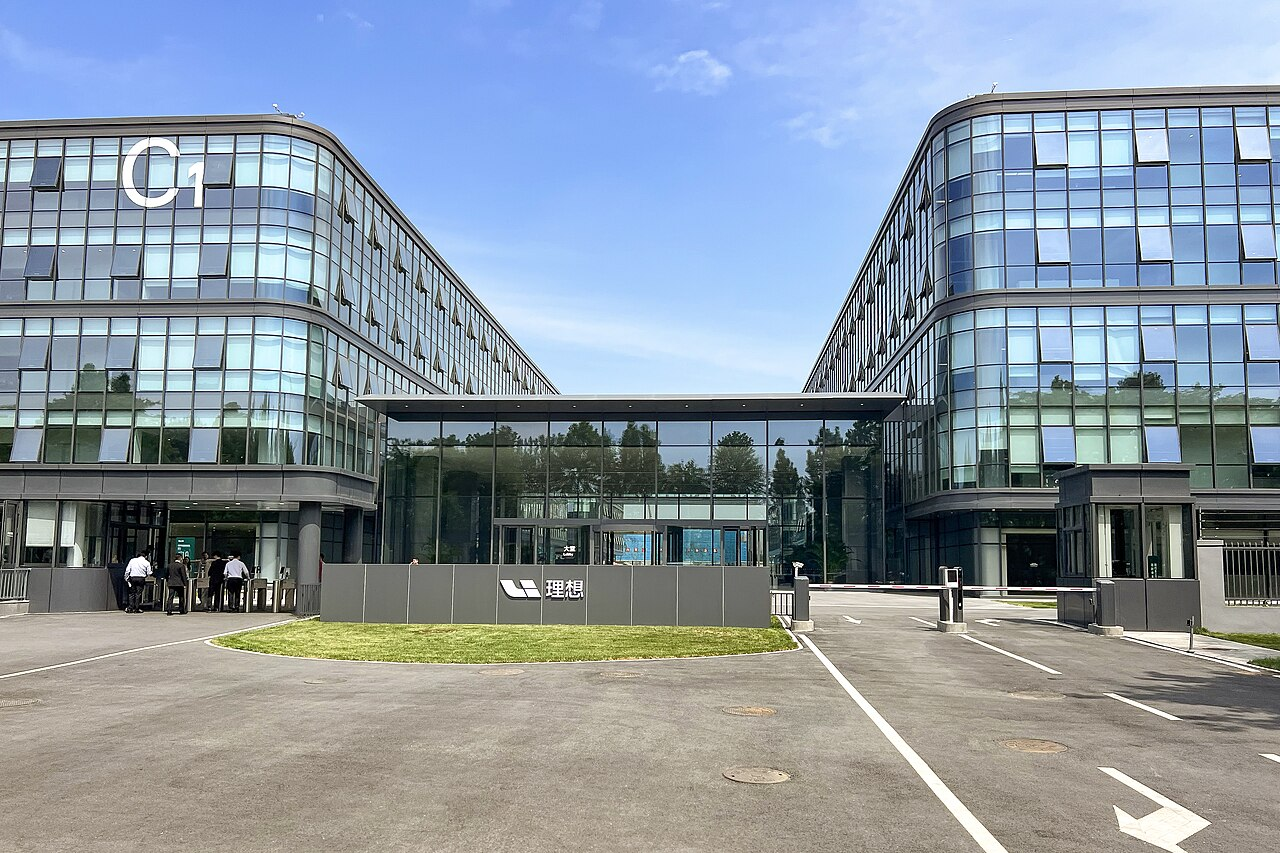
Li Auto R&D base in Gaoliying, Beijing

Li Auto Inc. (Chinese: 理想汽车; pinyin: Lǐxiǎng Qìchē; lit. 'ideal car') is a Chinese electric vehicle manufacturer headquartered in Beijing, with manufacturing facilities in Changzhou. Founded by Li Xiang in 2015, the company mainly builds electric vehicles that use range extenders for a power supply.[3] Li Auto has vehicle manufacturing, engineering, and design services located in Changzhou, Jiangsu with corporate headquarters and research and development located in Beijing

In 2015, Li Xiang, founder of Chinese website PCPop and automotive website Autohome.com.cn, created a company called Beijing Chehejia Information Technology (Chehejia translates as "Car and Home"). It started its operations by developing and producing low-speed EVs that targeted car-sharing and ride-hailing services. In 2018, Chehejia reached an agreement for a joint venture with DiDi, China’s largest ride-hailing service company, but the plan collapsed shortly afterward. In the first half of 2018, Chehejia abandoned the low-speed EV project due to the lack of support from the Chinese central government for legalizing the EV category.

In 2019, the holding company Chehejia Technologies, based in the Cayman Islands, rebranded itself as Leading Ideal Inc. The following year, it shortened the name to Li Auto, and the company was renamed Li Auto Inc. In Chinese, the brand is commonly known as Lixiang (理想). Li Auto Beijing manufacturing base in Shiyuan, Shunyi District, Beijing Li Auto unveiled its first model named the Li One in April 2019, with production beginning in November of the same year.

30/12/2024

Honda & Nissan aim to merge by 2026

Honda, Nissan Confirm Merger Plans To Offset Chinese EV Competition: How Mitsubishi Factors In

Honda Motor Company, Ltd and Nissan Motor Co., Ltd confirmed their merger plans at a joint press conference on Monday and said they aim for a completion date of August 2026. If successful, the merger would create the world's third-largest automobile group based on global sales volume.

The automakers plan to establish a new holding company, with Honda to appoint most of the board members and president of the new company. "We have confirmed again that our business integration will bring about synergy in all areas and that the impact of this will be greater than expected," Honda President Toshihiro Mibe said, per the Japan News.  "We aim to set a direction by the end of January," he added. The companies are considering including Mitsubishi Motors in the new consolidated company. Nissan is Mitsubishi's largest shareholder with a 24% stake in the company, and its president was present at Monday's joint press conference. Why It Matters: Tokyo-based Honda could prove to be a lifeline for Nissan, which has struggled with declining vehicle sales in the U.S. and globally. The automakers have already developed a partnership developing next-gen electric vehicle platforms. The merger would also allow both companies to pool resources and reduce development costs in the face of increasing competition from Tesla,  an American multinational automotive and clean energy company    and Chinese automakers, including Tesla, BYD, NIO, and Li Auto.

“Creation of new mobility value by bringing together the resources including knowledge, talents, and technologies that Honda and Nissan have been developing over the long years is essential to overcome challenging environmental shifts that the auto industry is facing," Honda Director and Representative Executive Officer Toshihiro Mibe said. Nissan, based in Yokohama, Japan, has seen it sales in China drop, with 2023 sales reduced to nearly half of its 2019 sales volumes which counted for 1 in 3 of Nissan’s global sales at the time. "These Nissan-Honda merger discussions, coupled with the recent challenges at Stellantis and production cutbacks in Europe, all point to a single, stark reality: a new force has emerged in the automotive sector, and legacy automakers need to be acutely aware of the competitive threat," said Moody's Michael Brisson said referring to the Chinese automakers, per Yahoo Finance.


Honda, Nissan aim to merge by 2026 in historic pivot
(From left) Nissan CEO Makoto Uchida, Honda CEO Toshihiro Mibe and Mitsubishi Motors CEO Takao Kato at a joint press conference in Tokyo on Dec 23

Honda and Nissan are in talks to merge by 2026, they said on Dec 23, a historic pivot for Japan’s auto industry that underlines the threat Chinese EV makers now pose to the world’s long-dominant legacy carmakers. The tie-up would create the world’s third-largest auto group by vehicle sales after Toyota and Volkswagen. It would also give the two companies scale and a chance to share resources in the face of intense competition from Tesla and more nimble Chinese rivals, such as BYD.

The merger of Honda, Japan’s second-largest automaker, with Nissan, its No. 3, would be the biggest reshaping in the global auto industry since Fiat Chrysler Automobiles and PSA merged in 2021 to create Stellantis in a US$52-billion (S$70.57-billion) deal. Smaller Mitsubishi Motors, in which Nissan is top shareholder, was also considering joining and would make a decision by the end of January, the companies said. The chief executives of all three held a joint press conference in Tokyo. “The rise of Chinese automakers and new players has changed the car industry quite a lot,” said Honda chief executive Toshihiro Mibe, citing technological trends of electrification and autonomous driving. "We have to build up capabilities to fight with them by 2030, otherwise we'll be beaten."

The two companies would aim for combined sales of 30 trillion yen ($191 billion) and operating profit of more than 3 trillion yen through the potential merger, they said. They aimed to wrap up talks around June 2025 before setting up a holding company by August 2026, when shares of both companies would be delisted. Honda, which has a market capitalisation of more than $40 billion, roughly four times that of Nissan, will appoint the majority of the company's board, they said. Combining with Mitsubishi Motors would take the Japanese group's global sales to more than 8 million cars. The current No. 3 is South Korea's Hyundai (005380.KS), opens new tab and Kia (000270.KS), opens new tab. Honda and Nissan have been exploring ways to bolster their partnership, including a merger, Reuters reported last week.


Honda, Nissan formalise merger talks, aim to combine by 2026
For Nissan, the merger with Honda could provide much-needed relief after paltry sales in the US and China triggered a massive drop in revenue

Honda Motor and Nissan Motor took their first historic steps toward merging to create a new force in the world’s automotive industry, as aggressive competition from China forces legacy carmakers to rethink their business models. The two Japanese auto manufacturers signed a basic agreement for merger talks on Monday (Dec 23), according to a joint media briefing held in Tokyo. Honda also said it will buy back as much as 1.1 trillion yen (S$9.5 billion) of its own shares.

A holding company will be created to house the new entity and should be listed by August 2026, the firms said, adding that Honda will be able to nominate a majority of directors of the holding company. Mitsubishi Motors, which is 24.5 per cent owned by Nissan, also signed the memorandum of understanding and will likely be part of the group, with a final decision on that expected by the end of January. Honda’s buyback cancels a previously announced buy back of 100 billion yen and will start on Jan 6 and run through most of 2025, according to Monday’s announcement. The company plans to repurchase as many as 1.1 billion shares, or almost 24 per cent of its stock excluding treasury securites. Honda chief executive officer Toshihiro Mibe said synergies from the combined company should lead to an increase in operating profit of more than 1 trillion yen, climbing to 3 trillion yen eventually.

“Both companies will continue as wholly owned subsidiaries of the joint holding company with their respective brands in place,” Mibe said. The holding company will include the brands of both Honda and Nissan, and wrap in Honda’s large motorcycle unit. Such an alliance would give rise to one of the world’s largest carmakers, pitting the trio against Toyota Motor at home and Chinese automakers including BYD and Geely Automobile Holdings abroad. Toyota has stakes in Subaru, Suzuki Motor and Mazda Motor, creating a powerhouse of brands backed by its top-notch credit rating. All three Japanese companies are to some degree facing an existential threat brought on by the global automobile industry’s breakneck shift to battery-powered electric vehicles and hybrid drivetrains and away from combustion engine cars.


Here are two seismic changes pushing Honda and Nissan into merger talks
Nissan and Honda are in talks for a merger with the goal to complete it by 2026. It's yet another sign of the big changes hitting the auto sector.

Honda and Nissan have started talks to pursue a merger, a deal that could create the world's third-biggest automaker.

The two major Japanese companies are hoping that joining hands will allow them to better compete in an automotive world that's facing seismic changes. Two massive forces are at play currently: The global auto industry is in the midst of a historic shift to electrification at the same time that the world's largest automakers are facing a formidable competitor in China.

As Honda and Nissan start talks with the goal of completing a merger by 2026, here are a few things to know:
  • China is winning ... in China and abroad
  • Honda and Nissan are not creating buzzy EVs
  • Not all mergers makes sense
  • What would it mean for American consumers?


Nissan and Honda announce plans for merger: Here's what to know

Nissan and Honda have announced plans to merge by 2026 in a seismic shift for the Japanese auto industry. The two carmakers signed a memorandum of understanding that allows them to continue discussions about integration via a joint holding company, the companies announced.

If Nissan and Honda are do integrate, they could become the third-largest auto group in the world, Reuters. Mitsubishi Motors, of which Nissan owns a 24% stake, will announce if the company will join the merger by the end of January.

"The rise of Chinese automakers and new players has changed the car industry quite a lot," said Honda CEO Toshihiro Mibe at a press conference, citing technological trends of electrification and autonomous driving. "We have to build up capabilities to fight with them by 2030, otherwise we'll be beaten." Once the merger is complete, Honda and Nissan aim to have combined sales of $191 billion, according to Reuters.


Nissan and Honda announce merger plans to create world’s no. 3 automaker
Makoto Uchida, Nissan's president and CEO, and Toshihiro Mibe, president of Honda, hold a joint press conference on their merger talks in Tokyo on December 23, 2024

Honda and Nissan have formally agreed to hold talks over the next six months on a possible merger, a deal that would create the world’s third-largest automaker and give them more resources to compete with a growing threat from Chinese carmakers.

A third, smaller Japanese automaker, Mitsubishi, which is already in an alliance with Nissan, will also participate in the talks. The combined company, should it be created, would trail only Toyota (TM) and Volkswagen in global sales.

Mergers in the auto industry are nothing new. They have taken place since the acquisition of various brands formed General Motors (GM) in the first decade of the 20th century. But they sometimes have trouble succeeding bringing together different partners.


Honda, Nissan aim to merge by 2026 as automakers formalize talks
Nissan Motor CEO Makoto Uchida (L), Honda Motor CEO Toshihiro Mibe (C) and Mitsubishi Motors President Takao Kato (R) pose during a photo session following a joint press conference on December 23, 2024, in Tokyo, Japan. Photo by Tomohiro Ohsumi

Honda Motor Co. and Nissan Motor Co. took their first historic steps toward merging, in hopes of creating a juggernaut that can survive aggressive competition from China that’s roiling the industry. The two Japanese auto manufacturers signed a basic agreement for merger talks on Monday and held a joint media briefing in Tokyo. Honda also said it will buy back as much as ¥1.1 trillion yen (US$7 billion) of its own shares.

A holding company will be created to house the new entity and should be listed by August 2026, the firms said, adding that Honda will be able to nominate a majority of the new company’s board of directors. Mitsubishi Motors Corp., which is 24.5 per cent owned by Nissan, also signed the memorandum of understanding and will likely be part of the group with a final decision on that expected by the end of January. Such an alliance would give rise to one of the world’s largest carmakers, pitting the trio against Toyota Motor Corp. at home and Chinese automakers abroad, including BYD Co. and Geely Automobile Holdings Ltd. Toyota has stakes in Subaru Corp., Suzuki Motor Corp. and Mazda Motor Corp., creating a powerhouse of brands backed by its top-notch credit rating.

Yet while forecasting an operating profit of more than ¥1 trillion that would eventually climb to ¥3 trillion for the combined entity, Honda chief executive Toshihiro Mibe did not address how the companies would combine their businesses to face pressing issues like shutting or streamlining factories. “Both companies will continue as wholly owned subsidiaries of the joint holding company with their respective brands in place,” Mibe said. Honda will take the lead as the new company is being formed, he said, underscoring the company’s much stronger position versus Nissan, whose sales have slumped amid a lineup of cars that consumers no longer find exciting.


Honda and Nissan to merge, Honda will take the lead

Beleaguered automaker Nissan is going to throw its lot in with Honda. The two Japanese OEMs want to merge by 2026, creating the world's third-largest car company in the process. In fact, earlier this year the two signed memorandums of understanding to create a strategic partnership focused on software and electrification. Now, the changing business environment calls for deeper integration, they say.

"Today marks a pivotal moment as we begin discussions on business integration that has the potential to shape our future. If realized, I believe that by uniting the strengths of both companies, we can deliver unparalleled value to customers worldwide who appreciate our respective brands. Together, we can create a unique way for them to enjoy cars that neither company could achieve alone," said Makoto Uchida, Nissan's president and CEO.

"Creation of new mobility value by bringing together the resources including knowledge, talents, and technologies that Honda and Nissan have been developing over the long years is essential to overcome challenging environmental shifts that the auto industry is facing" said Honda director Toshihiro Mibe. "Honda and Nissan are two companies with distinctive strengths. We are still at the stage of starting our review, and we have not decided on a business integration yet, but in order to find a direction for the possibility of business integration by the end of January 2025, we strive to be the one and only leading company that creates new mobility value through chemical reaction that can only be driven through synthesis of the two teams." Currently, Honda is an independent OEM, albeit one with strong links to General Motors. Meanwhile, Nissan currently forms one part of an alliance, together with France's Renault and the also-Japanese Mitsubishi. But the Renault-Nissan alliance has not been entirely smooth.


Honda, Nissan merger 'like two weak swimmers helping each other'; analysts see risks

The plan announced Monday by Japanese automakers Honda and Nissan to merge by 2026 highlights how the rise of Chinese automakers such as BYD is pressuring the industry to look for potential cost savings and increased scale, auto industry analysts told the Free Press. They suggested that consumers could benefit eventually, but any impact on the Detroit Three will take time to unfold.

They also pointed to the last major merger in the industry: the creation of Stellantis in 2021, to show that such endeavors are challenging to pull off successfully. Stellantis, owner of Jeep, Ram, Chrysler, Dodge and Fiat, has struggled in particular this year, even saying goodbye to CEO Carlos Tavares amid fights with key stakeholders, sales declines and excess inventory.

A completed Honda-Nissan merger would create the third-largest global automaker by vehicle sales after Toyota and Volkswagen. The news comes as the incoming Trump administration’s tariff threats add more uncertainty to the industry landscape. The plans, announced Monday in Tokyo, would seek to set up a holding company with Honda, the larger of the two, selecting the majority of the board members, according to Reuters, which noted that Mitsubishi is also considering joining and that the combined group would mean annual global sales of more than 8 million vehicles.


Honda
Headquarters in Minato, Tokyo

Honda Motor Co., Ltd. (Japanese: 本田技研工業株式会社, Hepburn: Honda Giken Kōgyō Kabushiki gaisha, lit. 'Honda Institute of Technology and Industry Joint-Stock Company', IPA: [honda] ⓘ; /ˈhɒndə/) is a Japanese multinational conglomerate automotive manufacturer headquartered in Minato, Tokyo, Japan.

Founded in October 1946 by Soichiro Honda, Honda has been the world's largest motorcycle manufacturer since 1959, reaching a production of 400 million by 19 December 2019. It is also the world's largest manufacturer of internal combustion engines measured by volume, producing more than 14 million internal combustion engines each year. Honda became the second-largest Japanese automobile manufacturer in 2001. In 2015, Honda was the eighth largest automobile manufacturer in the world.

Honda was the first Japanese automobile manufacturer to release a dedicated luxury brand, Acura, on 27 March 1986. Aside from their core automobile and motorcycle businesses, Honda also manufactures garden equipment, marine engines, personal watercraft, power generators, and other products. Since 1986, Honda has been involved with artificial intelligence/robotics research and released their ASIMO robot in 2000. They have also ventured into aerospace with the establishment of GE Honda Aero Engines in 2004 and the Honda HA-420 HondaJet, which began production in 2012. Honda has two joint-ventures in China: Dongfeng Honda and GAC Honda.


Nissan
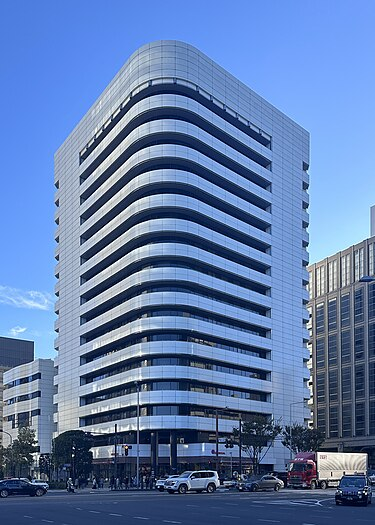
Nissan headquarters in Yokohama, Kanagawa Prefecture

Nissan Motor Corporation (日産自動車株式会社, Nissan Jidōsha kabushiki gaisha) is a Japanese multinational automobile manufacturer headquartered in Yokohama, Kanagawa, Japan. The company sells its vehicles under the Nissan and Infiniti brands, and formerly the Datsun brand, with in-house performance tuning products (including cars) under the Nismo and Autech brands. The company traces back to the beginnings of the 20th century, with the Nissan zaibatsu or called Nissan Group.

Since 1999, Nissan has been part of the Renault–Nissan–Mitsubishi Alliance (Mitsubishi joining in 2016), a partnership between Nissan and Mitsubishi Motors of Japan, with Renault of France. As of November 2023, Renault holds a 15% voting stake in Nissan, while Nissan holds the same stake in Renault.[8] Since October 2016 Nissan holds a 34% controlling stake in Mitsubishi Motors.

In 2017, Nissan was the sixth largest automaker in the world, after Toyota, Volkswagen Group, Hyundai Motor Group, General Motors and Ford. In 2014, Nissan was the largest car manufacturer in North America.[11] With a revenue of $78 billion in 2022, Nissan was the ninth largest automobile maker in the world, as well as being the leading Japanese brand in China, Russia, and Mexico.


Mitsubishi Motors

Mitsubishi Motors Corporation (三菱自動車工業株式会社, Mitsubishi Jidōsha Kōgyō KK, lit. 'Mitsubishi Automotive Industry Company', /mɪtsʊˈbiːʃi/, Japanese pronunciation: [mitsɯꜜbiɕi]) is a Japanese multinational automobile manufacturer headquartered in Minato, Tokyo, Japan.[6] In 2011, Mitsubishi Motors was the sixth-largest Japanese automaker and the 19th-largest worldwide by production. Since October 2016, Mitsubishi has been one-third (34%) owned by Nissan, and included in the Renault–Nissan–Mitsubishi Alliance

Besides being part of the Renault–Nissan–Mitsubishi Alliance, it is also a part of Mitsubishi keiretsu, formerly the biggest industrial group in Japan. The company was originally formed in 1970 from the automotive division of Mitsubishi Heavy Industries.

Mitsubishi Fuso Truck and Bus Corporation, which builds commercial-grade trucks, buses, and heavy construction equipment, was formerly a part of Mitsubishi Motors, but is now owned by German automotive corporation Daimler Truck, with Mitsubishi continuing to own a small stake.


Tesla vs BYD in epic showdown: The biggest electric car battle that awaits 2025

Tesla and BYD have been gunning for the electric car crown for some time now. But the stakes are all set to get higher still come 2025.

Who will come up on top and who have to walk away with the consolation prize? The 2024 round has not been decided yet but both Tesla and BYD have been firing on all cylinders through the course of the past 12 months.

While BYD offers both plug-in hybrids as well as all-battery models against Tesla's electric-only lineup, it recently began its global expansion project. Some dub it a 'David vs Goliath' battle but the question really is which is which?


Tesla Inc
Gigafactory Texas, Tesla's headquarters, just outside of Austin, Texas

Tesla, Inc. (/ˈtɛslə/ TESS-lə or /ˈtɛzlə/ TEZ-lə[a]) is an American multinational automotive and clean energy company. Headquartered in Austin, Texas, it designs, manufactures and sells battery electric vehicles (BEVs), stationary battery energy storage devices from home to grid-scale, solar panels and solar shingles, and related products and services.

Tesla was founded in July 2003 by Martin Eberhard and Marc Tarpenning as Tesla Motors. Its name is a tribute to inventor and electrical engineer Nikola Tesla. In February 2004, Elon Musk joined as Tesla's largest shareholder; in 2008, he was named chief executive officer. In 2008, the company began production of its first car model, the Roadster sports car, followed by the Model S sedan in 2012, the Model X SUV in 2015, the Model 3 sedan in 2017, the Model Y crossover in 2020, the Tesla Semi truck in 2022 and the Cybertruck pickup truck in 2023. In June 2021, the Model 3 became the first electric car to sell 1 million units globally.[6] In 2023, the Model Y was the best-selling vehicle, of any kind, globally. In January 2024, the Model Y became the best-selling BEV in history.

Tesla is one of the world's most valuable companies in terms of market capitalization. Starting in July 2020, it has been the world's most valuable automaker. From October 2021 to March 2022, Tesla was a trillion-dollar company, the seventh U.S. company to do so, and has been so again since November 2024. In 2023, the company led the battery electric vehicle market, with 19.9% share. Also in 2023, the company was ranked 69th in the Forbes Global 2000.


BYD Auto
BYD Auto Co., Ltd

BYD Auto Co., Ltd. (Chinese: 比亚迪汽车; pinyin: Bǐyàdí Qìchē) is the main automotive subsidiary and brand of BYD Company, a publicly listed Chinese multinational manufacturing company. It manufactures passenger battery electric vehicles (BEVs) and plug-in hybrid electric vehicles (PHEVs), collectively known as new energy vehicles (NEVs) in China. It also produces electric buses and trucks. The company sells its vehicles under the main BYD brand and high-end vehicles under its Denza, Yangwang and Fangchengbao brands.

BYD Auto was established in January 2003 by Wang Chuanfu, the founder of BYD Company, following the acquisition of Xi'an Qinchuan Automobile. The first car designed by BYD, the BYD F3, began production in 2005. In 2008, BYD launched its first plug-in hybrid electric vehicle, the BYD F3DM, followed by the BYD e6, its first battery electric vehicle, in 2009.

BYD Auto has experienced substantial sales growth since 2020, driven by the increasing market share of new energy vehicles in China. Since 2021, the company has expanded sales of electric passenger cars into overseas markets, mainly to Europe, Southeast Asia, Oceania and Latin America. In March 2022, BYD ended production of purely internal combustion engined cars to focus on new energy vehicles. In the fourth quarter of 2023, BYD was the top-selling battery electric vehicle manufacturer in the world ahead of Tesla.[8] BYD was also the best-selling car brand in China in 2023, overtaking Volkswagen, which had held the title since the liberalisation of the Chinese automotive industry.[9] BYD is also the third most valuable car manufacturer in the world, based on market capitalization.


Nio Inc
Nio House in Beijing, China

Nio Inc. (Chinese: 蔚来; pinyin: Wèilái; stylized as NIO) is a Chinese multinational automobile manufacturer headquartered in Shanghai, specializing in designing and developing electric vehicles. The company was established in 2014 and adopted its current name in 2016. In 2018, Nio filed for an initial public offering on the New York Stock Exchange. The company expanded its sales to the European market in 2021. As of 2023, Nio has two manufacturing plants in Hefei, Anhui Province, China, in collaboration with state-owned vehicle manufacturer JAC Group.

The company is notable for developing and operating battery-swapping stations for its vehicles, as an alternative to conventional charging stations. It operates over 1,300 battery swap stations in China.[5] It also develops semi-autonomous and autonomous vehicle technologies. Nio has participated in Formula E racing since 2014. In 2024, Nio established a new electric car brand called Onvo, targeting the mainstream market.

After the brand launch on November 21, 2016 in the Saatchi Gallery in London, England, several companies invested in Nio, including Tencent, Temasek, Sequoia, Lenovo and TPG. Its first model, the Nio EP9 sports car, debuted the same day.


Li Auto
Li Auto R&D base in Gaoliying, Beijing

Li Auto Inc. (Chinese: 理想汽车; pinyin: Lǐxiǎng Qìchē; lit. 'ideal car') is a Chinese electric vehicle manufacturer headquartered in Beijing, with manufacturing facilities in Changzhou. Founded by Li Xiang in 2015, the company mainly builds electric vehicles that use range extenders for a power supply.[3] Li Auto has vehicle manufacturing, engineering, and design services located in Changzhou, Jiangsu with corporate headquarters and research and development located in Beijing

In 2015, Li Xiang, founder of Chinese website PCPop and automotive website Autohome.com.cn, created a company called Beijing Chehejia Information Technology (Chehejia translates as "Car and Home"). It started its operations by developing and producing low-speed EVs that targeted car-sharing and ride-hailing services. In 2018, Chehejia reached an agreement for a joint venture with DiDi, China’s largest ride-hailing service company, but the plan collapsed shortly afterward. In the first half of 2018, Chehejia abandoned the low-speed EV project due to the lack of support from the Chinese central government for legalizing the EV category.

In 2019, the holding company Chehejia Technologies, based in the Cayman Islands, rebranded itself as Leading Ideal Inc. The following year, it shortened the name to Li Auto, and the company was renamed Li Auto Inc. In Chinese, the brand is commonly known as Lixiang (理想). Li Auto Beijing manufacturing base in Shiyuan, Shunyi District, Beijing Li Auto unveiled its first model named the Li One in April 2019, with production beginning in November of the same year.