A simple leg exercise that reduces the level of sugar & insulin in the blood for diabetics by 52%, better than many diabetes medications. A very simple movement and you do not need to make an effort or take any medication. Only by moving a very small muscle behind the leg, called the soleus muscle. By moving this muscle while you are sitting in your chair and watching TV, the blood sugar level decreases by a large percentage, by half, and this muscle does not suffer any fatigue, even if you continue to move it for long hours.
26/01/2023
25/01/2023
DOM Bénédictine Herbal Liqueur
Discover The World Of Flavor With Benedictine Liqueur

An Aromatic And Complex Sweet Treat
Benedictine liqueur is a sweet herbal liqueur that originated in France in the 19th century and has been a favorite among liqueur connoisseurs ever since. The distinct aroma and flavor of Benedictine liqueur is due to the combination of 27 herbs, spices, and botanicals that make up its unique recipe. With a unique and complex flavor profile, Benedictine liqueur is enjoyed neat, on ice, or as a key ingredient in many cocktails. Its recipe includes a variety of herbs and spices such as angelica root, cardamom, coriander, lemon balm, and many more. Furthermore, Benedictine liqueur is sweetened with a combination of honey and sugar. This combination of ingredients gives Benedictine liqueur its distinctive aroma, flavor, and deep golden color that makes it a beloved staple in the liqueur world.
Benedictine monk Dom Bernado Vincelli and his Abbey of Fécamp in Normandy, France, serve as the foundation for the Bénédictine movement. Chinese oriental spices are said to have enhanced the local medicinal plants used in the secret recipe of Bénédictine, which dates back to 1510. Drambuie, Yellow Chartreuse, Chartreuse Liqueur, Glayva, Amaro, Regular Brandy, Jagermeister, Grand Marnier, Fernet Branca, and Campari are all excellent substitutes for Benedictine. The order is supported by funds raised through sales. Unlike Bénédictine, which is not made by monks and has yet to be widely distributed, a type of oil does not require monks to manufacture. The brand claims that the Benedictine monk Dom Bernardo Vincelli created the medicinal elixir at the Fécamp Monastery in 1510.
Though the recipe is kept strictly secret, some of the ingredients include angelica root, hyssop, juniper berries, myrrh, saffron, mace, fir cones, aloe vera, arnica, lemon balm, tea, thyme, coriander, clove, lemon, vanilla, orange. A 700 ml bottle of Benedictine D.O.M Liqueur. The flavors on the palate are rich and complex, with 40% abv, intense sweetness, and a robust herbal aroma. A subtle scent of lavender honey and herbs dotted with a variety of botanicals creates a sense of understated elegance. There is no hint of the’medicinal’ taste that is commonly found in herbal spirits. The tonic is a health tonic that relieves fatigue while also strengthening the physical body. Because the active ingredients in Benedictine DOM activate gastrointestinal workings, it is possible to return to a regular diet after consuming it before meals. An active ingredient’s role in regulating primary bodily activities contributes to a healthy body.
What Is Bénédictine D.O.M. Liqueur?

The term D.O.M. found on the label stands for Deo Optimo Maximo which translates to "God, infinitely good, infinitely great." It is used to remind everyone of the liqueur's origins at the abbey
Bénédictine D.O.M. is an herbal liqueur produced in France. Its recipe comes from a 16th-century monk and includes a secret blend of 27 herbs and spices in a neutral spirit that's sweetened with honey. It may be an old liqueur but it has a well-deserved place in the modern bar. Bénédictine is a favorite distilled spirit worldwide and adds a refined spiced sweetness to some of the best cocktails ever created.
Bénédictine has a long history. Like many spirits of this age, there may be more myth to it than actual fact. The story begins in 1510 with a Bénédictine monk named Dom Bernardo Vincelli at the Abbey de Fécamp in Normandy, France. Vincelli was one of the many monks during that time who dabbled in alchemy. He documented his medicinal liqueurs in a manuscript that included some 200 recipes. One was the original formula for this unique herbal liqueur, which was apparently intended to revive tired monks. In the 1860s, a wine merchant named Alexandre Le Grand was browsing his family's collection that included acquisitions from the 1789 French Revolution. The monks had fled the abbey during the conflict and Vincelli's manuscript was in the collection. Le Grand interpreted the incomplete recipe and created what is known today as Bénédictine. Le Grand first sold Bénédictine in 1863 and it was imported into the U.S. beginning in 1888. It is produced at Palais de la Bénédictine near the original abbey. The brand is now owned by Bacardi Limited.
The recipe for Bénédictine is proprietary and one of the "secret" recipes seen so often on the liqueur side of the distilled spirits industry. There are a few aspects to the two-year production that are revealed. Bénédictine is made of 27 herbs and spices. It's believed that it includes hyssop, lemon balm, juniper, aloe, arnica, and cinnamon. The brand, however, only reveals angelica and saffron, making no other claims or allusions as to what the exact ingredient list entails. The distillers at Bénédictine do reveal that those 27 ingredients are divided into four groups. Each group is combined with neutral spirits and distilled either once or twice in copper stills. The result is four distillates called esprits. The esprits are aged for eight months then blended with honey for flavor and infused with saffron for color. This blend is double-heated to finish the flavor before going into oak barrels to age for four months. Before bottling, the liqueur is filtered.
Why Is Bénédictine DOM So Popular in Malaysia?

Newborn Gift Basket with Bénédictine by Gifts from Heaven
Malaysia accounts for a disproportionately high share of the global sales of Bénédictine DOM, a French herbal liqueur drink made up of a secret elixir of 27 aromatic plants and spices thought to include Angelica root, hyssop, juniper, myrrh, saffron, mace, fir cones, aloe, arnica, lemon balm, tea, thyme, coriander, clove, lemon, vanilla, orange peel, honey, red berries, cinnamon, nutmeg and six unknown ingredients.
The drink was concocted in the 19th century by Alexandre Le Grand, a French wine merchant who cleverly marketed it as the favourite tipple of Benedictine monks at the Abbey of Fécamp in Normandy whose long lost recipe had been rediscovered by his grandparent. To add authenticity to his story he added the initials D.O.M. on every bottle, meaning Deo Optimo Maximo (To God, most good , most great), an abbreviation used by the monks on their documents. The United States is the biggest market, followed by Malaysia, Singapore and UK. It is said that Burnley in England is a big consumer of 'Béné and hot' (diluted with hot water), popularised by returning soldiers of the East Lancashire Regiment who developed a taste for it in France during World War One.
The drink is more usually known as DOM in Malaysia where it is thought to have healing properties. The taste is honey sweet, pungent and herbal. Some Malaysian Chinese regard it as a health tonic particularly for mothers with newborns. Gift companies advertise baby shower gift hampers which include a bottle of Béné alongside the pacifiers, wipes and baby talc. As it is 40% alcohol or 80 proof, nobody is suggesting it is good for baby, but Malaysian mums seem to find it a comfort.
Dom Benedictine
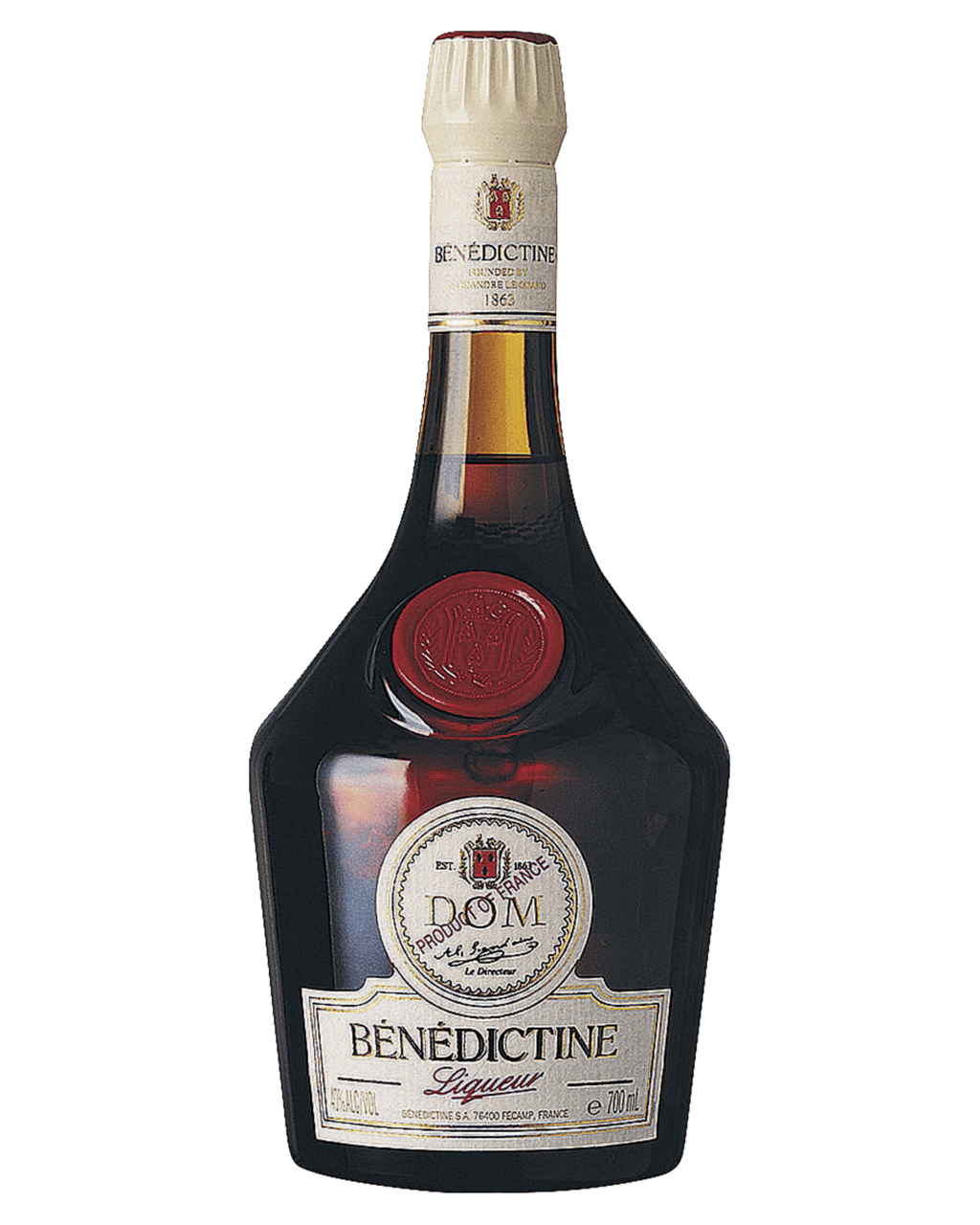
It is claimed that Dom Bénédictine is made from a traditional recipe from the Dominican Order of Monks (D.O.M) of 1510, lost then later rediscovered by wine merchant Alexandre Le Gran in the 19th century. Today Dom Bénédictine is one of the world’s favourite liqueurs. Its secret recipe contains aged Cognac blended with 27 individual herbs, roots and spices with a mellow touch of honey. Best served neat, on ice, or in cocktails.
Product Specifications:
- Type - Liqueurs
- Size - 700m
- Current Vintage - Dom Benedictine
- Standard Drinks - 22.
- Alcohol Volume - 40.0%
- Country - France
- Brand Name - Dom Benedictine
- Closure - Cork
- Spirit Style - Herbal Liqueurs
What Is The Health Benefit For Drinking Dom Benedictine?

Drinking DOM Benedictine has an image of providing health benefits, but like all alcoholic drinks, this is only in extreme moderation. Health benefits from alcohol are very much a side issue, although most companies like to play on and promote this image. DOM was initially used for medicinal purposes but with medical advances it became more popular as an alcoholic drink and is best known as a drink rather than for any medical impact.
DOM has a herbal liqueur taste to it which many people find nutritious, it can often be served up within a meal and is popular with meat dishes. The recipe for DOM is a closely guarded secret retained with the Benedictine Abbey that it originated from. Drinks produced by religious orders tend to be have a more wholesome image with DOM, brewed at the Benedictine Abbey in Fecamp, Normandy, falling into that category. Its religious connotations are, however, outweighed by the fact that it consists of 40% alcohol; making it a very potent drink that should only be consumed in extreme moderation whether or not the health benefits are being considered!
Regular drinking of DOM won't provide you with any health benefits. It would be foolish to consume on the basis that it was for health reasons. If you wish to drink something for health reasons there are multitudes of drinks to choose from which are non-alcoholic and medicinal. Many older people will enjoy a daily drink of DOM or an equivalent and feel that its rich warming taste and reputation will be beneficial, but that is mainly in the mind rather based on facts.
Bénédictine DOM 1510

Distilled and aged in a flamboyant palace, built in Fécamp in tribute to this unique liqueur, Bénédictine is a subtle alchemy of 27 different plants and spices. Some of the herbs and spices have been used since the biblical times and many still have a place in folk remedies. The origin of these plants is like a journey around the world: from Greece to Africa, to Indonesia, India and so much more. Bénédictine selects product ingredients from the five continents with quality as the sole criterion of choice.
ORIGIN - Bénédictine is united by a quest to achieve the extraordinary that begins with benedictine monk Dom Bernado Vincelli and the Abbey of Fécamp in Normandy, France. The secret recipe of Bénédictine is said to date back to 1510 and is based on local medicinal plants enhanced by oriental spices.
LEGACY - The last surviving monk of the Abbey of Fécamp passed down the secret recipe to the Le Grand family to preserve the legacy of Vincelli and the benedictine monks. Alexandre Le Grand was passionately committed to protecting the secret recipe of this local elixir and its production process, which is why the same traditional craftsmanship is used today.
Bénédictine

A poster from 1908 advertising Bénédictine
Bénédictine (French pronunciation: [benediktin]) is a herbal liqueur produced in France. It was developed by wine merchant Alexandre Le Grand in the 19th century, and is reputedly flavored with twenty-seven flowers, berries, herbs, roots, and spices. History:
- In 1863 Alexandre Le Grand developed a recipe for an herbal liqueur, helped by a local chemist, from old medicinal recipes that he had acquired from a religious foundation where a maternal grandparent had held office as a fiscal prosecutor. To market it, he embellished a story of it having been developed by monks at the Benedictine Abbey of Fécamp in Normandy, and produced by them until the abbey's devastation during the French Revolution. He began production under the trade name "Bénédictine", using a bottle with a distinguishing shape and label. To reinforce his myth, he placed the abbreviation "D.O.M." on the label, for "Deo Optimo Maximo" ("To God, most good, most great"), used at the beginning of documents by the Benedictine Order to dedicate their work.
- The liquor was mentioned in the 1948 RKO Pictures movie, “The Bishops Wife”, of three “Benedictines” drinks being ordered at a French restaurant by the Angel, “Dudley” (Cary Grant), then the order was changed to “Stingers” for the three nosey women with the cathedral board.
- In 1982 just 15% of the production of the liqueur was sold in France with 45% of the product going to the United States of America. Benedictine is sold in over two hundred markets. The United Kingdom remains a significant market in Europe where much of the Bénédictine is consumed in the Burnley area of England.[citation needed] This is as a result of returning Great War soldiers of the East Lancashire Regiment acquiring a taste for the drink while stationed in France during the War. Traditionally people in East Lancashire drink Bénédictine with hot water, known as "Bene 'n' 'ot", and the Burnley Miners Club is reputedly the largest single customer. The abbey at Fécamp was used for a convalescence hospital.
- In 1986, the Martini & Rossi group took control of Bénédictine. In 1992 they in turn were bought out by Bacardi for a reported $1.4 billion.
- By 2010 around 75% of the production was exported. This marked a significant increase in its popularity in France. The biggest consumers of Bénédictine are the United States, Malaysia and Singapore.
The recipe is a closely guarded trade secret, purportedly known to only three people at any given time. So many people have tried to reproduce it that the company maintains on its grounds in Fécamp a "Hall of Counterfeits" (Salle des Contrefaçons). The bottle and label have been imitated, as has the name Bénédictine. The company prosecutes those it feels are infringing on its intellectual property. The manufacturing process involves several distillations which are then blended. The recipe of Bénédictine is a commercial secret, but it is known to contain 27 herbs and spices, of which the following 21 are publicly known: angelica, hyssop, juniper, myrrh, saffron, mace, fir cones, aloe, arnica, lemon balm, tea, thyme, coriander, clove, lemon, vanilla, orange peel, honey, red berries, cinnamon, and nutmeg.


24/01/2023
Bak Kwa in the 1900s 肉 干
Bak kwa, also known as rougan

Bak kwa, also known as rougan (肉 干), is a dried savoury sweetmeat that traditionally takes the form of thin square slices and is usually made from pork. Bak kwa and rougan, meaning “dried meat” in Hokkien and Mandarin respectively, also refer to barbecued pork or pork jerky. Originating from China, bak kwa has become a favourite local snack in Singapore, with its popularity peaking during Chinese New Year, as evidenced by the long queues at the branches of famous bak kwa chains during the festive period.
Bak kwa is thought to have derived from a meat preservation and preparation technique used in ancient China. It is considered a Hokkien delicacy as it originated from Fujian province where the consumption of meat was considered a luxury usually reserved for Chinese New Year. Pork was preserved by slicing the meat into thin sheets and marinating them with sugar and spices, before air-drying the slices and cooking them over a hot plate. When this delicacy found its way to Singapore and Malaysia, it took on local characteristics. For example, after the meat is air-dried, it is grilled over charcoal, which imparts a smokier flavour. The local version is also sweeter than the original version.
The oldest bak kwa shop in Singapore is Kim Hock Guan, which was set up by two brothers in 1905 with the first outlet on Rochor Road. Other major players in the local bak kwa business include Bee Cheng Hiang, Lim Chee Guan, Fragrance and Kim Joo Guan. The bak kwa business is so competitive that bak kwa companies zealously guard their marinade recipe and refuse to divulge sales figures or the amount of raw pork purchased for making bak kwa during Chinese New Year. The marinade is likely to consist of salt, pepper, sugar, honey, soya sauce, rice wine, five-spice powder and fish sauce
Old-School Bak Kwa Seller That Has Been Around Since The 1930s

Kim Peng Hiang for old-school bak kwa at Kembangan
Few things in life can match the satisfaction of biting into savoury, delightfully charred, and slightly greasy pieces of bak kwa. Arguably one of the most popular bak kwa names in the business, Kim Peng Hiang is a family-run stall that’s famous for their legendary queues that stretch up to eight hours during the Chinese New Year period.
Having been around since the 1930s, Kim Peng Hiang was previously located at the now-defunct Pearls Centre in Chinatown before moving to the row of shophouses along Changi Road, where they remain at to this day. It is a five-minute walk from Kembangan MRT Station. Despite their popularity, Kim Peng Hiang does not take online orders, and customers are required to queue in person to get their hands on the yummy bak kwa. The shop also does not have a dedicated Facebook page or website, which makes it difficult to predict when they’re open for orders.
Typically, the stall puts out a notice at their shop days before pre-orders start. Ordering begins at approximately 11:30am, and customers are limited to a purchase of 3kg per person. Upon making payment via cash, you can collect your bak kwa between 2pm and 8pm the following day. Kim Peng Hiang fixes their bak kwa prices throughout the year, so you won’t need to worry about inflated prices during the festive season. This also means that they don’t offer discounts on regular days either.
Heritage Handmade Bak Kwa Brand That Started Out In A Kampung

The good ol’ days of Kim Tee
There are many bak kwa shops in Singapore, but few have a history as rich as Kim Tee’s. With Chinese New Year (CNY) just around the corner, there’s no better time to spotlight the family-run bak kwa brand, which started as a humble kampung stall in 1970. Over its 50-odd years of heritage, the homegrown business has seen multiple changes, including new innovations such as bak kwa fries and self-heating bak kwa pot added to its repertoire. Yet, one thing remains unchanged: Kim Tee still uses the same handmade recipe as its founding days, involving an arduous, two-step charcoal cooking process that places it a notch above the rest. Today, the brand boasts four outlets across the island, the baton now passed on to the third generation who are working hard to continue ‘Ah Gong’s’ legacy.
It all started with the late founder Mr. Teo Kim Tee, who operated out of a small stall in his kampung along Adam Road circa 1970. Back then, he was known as a wholesaler who supplied his wares to other noteworthy bak kwa brands. Mr. Teo perfected his craft over the years, soon carving a name for himself for his uniquely thin and flavourful bak kwa. As more kampungs were cleared to make way for development in the 1970s, Mr. Teo moved his operations out of the Adam Road kampung to a shophouse in Serangoon Gardens and formally set up ‘New Eastern (Kim Tee) Dried and Minced Pork’ in 1976. Today, the brand still operates out of the same shophouse, though they’ve recently rebranded to a more succinct ‘Kim Tee’ as a homage to the late founder.
The business has always been a family affair. Since the start, Mr. Teo’s children were involved in running the store. His grandchildren were also roped in to help from as early as the age of six. They started with folding bak kwa boxes, before they were ‘promoted’ to manning the front of house. Thereafter, they would be let in on the highly guarded bak kwa making process. After Kim Tee became an established name, Mr. Teo’s children went on to open three more branches, namely at Old Airport Road, Potong Pasir, and Toa Payoh. The bak kwa is still prepared and roasted in large charcoal-fired ovens at their flagship Serangoon Gardens store, but finished off on the charcoal grill at the various locations so that it gets to each customer as fresh as possible. These days, the business is largely helmed by the family’s third generation, including Ms. Ng Ling Chee, whom we had the chance to speak to. Ling Chee is in charge of business development in Kim Tee, while her parents run the Old Airport Road outlet.
What is bak kwa, and why do Chinese, Malaysians and Singaporeans crave it at Lunar New Year?

Bak kwa is a popular snack at Lunar New Year – and all year round
People pay high prices and queue for ages to get their hands on this salty-sweet dried meat, but where, and how, did it originate? Among all the well-known Lunar New Year snacks, bak kwa or rou gan is probably among the most famous of them all. Where did this tasty treat, which is similar to jerky, come from? Ask any Chinese person and you’ll most likely be told this: bak kwa, which means “dried meat” in the Hokkien dialect, is synonymous with Lunar New Year, and it is almost a crime not to have this moreish snack in your home all through the festive season.
Its origins can be traced by to ancient China, specifically the province of Fujian, during a time when poverty was widespread. Pork (or meat in general) was considered a luxury that not everyone could afford, so it was reserved for Lunar New Year. These succulent barbecued meats are first sliced into thin strips and dipped in a sugar and spice marinade before being air-dried and cooked over a hotplate. As many Hokkien immigrants from Fujian made their way to the Malay Archipelago (now Malaysia) in the early 15th century to escape a life of poverty, they reputedly brought this delicacy with them. It has since been tweaked to suit local tastes. The Malaysian and Singaporean versions are grilled over charcoal after being air-dried, which gives the meat a smokier flavour. The local version is sweeter than the original.
There are two main varieties of bak kwa in Malaysia and Singapore, minced pork and sliced pork. The minced pork version, which has a higher fat content, is prepared by shaping minced meat into slices before grilling. The sliced version is leaner and tougher as it is made from pork slices that have been cut off from solid blocks of meat. Making this snack can be time-consuming, but machines have helped to save time. When Lim Kay Eng, founder of popular bak kwa shop Lim Chee Guan, opened the store in 1938, a slab of pork cut into thin slices was marinated and dried in the sun – 82 years later, the process remains pretty much the same, except machines are used to cut large slabs of pork and to transport the meat from one production station to another. Everything else is still done by hand, says Benny Lim, the founder’s grandson.
Bak Kwa

Bakkwa is made with a meat preservation and preparation technique originating from China. The general method of production has remained virtually unchanged throughout the centuries, but the techniques have been gradually improved. It is traditionally made of pork, beef, or mutton, which is prepared with spices, sugar, salt and soy sauce, then dried on racks at around 50 to 60 °C (122 to 140 °F) to a final water activity between 0.60 and 0.69.
Nowadays, products with a softer texture, lighter color and less sugar are preferred. The shafu type of bakkwa products has a higher water content, and thus has a softer texture and lower sugar content. Whereas the traditional bakkwa has a water activity below 0.7, shafu bakkwa tends to be closer to a water activity of about 0.79. Nevertheless, shafu can have a similar shelf life to other types of bakkwa.
Bakkwa is very popular in Singapore and Malaysia where it is traditionally eaten during the Chinese New Year. When Chinese immigrants brought this delicacy over to Singapore and Malaysia, it began to take on local characteristics. A notable example lies in the preparation of bakkwa, where the meat is grilled over charcoal rather than air-dried, imparting a smokier flavor to the meat. The Singaporean and Malaysian versions of bakkwa are also sweeter than their mainland China counterparts with many different variations having developed to suit local palates, such as chili bakkwa.
What is Bak Kwa

Bak Kwa is Juicy, Tender, Slow Grilled. It's Better Than Jerky!
Seasoned with Southeast Asian spices then slow grilled to perfection, Bak Kwa (BUCK K'WAH) is a Singapore and Malaysian Street-Style roasted meat snack. Packed with umami, Bak Kwa is often small-batch crafted, then roasted to seal in moisture and to give it an authentic smoky char. It's succulent, sweet and savory. Bak Kwa is similar to many jerky, meat sticks or meat bars, but It's Better Than Jerky!®
What makes Bak Kwa different from jerky or meat bars is the cooking method that results in a more tender, juicier protein-rich snack. Native jerky was traditionally air-dried over days. Modern jerky speed up its drying process with a commercial dehydrator or smokehouse where the temperature is often warm and humid. Air circulation is also increased to speed up its drying process.
In Southeast Asia, Singapore and Malaysia namely, Bak Kwa is a popular street snack. (It was also featured on CNN Go as top 10 Singapore street food we cannot live without!). It is still grilled or roasted over charcoal. The cooking process is much quicker (as it's not dehydrated over days), resulting in softer texture and bolder flavors. Elevating from traditional Bak Kwa crafting, we've made this century old protein-rich snack healthier and portable. All our Bak Kwa are gluten free, without added hormones and antibiotics. Compare our Bak Kwa to traditional jerky and meat bars, you'll find our meat snacks have lower sodium as no nitrites and nitrates are added.
EVERYTHING YOU DIDN’T KNOW ABOUT BAK KWA

With the Lunar New Year festivities in full swing, we look ‘bak’ on an old favourite dish. Here’s the who, what,where, and when of this juicy delicacy, and why we love it so much! Once again, we come to that time of year where the queues begin to form in front of Kim Hock Guan, Lim Chee Guan, and Kim Hwa Guan. In short, it’s a good time to be a Guan.
Despite all the grumbling about price increases during this festive season, many Singaporeans are still willing to go that extra mile, sometimes literally, just for that perfect chewy slice of meat – Bak Kwa. So, what is it that gets us so excited about this simple, yet satisfying dish? First, the history. Originating in Fujian, a Southeastern province in China, the delicacy was first created as a tasty way to gobble up leftovers. Meat was sliced into thin sheets, marinated with sugar and spices and air-dried, before it was heated over a hot plate to preserve it for a longer period.
The poverty of the working class, at that point, meant that meat was a delicacy enjoyed only on special occasions, and so Bak Kwa soon came to be associated with the celebrations of Chinese New Year. The Southern Chinese diaspora in the 19th and early 20th century introduced Bak Kwa into Malaysia and Singapore. The disadvantages of air-drying meat soon became apparent, as the sheets of meat began to attract salivating pests of all kinds, and hawkers had to keep a close watch on their wares at all times. Charcoal grilling became much more common, and the Bak Kwa varieties in Singapore began to distinguish themselves from their Chinese cousins through their smokier taste.
7 popular bak kwa brands ranked from best to worst

7 Bak Kwa to celebrate with sweet and salty porky goodness:


- Bee Cheng Hiang
- Fragrance
- Kim Joo Guan
- Bee Kim Heng
- Kim Hua Guan
- Lim Chee Guan
- Hock Wong
10 Best Bak Kwa In Singapore To Complete Your CNY

It is not really the Lunar Chinese New Year until we get our first bite of Bak Kwa, isn’t it? (YES, at least for me) As the Lunar Chinese New Year approaches, many scramble to get their festive goodies ready, and one that we can never miss would be Bak Kwa!
The savoury, sweet and smoky pork jerky is a necessity in my family’s CNY feast and would kick start the festive.
10 Best Bak Kwa in Singapore to celebrate CNY 2022:
- Kim Peng Hiang
- Kim Hua Guan Bak Kua
- Fragrance
- Bee Cheng Hiang
- Kim Joo Guan
- Lim Chee Guan
- Sang Hock Guan
- New Peng Hiang
- Peng Guan Bak Kwa
- Xi Shi Bak Kwa
10 Best Bak Kwa Shops In Singapore

Bakkwa, also known as rougan, is a salty-sweet dried beef product akin to jerky that originated in China. Bakkwa is created using a Chinese technique for meat preservation and processing.
Sweet, savory, umami, meaty, and gratifyingly greasy, these gleaming squares speckled with charcoal char marks are sweet, savory, umami, meaty, and gratifyingly greasy in a manner that a cookie will never be. It’s manna from the CNY snack heavens — but only when you come across a piece that’s worth the (exorbitant) calories. We’ve all experienced the disappointment of eagerly biting into a slice only to discover it depressingly dry and tasteless.
We have listed down the top 10 finest Bak Kwa shops in Singapore to complete your CNY feast:
- Bee Kim Heng
- Golden Gourmet Bak Kwa
- Fragrance Bakkwa
- Kim Hock Guan
- New Peng Hiang
- Kim Joo Guan
- Bee Cheng Hiang
- Kim Tee
- Lim Chee Guan
- Peng Guan
15 Lip-Smacking Bak Kwa To Snack On CNY

There are a few staples when it comes to Chinese New Year, and one that we can’t go without is bak kwa. This sweet, decadent pork jerky is nothing short of gratifying – even better, when they come with charred edges. You’ll keep reaching for it even if it means you’ll have to work extra hard to burn off ‘em calories. This CNY 2023, get your hands on the best bak kwa with our list of the best places to get them in Singapore!
Best places to buy bak kwa in Singapore
- Bee Cheng Hiang
- Fyre
- Fragrance
- Kim Tee
- Shangri-La
- Gin Thye
- Golden Bridge
- New Peng Hiang
- Wu Chin Leong
- New Moon
- Peng Guan
- Hock Moon Hiong
- Kim Joo Guan
- Lim Chee Guan
- Xi Shi Bakkwa
The story of Singapore bak kwa specialist Lim Chee Guan goes back 80 years

The former Lim Chee Guan stall at 191 New Bridge Road, taken sometime between the 1960s and 1980s. (Photo: Lim Chee Guan)
Like most Chinese parents of the early 20th century, Mr Lim Kay Eng’s folks hoped their son would study to become a doctor in China. But the young native of Xiamen had other plans. Studying was the very thing he loathed most, so he packed his bags and jumped on a boat to Singapore in search of a brighter future.
Like the countless other Chinese migrants to Singapore of the time, Kay Eng took whatever employment he could find. He worked as a plantation helper, a coffee shop assistant and a provision shop assistant. By 1938, he had saved enough money to start his own stall selling titbits and – having learnt the art of preserving meats from his mother and grandmother in China – bak kwa. His pushcart stall was located at the foot of a staircase along Chin Chiew Street or "tau fu kai" as it was better known at the time. Although he did brisk business, that sliver of space was a veritable border between opposing Cantonese and Hokkien gangs who often clashed right by the stall.
To avoid getting caught in the crosshairs, Kay Eng moved his wares to a shophouse along New Bridge Road in 1956, where Lim Chee Guan continues to operate. Today, Lim Chee Guan boasts two other outlets at ION Orchard and People’s Park Complex, as well as its headquarters and production facility in the Ulu Pandan area. With over 100 employees, the business has come a long way from its humble roots.
Rou Gan (肉 干) Bak Kwa

Bak kwa, also known as rou gan (肉干), is a dried savoury sweetmeat which traditionally takes the form of thin square slices and is usually made from pork. Bak kwa and rou gan mean “dried meat” in Hokkien and Mandarin, respectively. It is also sometimes referred to as barbecued pork, dried pork or pork jerky. Bak kwa, which has its origins in China, has become a favourite local snack in Singapore, with its popularity peaking during the Chinese New Year period, as evidenced by the long queues at the branches of famous bak kwa chains.
Bak kwa is closely associated with Chinese New Year in Singapore as it is considered a staple in the new year celebrations, where it is commonly offered to guests during visits or presented as gifts to friends and relatives. In the run-up to the festivities, long queues will form at popular bak kwa outlets, especially those in Chinatown. Instead of being deterred by the long queues, some people even consider the queuing for bak kwa to be a Chinese New Year tradition. The queues are sometimes so long that customers have to wait six hours or more for their bak kwa, and Singaporeans have been known to send their employees or domestic helpers to stand in the queue for them. To prevent their supplies from running out, popular outlets usually impose buying limits on their customers during this period.
The rising prices of bak kwa during the few weeks before Chinese New Year are a common grouse among Singaporeans and some see bak kwa prices as an indicator of inflation in Singapore. In 2007, the preoccupation of Singaporeans with bak kwa prices prompted the Singapore office of Bloomberg News to release a light-hearted Bak Kwa Index which tracked bak kwa prices during the Chinese New Year period by surveying four bak kwa vendors, namely Bee Cheng Hiang, Fragrance Foodstuff, Lim Chee Guan and Kim Hock Guan.
23/01/2023
Fú Dào Le 福到了2023


Xīn Nián Kuài Lè 新年快乐 - Fú Dào Le 福到了

Those Chinese Characters on the Door
It's a homophone, a play on words. The character that is hung upside down is Fú - 福, pronounced “foo”. It means fortune or luck.
The pun - In Mandarin, saying Fú Dào Le means "luck or fortune has arrived". But the word "Dào" can also imply to fall down or turn upside-down. So, literally turning the character 福, Fú, upside-down is a play on words implying fortune has arrived.
On the door - You'll see the character, usually written in gold on a red background, hung on doors across the country by Chinese hoping for good fortune for the new year. The decorations are often left up all year so you may see it at any time. And why not? Everyone needs a little fortune heading their way.
Rabbit Horoscope 2023 – Luck and Feng Shui Predictions!

Based on the Rabbit Horoscope 2023, this year promises to be an excellent year for Rabbit natives when it comes to your professional life. You will get all the encouragement, inspiration, motivation, guidance, and assistance you need from your loved ones and friends. It is upon you to surround yourself with positive energies and be happy with your progress.
2023 Chinese year of the Black Water Rabbit will see you celebrate many achievements though you will have some issues with your health as the year begins. You need to be careful about the foods and drinks you allow into your body. Be honest with yourself when handling business deals with people. Do not involve yourself in dishonest deals because you will end up regretting your decisions and choices.
Chinese Astrology Forecast for 2023 calls on you to appreciate the love you receive in your life. You are surrounded by people who care for you dearly. Always be honest with your loved ones. If something is not working out in your romantic relationship, you should not force things.
Chinese New Year History

Chinese New Year, also known as the Lunar New Year or Spring Festival, is the most important traditional festival. Falling on the first day of the lunar calendar, the Chinese New Year has a history of over 4000 years. Chinese New Year can be traced back to 4000 years ago. Since there was no written record in Ancient Times (before 2000 BC), the exact beginning year is still uncertain. Some people believe that the Chinese New Year originated in Yushun Time (虞 舜 时 代 yú shùn shí daì). In Ancient Times, people believed astrology, they also thought ancestors and gods could control the fortune of people. So ancient people would go hunting and kill animals in winter, offering sacrifices to ancestors and gods at the beginning of the lunar year.
In Ancient Times, people didn't have the concept of a "year". They usually celebrated the "New Year" at the beginning of spring. In the Zhou Dynasty, the 11th lunar month was considered the beginning of the year (called 岁 首 suì shǒu or 正 月 zhēng yuè in Chinese) according to the Chinese sexagenary cycle. Though the leading custom was still offering sacrifices to ancestors and gods, some people started to worship nature and bless harvests at the turn of the year. From this time, the festival began to have names, such as 元 日 (yuán rì), 改 岁 (gǎi suì), or 献 岁 (xiàn suì). Chinese New Year Date Was Fixed 2000 Years Ago. In ancient times, the Chinese New Year celebration date varied from mid-winter to early spring. The date was fixed on the first of the first lunar month in the Han Dynasty. Besides offering sacrifices to ancestors and gods, some other celebrating activities appeared, such as burning bamboo and drinking Tusu wine (屠 苏 酒 tú sū jiǔ). In this time, Chinese New Year has different names as 正 日 (zhèng rì), 正 旦 (zhèng dàn), 岁 旦 (suì dàn). Chinese New Year Became a Popular Festival1000 Years Ago. Before the Tang Dynasty, Chinese New Year is only celebrated by the upper-class such as the royal family and rich people. With the development of the social economy, the celebrations of the Chinese New Year became popular among ordinary people. The function of the Chinese New Year is not only worshiping but also entertaining. More and more activities appeared, such as putting up Spring Festival couplets and staying up late on New Year's Eve. At this time, Chinese New Year has different names as 岁 日 (suì rì), 新 正 (xīn zhèng), 新 元 (xīn yuán).
From the Song Dynasty, more celebrating activities appeared, such as setting off firecrackers, guessing lantern riddles, and visiting relatives. People got a 7-day holiday during the festival. The customs were similar to those in modern times. Chinese New Year was an important festival in the Qing Dynasty. The royal family would hold huge celebrations and grand banquets. It was very extravagant. At this time, Chinese New Year has different names as 元 旦 (yuán dàn), and 元 日 (yuán rì). During the Beiyang government period (1912-1928), President Yuan Shikai decreed that the Chinese New Year would fall on the first day of the lunar month, and named it 春 节chūn jié (Spring Festival) in Chinese. While 元 旦 (yuán dàn) would fall on January 1 of the Gregorian calendar, it is considered the official start of the new year. Nowadays, Chinese people will have a 7-day holiday from Chinese New Year's Eve (除 夕 chú xí) to the sixth day of Chinese New Year. In 2023, the Chinese New Year holiday is from January 21st to January 27th. Besides traditional customs, some new celebrations appear. Watching the CCTV (China Central Television) Spring Festival Gala on Chinese New Year's Eve, giving digital red envelopes via Wechat, and going on a short trip become new trends in the New Year celebration.
22/01/2023
Year of the Rabbit 2023


Wishing You Lots of Luck This Rabbit Year 兔 年 大 吉

Xīn Nián Kuài Lè 新年快乐 - Fú Dào Le 福到了


A Peranakan Chinese New Year
How the creatures in the Chinese Zodiac found their place

The wily rat made sure it won the race
You may be wondering why the lunar years, as they are known, each bear the name of a different creature - and why there are twelve of them. It's based on an ancient tale, and it goes a little like this.
Why was there a race? The story goes that a race was organised by the Jade Emperor - one of the most important gods in traditional Chinese religion - who invited all the animals in the world to take part. Twelve species turned up at the start line: a pig, dog, rooster, monkey, sheep, horse, snake, dragon, rabbit, tiger, ox and rat.
As a reward for turning up, the Emperor named a year in the zodiac after each one, while the race would determine the order each animal would be placed.
Year Of The Rabbit 2023: Predictions For All 12 Chinese Zodiac Signs

2023 is Year of the Rabbit. According to the Chinese Zodiac, also known as ‘Shengxiao’, we are all assigned a powerful animal – ‘Shuxiang’ – based on the year we are born based on the Luni-Solar calendar that has close ties with Chinese philosophy.
Legend has it that the Great Jade Emperor – Yu Di – ruler of the heavens, wanted to devise a way to measure time. So, he organised a race, where he challenged all the animals to cross the mighty river. The first twelve, would not only earn a spot on the calendar and zodiac, but would also be the guards of his heavenly realm.
Thus, these 12 animals represents the cycles of the Chinese zodiac – the rat, the ox, the tiger, the rabbit, the dragon, the snake, the horse, the sheep, the monkey, the rooster, the dog, and the pig.
The 15-Day Celebration of Chinese New Year
Chinese New Year starts with the New moon on the first day of the first lunar month and ends on the Full moon 15 days later.
First day, zhengyue, ’Birthday of Chicken’
Second day, zhengyue, ‘Birthday of Dog’
Third day, zhengyue, ‘Birthday of Pig’
Fourth Day, zhengyue 4, ‘Birthday of Sheep’
Fifth day, zhengyue, ‘Birthday of Ox, Cattle’
SIx day, zhengyue, ‘Birthday of Horse’
Seventh day, zhengyue, ‘Birthday of Men’
Eighth day - The Completion Day
Ninth day
Tenth to the Twelfth Day
Thirteenth day
Forteenth day, The Lantern Decoration Day
Fifteenth day, Lantern Festival
read more
Subscribe to:
Posts (Atom)