24/12/2019

Christmas Eve 2019

Christmas trees are decorated with baubles, lights and tinsel during the Christmas season

Christmas Eve, which is the day before Christmas Day, is celebrated in many countries worldwide. It is a Christian observance that falls on December 24 in the Gregorian calendar.

Christmas Eve, also known as the Vigil of Christmas, is perceived as the culmination of the Advent season. Christmas Eve is the day before Christmas Day and is associated with celebrating Jesus Christ’s birth, although his actual birth date has been disputed among many scholars. However, many Christmas traditions that are around today have their roots in pre-Christian winter festivals. These include the importance of candles and decorations made from evergreen bushes and trees, symbolizing everlasting light and life.

In Roman times, a mid-winter festival was held. This was a relaxing time with a lot of parties and merry making. It was also common to give other people small gifts, such as dolls for children and candles for adults. This festival culminated with the celebration of the winter solstice, which fell on December 25 in the Roman calendar.

Since pagan times, it was customary to decorate with greenery on festivals, especially with holly, ivy, and mistletoe. After some debate, the church authorities permitted it to be done on Christian festivals, at least from the early seventh century in England. Holly and ivy were associated with good and evil, or male and female, and so were often combined. Mistletoe has pagan associations. For example, the druids of Gaul regarded mistletoe growing on oak trees as sent from heaven.

Images of Santa Claus, also known as Father Christmas, snowmen, reindeer, and candy canes are seen in cards, posters, signs and other printed or marketing material associated with the Christmas celebrations. Images of baby Jesus, the Christmas star, and other symbols associated with the religious meaning of Christmas are also seen during Christmas Eve and Christmas Day.

read more

23/12/2019

Why You Can't Sleep Without A Blanket Or Sheet

Even If It's Hot
Blankets and sheets are usually a handy sleep accessory

Getting (and staying) asleep during oven-hot weather can sometimes feel like more work than, well, your job. You know an easy solution to staying cool and sleeping better would be to toss your covers ― yet no matter how sweaty and uncomfortable you get, you can’t bring yourself to go entirely free of a sheet or blanket.

You might drench yourself in cold water before getting underneath, or wrap one leg over the top, or blast a fan directly at your side of the bed. You might even feel brave enough to sleep with the back half of your body exposed (while your front half hangs on tight). But get rid of that top covering entirely? That’s crazy talk.

Why is sleeping without the covers such a dealbreaker, even though it could improve the quality of your sleep exponentially? Glad you asked.

read more

22/12/2019

Dongzhi 冬至 Winter Solstice Festival 2019


Dong Zhi, or Winter Solstice Festival, is an important observance in Singapore, where longstanding Chinese traditions remain strong. While celebration is most common among ethnic Chinese, people of all backgrounds get involved in Winter Solstice activities. This day is not a public holiday, but it is nevertheless an important cultural day on the Singapore calendar.

Winter Solstice comes six weeks before the Chinese New Year, which is also much celebrated in Singapore. It marks the shortest day of the year, which in Singapore is only about eight minutes shorter than the longest day due to its location a mere one degree latitude above the Equator. On this day, families may go out on the town to see public decorations or attend special events, but the heart of the holiday is at home. The main dish served, traditionally, is called “Tang Yuan”. It is a kind of pea soup into which are placed sweet, cooked rice dough balls. Some of the balls are white and the others pink, with the pink ones being intended to bring good luck.

Even though there isn’t much of a “winter” or radical seasonal changes in Singapore, the traditions of Winter Solstice live on and find new expression here year after year.


Dongzhi Winter Solstice Festival

Tangyuan (湯圓)


In the West, the general population usually equates the yin yang with balance, harmony and unfortunate ankle tattoos. However, his curvy black and white symbol has the honor of being a prominent figure in the Chinese Dongzhi Winter Solstice Festival.

What’s the yin yang/solstice connection? Well, balance and harmony are indeed a big part of it, but according to the Chinese the yin yang also represents the flow of energy, warmth and light. Each year when winter solstice rolls around (generally December 21 or 22, the shortest day of the year) the warm, positive energy -which had apparently turned cold, dark and lazy throughout the fall – revs back up again and sets its sights on spring. Put simply, winter solstice opens up the floodgates of happiness, joy, optimism and all those other fuzzy feelings.

How the locals do Dongzhi - Back in the day, the Dongzhi winter solstice festival literally brought the country to a halt. Soldiers were brought in from their posts, farmers and fishermen kicked up their boots and everyone indulged in some much needed post-harvest R&R. Emperors staged elaborate ancestral-honoring ceremonies, while the common folk simply used the break for spending time with family and friends, honoring the dearly departed and eating their weight in special Dong Zhi dishes.


Dongzhi Festival
Tangyuan (湯圓)

Dongzhi Festival is observed on December 22, 2019.

The Dongzhì Festival or Winter Solstice Festival is one of the most important festivals celebrated by the Chinese and other East Asians during the Dongzhi solar term (winter solstice) on or around December 22 when sunshine is weakest and daylight shortest. The origins of this festival can be traced back to the yin and yang philosophy of balance and harmony in the cosmos.

After this celebration, there will be days with longer daylight hours and therefore an increase in positive energy flowing in.

read more

21/12/2019

Harnessing the sun to turn plastics into useful chemicals

Scientists to harness the sun to break down plastic
Countries worldwide are battling to reduce mountains of plastic waste AFP/Prakash SINGH

Scientists said Wednesday (Dec 12) they have come up with an environmentally-friendly method that uses artificial sunlight to transform plastic into power-generating chemicals, as countries worldwide battle to reduce waste.

Huge quantities of plastic have piled up on land and been dumped in the sea across the world, with Asian nations in particular facing criticism for failing to tackle the problem.

Researchers in Singapore say they have converted plastic into "formic acid", which can be used in power plants to generate electricity, by using a catalyst which neither damages the environment nor costs a lot of money.

read more

NTU scientists devise method to turn plastic waste into valuable chemicals using sunlight
Asst Prof Soo Han Sen, from NTU’s School of Physical and Mathematical Sciences, holds a vial with a mixture that dissolves plastic when combined with sunlight

Scientists at Nanyang Technological University (NTU) have devised a way to turn non-biodegradable plastic waste into valuable chemicals using sunlight.

The technique uses a low-toxicity “catalyst” to dissolve the plastic molecules through exposure to sunlight, said Assistant Professor Soo Han Sen, who led a team of five scientists on the project.

At a press conference on Wednesday (Dec 11), Asst Prof Soo said the process resulted in formic acid – a highly versatile natural chemical that can be used as a food preservative, antibacterial cleaning agent or in fuel cells for hydrogen energy.

related: Packaging waste is everywhere, including in your body

read more

NTU Singapore scientists convert plastics into useful chemicals using sunlight
Chemists at Nanyang Technological University, Singapore (NTU Singapore) have discovered a method that could turn plastic waste into valuable chemicals by using sunlight

In lab experiments, the research team mixed plastics with their catalyst in a solvent, which allows the solution to harness light energy and convert the dissolved plastics into formic acid – a chemical used in fuel cells to produce electricity.

Reporting their work in Advanced Science, the team led by NTU Assistant Professor Soo Han Sen from the School of Physical and Mathematical Sciences made their catalyst from the affordable, biocompatible metal vanadium, commonly used in steel alloys for vehicles and aluminum alloys for aircraft.

When the vanadium-based catalyst was dissolved in a solution containing a non-biodegradable consumer plastic like polyethylene and exposed to artificial sunlight, it broke down the carbon-carbon bonds within the plastic in six days.

read more

Sunlight turns plastic waste into key element of hydrogen fuel cells
Could plastic waste one day provide a key ingredient for zero-emission transport?

Our plastic waste problem is a large one, and it’s only getting larger. This is a huge environmental problem that requires some big picture thinking, but scientists are also exploring more subtle ways of chipping away at it and that includes turning plastic waste into sources of fuel. New research out of Singapore’s Nanyang Technological University (NTU) has thrown another interesting possibility into the mix, with scientists converting consumer plastic into a chemical used to to produce electricity in hydrogen fuel cells by exposing it to sunlight.

The key to the breakthrough was the introduction of a new kind of photocatalyst, which is a material that harnesses light energy to power chemical reactions. In search of new ways to convert plastic waste into useful chemicals, the NTU team turned to a type of affordable, biocompatible metal called vanadium. This commonly forms part of the steel and aluminum alloys used in cars and aircraft, but the scientists found it might play a role in plastics recycling, too.

By adding the vanadium-based catalyst to a solution containing consumer plastics, heating it to 85° C (185° F) and then exposing it all to artificial sunlight, the team was able to break down key bonds within the plastic in the space of six days. Breaking apart these carbon-carbon bonds typically involves high temperatures, which is energy-intensive, but by harnessing sunlight instead the scientists may have found a greener way forward.

read more

Scientists convert plastics into useful chemicals using sunlight

Most plastics are non-biodegradable because they contain extraordinarily inert chemical bonds called carbon-carbon bonds, which are not readily broken down without the application of high temperatures.

The new vanadium-based photocatalyst developed by the NTU research team was specially designed to break these bonds, and does so by latching onto a nearby chemical group known as an alcohol group and using energy absorbed from sunlight to unravel the molecule like a zipper.

As the experiments were conducted at laboratory scale, the plastic samples were first dissolved by heating to 85 degrees Celsius in a solvent, before the catalyst, which is in powder form, was dissolved. The solution was then exposed to artificial sunlight for a few days. Using this approach the team showed that their photocatalyst was able to break down the carbon-carbon bonds in over 30 different compounds and the results demonstrated the concept of an environmentally-friendly, low-cost photocatalyst. The research team is now pursuing improvements to the process that may allow the breakdown of plastics to produce other useful chemical fuels, such as hydrogen gas.

read more

Scientists to harness the sun to transform plastic into power-generating chemicals
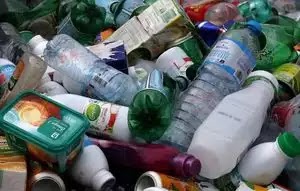
Plastic bottles and containers are seen in a container at a recycling park near Brussels, Belgium, November 20, 2018. REUTERS/Yves Herman/File Photo

In lab experiments, researchers from the city's Nanyang Technological University mixed plastic with chemicals to form a solution, which could then be broken down by artificial sunlight.

The plastic was broken down in six days, and scientists hope the process can be carried out in future under real sunlight.

"We are able to turn plastics, which are of course polluting the oceans, into useful chemicals," said Soo Han Sen, who led the two-year research project and is from NTU's.

related:
What to do with all the plastic trash?
Phasing out plastic: what is the alternative?

read more

Waste to bioenergy: a review on the recent conversion technologies

Scientific studies have demonstrated that it is possible to generate a wide variety of bioenergy from biomass residues and waste, and however its cost is not competitive with petro-fuels and other renewable energy. On-going efforts are continued extensively to improve conversion technologies in order to reduce production costs.

The present review focuses on the conversion technologies for transforming biomass residues and waste to biofuels, specifically their technological concepts, options and prospects for implementation are addressed. The emerging developments in the two primary conversion pathways, namely the thermochemical (i.e. gasification, liquefaction, and pyrolysis) and biochemical (i.e. anaerobic digestion, alcoholic fermentation and photobiological hydrogen production) conversion techniques, are evaluated.

Additionally, transesterification, which appears to be the simplest and most economical route to produce biodiesel in large quantity, is discussed. Lastly, the strategies for direct conversion of biomass residues and waste to bioelectricity including the use of combustion and microbial fuel cells are reviewed.

read more

Tiny particles help plastic break down in the sun
An otter is playing with plastic bottle. A teen is now working to make plastic that will break down and go away for good

Tossing a plastic bag out of a car window isn’t just rude. It creates a huge problem. That’s because when plastic enters the environment, it can take years — if not a century — to go away. Worse, this litter can break down into microplastics, tiny particles that can move into rivers and oceans, where animals may mistake them for food. But Thomas Colburn, 17, has come up with a new recipe for plastic. This plastic breaks down into harmless carbon and gas. All it needs to do this is a bit of sunlight.

Thomas, a senior at Oak Ridge High School in Tennessee, is on his school’s cross-country team. He loves to run for miles along trails that surround his town. But he hated seeing plastic trash as he ran — trash that he would spot over and over again.

At the Governor’s Schools for the Sciences and Engineering, a summer program in nearby Knoxville, Thomas had the chance to create plastic polymers. These molecules are long chains of repeating groups of atoms, commonly used to make plastic. They can be found in everything from shopping bags to cell phone cases and even socks. As Thomas made the polymers, the teen began to think about ways to un-make them. What he learned might suggest ways to get rid of the plastic that litters his running paths.

read more

New filter uses sunlight to break down ocean-bound plastics
A microscope image of the semiconductor-coated wires used in the KTH team's new microplastic filter

Plastic's resilience makes it great for product packaging, but not so great when it ends up in the ocean. Now, scientists from KTH Royal Institute of Technology in Sweden are testing a new filter system to catch tiny bits of plastic before they enter natural waterways, and quickly break them down using visible light from the Sun.

The silky smooth texture of some toothpaste or hand soaps owes a lot to plastic microbeads, and while these additives are currently being phased out, microplastics are still getting into our waterways. They've penetrated even the deepest trenches of the oceans, where they not only pollute the environment but are eaten by marine animals and slowly poison creatures all the way up the food chain.

"These plastics will start accumulating in the food chain, transferring from species to species, with direct adverse consequences to human population," says Joydeep Dutta, chair of the Functional Materials division of KTH. "Tackling plastic pollution at its source is the most effective way to reduce marine litter." Normally, plastics break down with exposure to sunlight in a process called photocatalytic oxidation, but that can take many years. So the KTH team, along with a Swedish company called PP Polymer AB, developed a membrane that speeds it up.

read more

The sun can help break down ocean plastic, but there’s a catch
As of 2014, 5 trillion plastic pieces are floating around the planet's oceans

With the help of sunlight, plastics in the ocean dissolve into carbon that some microbes will turn into food. What if the plastic in the ocean could burn itself up? This thought might not be too far from the truth. A recent study in the Journal of Hazardous Materials found that when four different types of post-consumer microplastics collected from the waters of the North Pacific Gyre were placed under a solar simulator, they dissolved into organic carbon.

Currently, scientists predict that 5 trillion plastic items, most of which are teensy microplastics, are currently floating around in the world’s oceans, weighing over 250,000 tons. Still, researchers have estimated that the plastic found at the surface of the sea is only around one percent of the plastic that has gone into the oceans.

However, the plastics on the surface are unique in that they are exposed to sunlight. And, since plastics are made of polymers of carbon, that sunlight breaks down larger plastics into carbon over time, says Aron Stubbins, an author of the study and professor of marine sciences and engineering at Northeastern University.

read more