29/07/2013

Good time to lock-in housing loans?

'Rising S'pore household debt worrying'

Singapore's central bank expressed concern yesterday at the growing mountain of household debt and surging property prices, saying they posed "significant risks" to the country's financial system.

While the city-state's banking system remains sound, the build-up in household debt was "worrying", said Ravi Menon, managing director of the Monetary Authority of Singapore.

He said a growing number of households have overborrowed in the property market, largely due to low interest rates and stretched loan tenures.

read more

Singapore's mounting household debt 'worrying'

Singapore's high property prices and increasing household debt pose a significant risk to its financial system, according to the Monetary Authority of Singapore (MAS).

"The combination of low interest rates, growing leverage and surging property prices poses significant risks to financial stability," said Ravi Menon, Managing Director of the central bank.

Despite the city-state's sound banking system, the mounting household debt is "worrying", noted Menon, adding that a sizeable number of households have overborrowed in their mortgages due to low interest rates and long repayment terms.

read more

Singapore banks placed on "negative" outlook: Moody's

Credit rating agency Moody's on Monday downgraded the outlook of Singapore's three main banks to "negative" from "stable" amid rising property prices and mounting household debt in the city-state.

"The two main drivers underpinning our opinion are the recent period of rapid loan growth and rising real estate prices in Singapore and in regional markets where Singapore banks are active," it said in a statement. "These have increased the probability of deterioration in the banks' credit profiles under potential adverse conditions in the future."

Moody's said Singapore banks have been operating in a favourable environment for an extended period amid low interest rates and strong regional economic growth, which has led to rising credit and asset inflation in the property and financial markets.

read more

Moody's downgrades Singapore banking system to 'negative'

The outlook for Singapore's banking system has plunged from stable to negative due to the recent period of soaring loan growth, as well as rising property prices locally and in countries where Singapore banks operate.

According to Moody's Investors Service, these factors increase the chance that credit quality would deteriorate under potential adverse conditions in future. "The operating environment for Singapore's banking system has been favourable for an extended period, with low interest rates and strong economic growth domestically and in the surrounding region," said Moody's Vice President and Senior Analyst Gene Fang.

"With the potential risk of a turn in the interest rate cycle, we view strong asset inflation and credit growth trends as vulnerabilities, as this combination would likely cause credit costs to rise from their current low base." Fang was commenting on the recently released Moody's report called Singapore Banking System Outlook, which details Moody's forecasts on how bank creditworthiness will evolve in this system for the next 12 to 18 months.

read more

Singapore cuts CPI outlook, warns of household debt risks

Singapore’s central bank lowered its inflation outlook for the year on Tuesday but said it was concerned about household debt levels as interest rates looked set to rise.

The Monetary Authority of Singapore (MAS) revised downwards its inflation forecast for 2013 to 2-3% from an earlier 3-4%, citing the sharp fall in car prices earlier this year as well as a slower rise in accommodation costs.

Economic growth this year will “comfortably” meet the official forecast of 1-3%, the central bank added, citing the strengthening US economy and Japan’s expansionary policies that will likely offset headwinds from a slowdown in China and easing public spending in some Southeast Asian countries.

read more

Analyst: 9,000 troubled units could be on market 

Up to 9,000 Singapore private property owners could be forced to sell their homes if interest rates rise in the city-state, according to an analyst report published today.

On the back of news that up to 10 percent of Singapore households may have already over-leveraged their private property purchases beyond the new 60 percent limit that was recently imposed by the Monetary Authority of Singapore (MAS), wealth management firm Religare Enterprises has cautioned its clients to avoid investing in Singapore property developers.

In its ASEAN Property Pulse report released today, the research arm of the India-based firm explained that between 10 -15 percent of borrowers could be in financial trouble should interest rates rise in Singapore.

read more

Singapore Home Prices Climb to Record as Loan Curbs Imposed

Singapore Home Prices Climb to Record as Government Curbs Loans
Traffic travels along the Benjamin Sheares Bridge, past a condominium development, in Singapore. Photographer: Munshi Ahmed/Bloomberg

Singapore home prices climbed to a record in the second quarter as gains in suburban housing values accelerated, prompting the government to implement new measures on property loans.

The island-state’s private residential property price index rose 1 percent to 215.4 points in the three months ended June 30, extending a 0.6 percent increase in the first quarter, according to revised figures released by the Urban Redevelopment Authority today. The pace of gains in prices in the suburbs more than doubled from the previous three months.

Record home prices amid low interest rates raised concerns of a housing bubble and prompted the government to widen a four-year campaign to curb speculation in Asia’s second-most expensive housing market. Singapore on June 28 unveiled new rules governing how financial institutions grant property loans to individuals.

read more

Mitigating Interest Rate Risks in Your Properties

In our earlier blog entry on Who will be Hardest Hit by 3.5% Interest Rate, we identified the homeowners most likely to be affected by the interest rate uncertainty brought on by the possible removal or reduction of the United States Federal Reserve Quantitative Easing measures.

Since then, there has been a succession of other events and articles that reinforce our expectations. As reported in Yahoo, several banks in Singapore have either raised interest charged on their fixed-rate home loans or abolished such loans altogether. We, at BLUTA, expect more banks to do so in the coming weeks. Another recent article by CNBC also discussed the dangers of Singapore’s soaring household debt and point out that “the 10-year Singapore government bond yield has risen to 2.5 percent from 1.4 percent in May”.

Do we need to prepare for this?  Of course, the million dollar question here is the probability of the interest rates rising and the extent that they do.  Some homeowners will need some concrete evidence before even consider making provisions for it.

read more

S'pore banks raise fixed-rate loans

In an effort to hedge against rising mortgage rates in the US, Singaporeans are expected to switch to fixed-rate loans.

However, some local banks have already raised the interest rates on their products.

For instance, Maybank increased the interest rate of its three-year fixed loan by 0.1 percentage point on Monday, while ANZ raised its two-year fixed mortgage by 0.17 percentage point 

read more

Good time to lock-in loans, says DBS head

With mortgage interest rates in the US and Singapore expected to rise in the next one to two years, now is an opportune time for borrowers to switch from variable interest rate loans to fixed-rate loans, according to DBS CEO Piyush Gupta (pictured).

But most Asian borrowers prefer floating rate loans rather than fixed-rates, he noted. "In Asia, most of us tend to be punters…Anecdotally, the easiest way to think about this – We go to the US (and) the most popular mortgage is the 30-year fixed rate. In Asia, we at DBS tried pushing two years ago a five-year fixed rate mortgage…almost no takers. So Asians don't like fixing, Asians don't like hedging."

"However, given where we are in terms of our view in the world and the fact that there's likely to be a steepening bias over 12, 24 months, I would suggest it might be worthwhile to think about it."In addition, Gupta cautioned investors to be selective on where they put their money in China due to over-borrowing in that market.

read more

MAS clamps down on bank-developer tie-ups

The Monetary Authority of Singapore (MAS) has introduced a new rule which prohibits financial institutions (FIs) from tying up with property developers and agents to sell property, according to local media reports.

FIs were informed of this new rule the same day the latest property loan curbs were announced that will, among others, prevent banks from providing preferential interest rates to clients acquiring certain properties."MAS is of the view that, except for the granting of property loans, FIs should not be offering any property-related services to customers in general. FIs should therefore not engage in property advertisements or tie-ups with property developers/agents," an MAS spokesman said

"This is regardless of the location of the property (in Singapore or overseas) or the type of the property (residential, commercial or industrial). MAS will take into account an FI's compliance on this issue, in its supervisory assessment of the FI," he noted, adding that the central bank expects full compliance from FIs.

read more

Who will be Hardest Hit by 3.5% Interest Rate

We wrote about the recent property loan regulations announced by Monetary Authority of Singapore (MAS) in our article on 2nd July. We also posited that the introduction of a mandated 3.5% interest rate for total debt servicing ratio (TDSR) calculation implies an unspoken expectation of an interest rate hike in the short to medium term.

As we mentioned in the second article, such a hike in interest rate would surely be accompanied by some market corrections and turbulence. And needless to say, there will be some whose pocketbooks are exposed to a direct hit, due to their property investments.

We will attempt to identify these groups of home and property owners, so that they can take corrective action before things really take a turn for the worse.

read more

Local banks not at risk despite Moody's downgrade: MAS

Singapore banks are not at risk from potential downturns as they have adequate buffers to cope with rising interest rates, according to the Monetary Authority of Singapore (MAS) in its reaction to Moody's outlook downgrade for Singapore banks from stable to negative.

"Local banks are not at risk" even though some borrowers may face problems should interest rates rise due to a slowing of the US Federal Reserve's bond-buying programme, MAS said. "They undertake regular stress tests on their own as well as coordinated by the MAS, and have adequate buffers in place to cope with the inevitable upturn in the interest rate cycle."

Moreover, the financial positions of local banks continue to be strong. As Moody's also concluded, Singapore banks have sufficient capital to withstand even severe stress test scenarios.

read more

Singapore developer CapitaLand warns of headwinds as profit drops

capitaland.jpg
CapitaLand, Southeast Asia's biggest developer, said prices and sales of Singapore residential properties would moderate because of government measures to curb speculation.

The company sold 139 residential units in the city state in the three months to June 30, 31 per cent fewer than in the same period last year, the firm said in a statement through the Singapore stock exchange yesterday.

Second-quarter profit fell 0.7 per cent on lower portfolio gains, it said. CapitaLand expected some headwinds for Singapore's private residential property market in the near term, its earnings statement said.

The Monetary Authority of Singapore (MAS) introduced a total debt servicing ratio cap of 60 per cent for property loans granted by financial institutions. This was expected to have an impact on residential property sales, CapitaLand said.

read more


Loan curbs expected to hit home prices, sales


CapitaLand said prices and sales volume of the residential property sector in Singapore are expected to moderate as the cumulative impact of the various cooling measures is played out in the coming months. -- ST FILE PHOTO

Home prices and sales volumes are likely to head south over the next few months as various measures to curb excessive borrowing take their toll on demand, property giant CapitaLand said yesterday.

"The group envisages some headwinds for the private residential property market in the near term," CapitaLand said in its earnings statement.

"Prices and sales volume of Singapore residential property are expected to moderate as the cumulative impact of the various property measures continue to be played out in the coming months," it added.

read more

More million-dollar HUDC sales to come: expert

Channelnewsasia Forum, 18 Jul 2013


SINGAPORE: Expect more million-dollar transactions of Housing and Urban Development Company (HUDC) units.

This was what one expert -- Nicholas Mak, the executive director for research and consultancy at SLP International Property Consultants -- said about the units, which were built in the 1970s. One unit at Serangoon North was sold for S$1.14 million, which is the highest this year. Last year, another unit at Shunfu was sold for S$1.33 million.

There are currently four HUDC estates pending privatisation. Full story
Related:
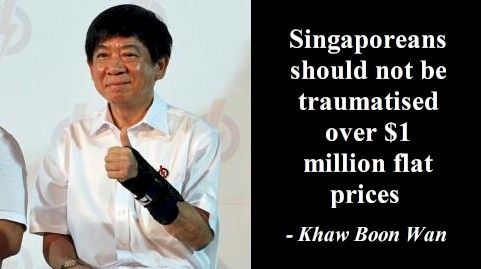
Singaporeans should not be traumatised over $1m flat price: Khaw Boon Wan - Asiaone.com

read more

28/07/2013

AND THEN IT IS WINTER

You know. . . time has a way of moving quickly and catching you unaware of the passing years. It seems just yesterday that I was young, just married and embarking on my new life with my mate.

Yet in a way, it seems like eons ago, and I wonder where all the years went.

I know that I lived them all. I have glimpses of how it was back then and of all my hopes and dreams.

But, here it is... the winter of my life and it catches me by surprise...How did I get here so fast? Where did the years go and where did my youth go? I remember well seeing older people through the years and thinking that those older people were years away from me and that winter was so far off that I could not fathom it or imagine fully what it would be like.

But, here it is...my friends are retired and getting grey...they move slower and I see an older person now. Some are in better and some worse shape than me...but, I see the great change.

Not like the ones that I remember who were young and vibrant...but, like me, their age is beginning to show and we are now those older folks that we used to see and never thought we'd be. Each day now, I find that just getting a shower is a real target for the day! And taking a nap is not a treat anymore... it's mandatory! Cause if I don't on my own free will... I just fall asleep where I sit!

And so...now I enter into this new season of my life unprepared for all the aches and pains and the loss of strength and ability to go and do things that I wish I had done but never did!! But, at least I know, that though the winter has come, and I'm not sure how long it will last...this I know, that when it's over on this earth...its over. A new adventure will begin!

Yes, I have regrets. There are things I wish I hadn't done...things I should have done, but indeed, there are many things I'm happy to have done. It's all in a lifetime.

So, if you're not in your winter yet...let me remind you, that it will be here faster than you think. So, what ever you would like to accomplish in your life please do it quickly! Don't put things off too long!! Life goes by quickly. So, do what you can today, as you can never be sure whether this is your winter or not!

You have no promise that you will see all the seasons of your life...so, live for today and say all the things that you want your loved ones to remember...and hope that they appreciate and love you for all the things that you have done for them in all the years past!! "Life" is a gift to you.

The way you live your life is your gift to those who come after. Make it a fantastic one.

LIVE IT WELL!

ENJOY TODAY!

DO SOMETHING FUN!

BE HAPPY!

HAVE A GREAT DAY!

Remember "It is health that is real wealth and not pieces of gold and silver.

LIVE HAPPY IN 2013!

LASTLY, CONSIDER THE FOLLOWING:

TODAY IS THE OLDEST YOU'VE EVER BEEN, YET THE YOUNGEST YOU'LL EVER BE

SO - ENJOY THIS DAY WHILE IT LASTS.

~Your kids are becoming you......but your grandchildren are perfect!

~Going out is good.. Coming home is better!

~You forget names.... But it's OK because other people forgot they even knew you!!!

~You realize you're never going to be really good at anything....especially golf.

~The things you used to care to do, you no longer care to do, but you really do care that you don't care to do them anymore.

~You sleep better on a lounge chair with the TV blaring than in bed. It's called "pre-sleep".

~You miss the days when everything worked with just an "ON" and "OFF" switch..

~You tend to use more 4 letter words ... "what?"..."when?"... ???

~Now that you can afford expensive jewelry, it's not safe to wear it anywhere.

~You notice everything they sell in stores is "sleeveless"?!!!

~What used to be freckles are now liver spots.

~Everybody whispers.

~You have 3 sizes of clothes in your closet.... 2 of which you will never wear.

~But Old is good in some things: Old Songs, Old movies, and best of all, OLD FRIENDS!!

Stay well, "OLD FRIEND!" Send this on to other "Old Friends!" and let them laugh in AGREEMENT!!!

It's Not What You Gather, But What You Scatter That Tells What Kind Of Life You Have Lived

27/07/2013

Taking free items in bulk is criminal misappropriation


People seem to be helping themselves to more than what they need at self—help counters at fast—food chain McDonald’s.

At a McDonald’s outlet in Tampines Mall, people took napkins, sauces, or even free drink refills in bulk, and paid no heed to warnings by staff.

Although it is not considered as theft, the actions amount to criminal misappropriation. Those found guilty could be jailed up to two years, fined or be liable to both.

read more

Which eatery has the best toothpicks? Din Tai Fung, says labour chief Lim Swee Say
When labour chief Lim Swee Say goes to Chinese restaurant Din Tai Fung, his eyes are peeled not so much on its dumplings and noodles, but on its toothpicks. -- ST PHOTO: MARK CHEONG
When labour chief Lim Swee Say goes to Chinese restaurant Din Tai Fung, his eyes are peeled not so much on its dumplings and noodles, but on its toothpicks. -- PHOTO: DIN TAI FUNG

When labour chief Lim Swee Say goes to Chinese restaurant Din Tai Fung, his eyes are peeled not so much on its dumplings and noodles, but on its toothpicks.

He likes them because they are well-designed and of good quality.

"Many restaurants give you toothpicks, but the toothpick is so big it can never go through, but this one is so fine that whatever is inside sure can come out," he said on Monday.

read more

Govt’s handling of recent cases: Lim Swee Say

On 22 July, NTUC Chief, Lim Swee Say, was reported to have said that he likes the toothpicks from the Din Tai Fung restaurant, so much so that he “can never resist” to “pinch” half a box each time he visits the restaurant.

“They always serve in a pack,” he told reporters at BreadTalk Group’s new headquarters in Tai Seng. “And because I go there very early – 10.30 in the morning – always full right. And guess what? By the time I left, normally right, it’s half left. The other half is in my pocket.”

His remarks and admission drew criticisms from the public who chided him for displaying the worst traits of a “kiasu” Singaporean – one who hoards things and disregard others. While some of the criticisms were overboard, the gist of them is still valid – especially when one considers that the government has spent millions of dollars throughout the decades to inculcate and promote a “kind society”.

read more

Of toothpick-gate and handshake-gate

Lim Swee Say was telling reporters how Din Tai Fung had the best toothpicks

Just quite recently, we were entertained by labour chief Lim Swee Say’s take on the eatery with the best toothpicks. The eatery in question is Din Tai Fung, which serves dumplings and noodles.

Lim unabashedly tells reporters that he went to the eatery very early at 10.30 am, and helps himself to the pack of toothpicks. Initially full, the pack will be half full by the time Lim left, with the other half in his pockets. He even showed reporters the toothpick that he pocketed. The spokesman for Din Tai Fung said that customers are free to use as many toothpicks as they like.

Lim wanted to make a point about being attentive to details. If the irony was not lost on the PAP, where was the attention to details when Mas Selamat escaped, when parts of Singapore was flood-prone, bringing in too much foreign labour that result in wages depression and creation of additional problems..the list goes on.

read more

It’s tooth-picking good!


Is it lunch-time already? Where’s the nearest Din Tai Fung? It’s got the best toothpicks, said labour chief Lim Swee Say, so slim that it can get between your teeth to dig out your lunch remnants. Save on flossing!

Go take as many as you want. Din Tai Fung says you can. How wonderful that the Chinese restaurant is so understanding of the Singapore spirit of kiasu-ism. Mr Lim actually confessed to taking half a box everytime he ate there. He even has them handy in his shirt pocket!

Oh. Is it minty too?

read more

Lim Swee Say can never resist Din Tai Fung toothpicks

Masked crusaders need clean teeth

According to Lim Swee Say, the measure of a company’s success is how it pays attention to fine details. He also believes they should emulate Lady Gaga. The DTF toothpick is unusual in that it resembles an interdental brush, with bristles to give our labour chief’s oral cavity a ‘shiok’, clean feeling after every meal. Perhaps the restaurant should sell their designer picks as a side merchandise considering they have one very rich customer who’s an obvious fan of their product, an addict even.

I never had much success with the traditional wooden picks myself, but now that the Minister has put his stamp of approval on this tiny marvel of dental engineering, I simply have to give it a shot. Now I can dislodge little pieces of xiao long bao with a touch of sophistication, when all I was doing in the past was poking twigs between my gums like a caveman. Thank you Sir for showing me the way to refinement and good taste.

After this endorsement, you’re likely to have some kiasu, ugly Singaporeans following the Minister’s example and taking home half box fulls of quality toothpicks to save money on Oral-B products, a behaviour more commonly known as bad etiquette or miserliness. Maybe Lim Swee Say is a stickler for oral hygiene, but this is just shameless.

read more

The Secrets Behind Lim Swee Say's Message

So says the article by Amelia Tan [link] from Straits Times, the bearer of right news. I bled my eyes as a sacrifice by reading the article over twice. Mean feat, I deserved to be knighted just for that. Are SPH hard up to use up precious space in their newspaper? Can't they insert more ceiling cleaning articles or something? This might be an indicator I should sell up my SPH shares

My beloved primary school English teacher Miss Ong used to grind us through reading newspaper articles like that and writing our thoughts on them. I didn't even know where to start. Normally I could pick up any sort of propaganda by running my Bullshit Detector V1.4 software over the article but it failed me badly for the first time today. What was the message that Amelia Tan encrypted in her article? She must be a master in this trade. I'd love to meet her up for a cup of coffee during my return to Singapore soon

Is this one of those clever advertising ideas by our creative gurus? Viral advertising or something, is that what they call it? I'm sure Din Tai Fung will get plenty of business after this. They might even put up Lim Swee Say digging his cavity with their perfect toothpick as their poster boy. I'm sure that will boost the appetite of the silent majority who dine there, going by the fact how much they enjoy Nasi Lemak, Chikus, Abalone porridge and other whatnots.

read more

Yao Gui Sia Suay Lim steals toothpicks home from Din Tai Fung?


Jason Phua saw this high credibility article on straits times newspaper today and wants to share it with the other readers. Please NOTE this is NOT a satire article

When labour chief Lim Swee Say goes to Chinese restaurant Din Tai Fung, his eyes are peeled not so much on its dumplings and noodles, but on its toothpicks.


He likes them because they are well-designed and of good quality.

read more

Minister Lim Swee Say is a DISGRACE to Parliament, stealing toothpicks from Restaurant

In fact, he revealed with a laugh, the Din Tai Fung toothpicks are so good, he "can never resist" - he always takes half a box of them during each visit.


"They always serve in a pack," he told reporters at BreadTalk Group's new headquarters in Tai Seng. "And because I go there very early - 10.30 in the morning - always full right. And guess what? By the time I left, normally right, it's half left. The other half is in my pocket."

In fact, Mr Lim had a Din Tai Fung toothpick on him, and showed it to reporters.

read more

So Zorro Steals Toothpicks?
I wouldn’t call it pilferage but toothpicks I steal too

Those righteous among you screaming “sin” “sin” go ahead and cast the first stone only if you have never pinched a pencil from a seminar, or a small plastic bottle of shampoo from a hotel room, or wiped your dick on your girlfriend’s bedsheets as you leave her house.

Truth be told, toothpicks seem like a hot favorite. I know a girl who would empty every toothpick holder she sees. Well, maybe she has lots of gaps in her teeth. For sure, some Chinese restaurants seem to try to beat toothpick stealers in their game – haven’t you noticed how nowadays most Chinese restaurants set aside with the cutlery, one, yes, just ONE toothpick per diner.

What I find truly amazing is the amount of chatter that toothpick story has generated.

read more

Game Over

It is disconcerting, though, when a millionaire minister has acknowledged publicly that he purloined half a box of toothpicks from a fancy restaurant. Toothpicks which were meant for the use of other patrons as well, not just his gauche fetish of picking teeth in public.

response:
Anonymous7/24/2013 5:19 PM
The crybaby ex-Minister, and the toothpick Minister, in the Prime Minister's Office? Toothpick/Zorro pockets the picks, and while at NTUC, picks the pockets of workers? His toothpick lark has turned into a slapstick on himself. I can't imagine a more silly and bone-headed admission, rivalling the PM's "fix the opposition", "mee siam mai hum" or "free smoke and free pork soup in Beijing" joke. Ouch. It appears they are having a lark at the PMO. Speaking of PMO, the CPIB, reporting to the same, has it's own corruption, in the person of Edwin Yeo Seow Hiong. Integrity indeed, under the PM's own charge.

read more

"Din Tai Fung toothpicks are so good" says labour chief Lim Swee Say

In fact, he revealed with a laugh, the Din Tai Fung toothpicks are so good, he "can never resist" - he always takes half a box of them during each visit.

"They always serve in a pack," he told reporters at BreadTalk Group's new headquarters in Tai Seng. "And because I go there very early - 10.30 in the morning - always full right. And guess what? By the time I left, normally right, it's half left. The other half is in my pocket."

In fact, Mr Lim had a Din Tai Fung toothpick on him, and showed it to reporters.

read more

26/07/2013

Paying high salaries to mitigate corruption


Update 25 Sep 2018: Ministers should accept pay sacrifice as job is 'form of NS': Blackbox survey

Nearly seven in ten Singaporeans (67 per cent) feel that ministers should be “willing to make a sacrifice” and accept a lower pay than what they may earn in the private sector as their job is a “form of national service”, a recent Blackbox Research survey showed. Nearly two in five, or 36 per cent, also disagreed that an important criterion for ministers should be “the likelihood that they would earn a high salary if they were working in the private sector” while 27 per cent agreed with the statement and 37 per cent expressed neutral views, according to the survey conducted between 17 and 24 August.

Last month, Emeritus Senior Minister Goh Chok Tong sparked a heated debate on ministerial salary after a dialogue he had with South East District residents. During the dialogue, he said that ministers are not paid enough and also spoke about the difficulties in attracting top talent to join the government. He had said, “You are going to end up with very very mediocre people, who can’t even earn a million dollars outside to be our minister. Think about that. Is it good for you, or is it worse for us in the end?”

Currently, the annual salary of an MR4 grade (entry level) minister stands at $1.1 million, while the Prime Minister earns $2.2 million. This is based on the assumption of an Annual Variable Component of one month, good individual performance and the national bonus indicators being met.


High pay for better talents?
(Photo by Luis Ascui/Getty Images)

In late 1994 the Goh Chok Tong government adopted a policy of giving cabinet ministers, parliament members, senior civil servants and other public sector employees (e.g., at the time university professors were included, but they were subsequently decoupled from civil service salary scales.) higher levels of pay, on the twin grounds that salaries competitive to those prevailing in the business and professional sectors are necessary to attract managerial and other talent into politics, and better paid public employees are less likely to engage in corruption. (The old article by Catherine Lim was triggered by the action, but it then went into territory sufficiently controversial to produce a reprimand from Goh Chok Tong himself – a major event then but today mostly forgotten.)

The need to match political salaries with business levels reflects a basic feature of the Singapore “system”, namely the inter-twining of public and commercial sector careers. With the government in control of a large sector of the Singapore economy through share ownership, many civil servants, army officers, even some professors, receive board directorships and executive positions in commercial companies, while in the reverse direction business executives, professionals, and, again, academics, have been recruited as PAP parliamentary candidates. Going into politics is largely an extension of one’s previous career, like promotion from line staff into the executive circle as reward for good performance, rather than a separate calling due to strong ideological commitment to a particular set of political beliefs.

The assumption underlying the system is that the Singapore government’s main task is to manage the economy, so that parliament members and cabinet ministers need to have the relevant experiences, which are best judged by their previous educational background and management related performance. One could say that the cabinet sees itself as the board of directors of Singapore Inc, working on behalf of its citizen shareholders, with parliament acting as a kind of “nominating committee”, since you need to get its majority support to gain power.

read more

HIGH SALARIES WILL PREVENT CORRUPTION, REALLY?


What do the following people have in common?

Wee Toon Boon, Phey Yew Kok, Teh Cheang Wan, SCDF Commissioner Peter Lim, Principal Koh Yong Chiah, MFA Chief of Protocol Lim Cheng Hoe

PAP claimed that paying high salaries to politicians and civil servants will prevent corruption. We have seen many civil servants committing money and sexual corruption despite their high salaries. Can we trust what the PAP preach? High salary equals no corruption? How true is this

read more

Ex-principal admits to giving false info to MOE

Koh Yong Chiah (above) lied to cluster superintendent Chia Ban Tin on Nov 24, 2005, that he was not having an affair with school service provider Ivy Loke Wai Lin. As the final approving authority at Jurong Junior College and River Valley High, he had awarded millions of dollars in school contracts to Ms Loke's firms.ST PHOTO: LAU FOOK KONG

Former River Valley High principal Koh Yong Chiah, who lied about an extramarital affair with a vendor to whom he awarded millions of dollars in school contracts, pleaded guilty yesterday to giving false information to a Ministry of Education (MOE) senior officer.

The 61-year-old educator of 35 years' service, who had been principal of four schools since 1995, lied to cluster superintendent Chia Ban Tin on Nov 24, 2005, that he was not having an affair with school service provider Ivy Loke Wai Lin, 55.

Ms Chia, who had been tasked to inquire into an anonymous complaint against Koh for alleged misconduct, then reported to the Director General of Education that there had been no such misconduct. Koh was then principal of Jurong Junior College (JJC). He later became head of River Valley High in 2009.

read more

SCHOOL PRINCIPAL CONVICTED OF AWARDING $3.2 MILLION WORTH OF CONTRACTS TO MISTRESS' COMPANY


Former RVHS principal Koh Yong Chia was convicted of providing false information to the senior MOE official about his extramarital affair with school vendor Loke Wai Lin. Koh had over a 7 year period awarded $3.2 million worth of contracts to companies owned by Ms Loke

Koh was principal of JJC from January 2003 to December 2009. After which he transferred to River Valley High School in Dec 2009. Ms Loke was the director and majority shareholder in companies EA 21 and EI which provided education services to schools.

Ms Loke was with TCS when she first approached Koh Yong Chia to take part in an overseas community project in 2000. Soon a mutual attraction developed between the two and they had sex during a school trip to Lijiang, China. Loke subsequently divorced her husband in 2005

read more


Can high salary curb corruption?


Most highly paid bosses head the most corrupt organisations, according to bribery survey

Anti-corruption activists, MPs, and the general public are divided over Kampala City Council Authority (KCCA) Executive Director Jennifer Musisi’s claim that being paid highly deters corruption.

In an interview with The Independent (Issue 178 “Jennifer Musisi wants to be judged on results”), Musisi said it is better to be paid a high salary than earn little officially but illegally earn millions through corrupt means.

She says the Shs 43 million she wants to be paid is nothing compared to the revenues she has recovered and will still recover that KCCA has been losing to corruption. She insists that most civil servants are corrupt and inefficient because they are paid low wages and yet, like everybody else, they have to meet their basic needs at the end of the day.


Don’t expect much from ministers despite their high pay

It was reported yesterday that an assistant-director with the Corrupt Practices Investigation Bureau was charged with corruption. 39-year-old Edwin Yeo Seow Hiong was charged with 21 criminal counts with alleged misappropriation of more than $1.76 million dollars in public funds and blowing part of the sum at the Marina Bay Sands casino.

When a fiasco of such magnitude happens, the knives usually come out quickly, and one particular outlet where the public vents its anger is this – why our ministers with their high pay can allow this to happen? It is to this end that we would like to bring to readers’ attention a seminal article by Tomas Chamorro-Premuzic published in the Harvard Business Review blog network. Tomas is an international authority in personality profiling and psychometric testing. He is currently a Professor of Business Psychology at the University College London. In April 2013, he published an article titled “Does money affect motivation? A review of research”. As the title of his article suggests, Tomas explored the impact of pay on motivation in workers.

We have always wanted to discuss this article since its publication in April, but there wasn’t a ripe occasion for it. However, when news of Yeo’s corruption charges broke out, it presented us with a suitable opportunity.

read more


Opposition member Lina Chiam on CPIB case: Revise gov't policy of high salaries
Lina Chiam has been elected as Chairman of SPP. (Yahoo! photo/ Alicia Wong)

The Chairman of Singapore People’s Party (SPP), Lina Chiam, is the first opposition member to comment on the recent graft case involving a senior officer in the Corrupt Practices Investigation Bureau (CPIB).

Edwin Yeo Seow Hiong, 39, was charged for misappropriating a total of S$1.76 million on Wednesday, and was released later that evening with a bail of S$500,000. His passport was impounded.

Chiam, who is also a Non-Constituency Member of Parliament (NCMP), released a statement on the opposition party’s website, which also referred to other recent corruption-related offences among civil servants

read more

Does Money Really Affect Motivation? A Review of the Research

How much should people earn? Even if resources were unlimited, it would be difficult to stipulate your ideal salary. Intuitively, one would think that higher pay should produce better results, but scientific evidence indicates that the link between compensation, motivation and performance is much more complex. In fact, research suggests that even if we let people decide how much they should earn, they would probably not enjoy their job more.

Even those who highlight the motivational effects of money accept that pay alone is not sufficient. The basic questions are: Does money make our jobs more enjoyable? Or can higher salaries actually demotivate us?

Let’s start with the first: does money engage us? The most compelling answer to this question is a meta-analysis by Tim Judge and colleagues. The authors reviewed 120 years of research to synthesize the findings from 92 quantitative studies. The combined dataset included over 15,000 individuals and 115 correlation coefficients.

read more

Key myths about corruption

Corruption has been one of the major international concerns of the past decade. It is an issue that affects all countries, rich and poor, in different ways and to differing degrees. Exactly how corruption affects particular societies has, however, been the subject of some discussion in the literature. The major international institutions promoting governance reforms have, for example, persistently argued that corruption has a direct negative impact upon overall economic growth levels and can depress the climate for attracting international investment; although these are far from universally-held assumptions, even in the mainstream economics literature.

Amidst heightened international concern for tackling the abject poverty which continues to affect such large sections of humanity (expressed most clearly in the evolution of the millennium development goals or MDGs), perhaps the most important concern that has been expressed about corruption is that it disproportionately affects the poor and marginalized, through excluding them from access to services or reducing the funds available for direct use in social programmes. Donor-country fears over corruption in the handling of development aid monies may also act to erode the political will necessary to ensure adequate international funding of the actions needed to meet MDG targets, whilst within Southern countries perceptions of widespread corruption within political life can act decisively to depress popular support for state reforms and/or open democratic political systems.

Clearly, then, corruption – its extent, nature, dynamics, causation and how it might be tackled – is an issue of fundamental importance to those working in the field of international development. One of the things noticeable on a first exploration of the literature on corruption and development is the singular lack of attention that was devoted to the issue for most of the period since the second world war and, in turn, the sudden rediscovery of the issue towards the end of the 1980s and the explosion of international legislative initiatives, institutional formation and academic work that has occurred since then.

read more

Graft - A really bad slip!

Singapore’s struggle to keep its rank as the world’s 5th least corrupt country takes a knock on the head.

The arrest of a top anti-corruption officer raises more public doubts that high salaries prevent government corruption.

Under all criminal conditions, one body – the Corrupt Practices Investigation Bureau (CPIB) which originated under British rule – has steadfastly remained a pillar most Singaporeans feel they can rely on to ensure integrity.

read more

Corruption, Embezzlement and Cleaning Up the Civil Service

Yet another case of wrongdoing for personal gain in the civil service. CPIB chief Eric Tan did the right thing by humbly apologising for the actions of his officer but that is not enough for a public tired of cases of fallen civil servants abusing their authority.

CPIB has been busy. Ng Boon Gay was acquited although his name was dragged in the mud before cleared of co being corruption. Former SCDF chief Peter Lim was sentenced to 6 month jail for his sex for contracts scandal. NUS lecturer Tey Tsun Hang went to prison for 5 months for his sex for grades scandal. Earlier this year, an assistant director in MDA was cooperating with CPIB as he was accused of asking for bribes from those who applied for grants from MDA.

Now, an assistant director in the CPIB is charged with criminal breach of trust as he pocketed $1.7 million, with about $240,000 of it gambled away at MBS. The amount is huge by most standards, albeit the highest amount of money embezzled by tainted civil servants was $12 million by 2 SLA staff who were sentenced in 2010 to 22 and 15 years.

read more

One Man's View

During small talk at a wake last year, somebody was awfully confident about the outcomes of the corruption cases concerning Peter Lim (Singapore Civil Defence Force) and Ng Boon Gay (Central Narcotics Bureau). Sure enough, Lim was jailed and Ng was acquitted. The whiff of intrigue spelt power play at high levels.

PM Lee's sacking of CPIB Director Eric Tan over a mere $1.7 million embezzled by Edwin Yeo, an Assistant Director, confirms the rot is indeed well entrenched and system wide. After all, not a whimper was raised when Balakrishnan blew $387 million.

The following 2012 account culled from the internet may fit Ng Eng Hen's definition of DRUMS - Distortions, Rumours, Untruths, Misinformation and Smears -  but as they say, there's no smoke without fire. The curious observer will note that all the component parts, warts and all, form a perfect fit.

read more

The Downfall of Eric Tan, CPIB Director

The announcement of the replacement of Eric Tan, CPIB director for supervisory lapses in order to rebuild public trust in the bureau hit recently by a $1.7 million scandal did not take the public by surprise. That he had been completely in the dark as CPIB director when his enterprising assistant director at the bureau, Edwin Yeo Swee Hong, was siphoning off bureau funds to the tune of $1.7 million meant for the bureau operations from 2008 until his ruse was uncovered last year is mind-boggling. So his replacement as CPIB director is only a natural corollary of his supervisory lapses, otherwise the Government will find itself in an untenable position to try to rebuild public trust in the bureau. That Edwin Yeo had been able to embezzle bureau funds for four years without detection under the watchful eye of his director is more in the nature of a fiction.

From past observation of his highfalutin character, especially in his high-handed handling of the invited guest list of former CPIB directors in connection with the 60th anniversary celebration of the bureau, he stood out as a director of pomposity, totally bereft of humility and civility. In a fit of funkiness, he decided to exclude  me,as a former CPIB director, from the anniversary celebration in order to ingratiate himself into the favour of the former prime minister Lee Kuan Yew who was a guest of honour at the celebration. Eric Tan had a morbid fear that my presence would cause great embarrassment to his honoured guest Lee Kuan Yew because of our mutual antagonism.

I was however not sore that I was excluded but was livid that Eric Tan had not the civility inform me beforehand and I had to learn about it after the celebration from the press report. I wrote to him in the most civilised manner requesting an explanation but he persisted in his arrogance in not even replying to my letter, much less to offer any apology. To add to his impudence, he had the gall to get his man to leave an unsigned copy of the anniversary coffee table book at my doorstep. There were blog postings both by me and by TR Emeritus castigating Eric Tan for his arrogance and his lack of civility.

read more

WDA CEO Wong Hong Kuan to succeed Eric Tan as CPIB director


Singapore's Corrupt Practices Investigation Bureau (CPIB) will have a director-designate from 1 September.

He is the current chief executive of the Singapore Workforce Development Agency, Wong Hong Kuan

A statement from the Prime Minister's Office said an independent review panel had reported that supervisory lapses in CPIB had resulted in deficiencies in financial controls and the loss of public funds

read more
Yeo allegedly started by taking $1,200 from CPIB


It all started with $1,200 from the coffers of the Corrupt Practices Investigation Bureau (CPIB).

Apparently when Edwin Yeo Seow Hiong allegedly took the money in 2008, no one noticed. That only made the CPIB officer more brazen.

The sums he allegedly misappropriated ballooned from year to year - from $95,000 in 2009, to $106,000 the next year, and $320,000 in 2011. Last year, he allegedly siphoned about $1.2 million.

read more

DPM Teo: Latest high profile CPIB case 'particularly serious'
<span>DPM Teo Chee Hean acknowledged public concern over the n</span><span>umber of high profile graft cases involving civil servants.</span>
UPDATED at 2:15pm: adding comments from Law Minister K Shanmugam

Deputy Prime Minister Teo Chee Hean on Wednesday called the latest graft case involving a senior civil servant "particularly serious".

In a statement issued by the Prime Minister's Office shortly after 39-year-old Corrupt Practices Investigation Bureau (CPIB) officer Edwin Yeo Seow Hiong was charged in court with misappropriating more than S$1.7 million from the anti-graft agency, the minister outlined a series of measures that will be taken in light of the case.

These include a study of recent instances of misbehaviour within the civil service, as well as an independent review audit to examine the source of the lapses that occurred within the CPIB that allowed Yeo's alleged crimes to happen.

read more

CPIB director 'deeply sorry' for lapse

In a statement released on Wednesday afternoon, CPIB director Eric Tan said he was "deeply sorry" that the lapse occurred on his watch. "As the most senior officer in the agency, I accept responsibility for any lapses or deficiencies which allowed a senior staff's actions to go undetected for four years," he said. "CPIB will learn from this. It will strengthen its safeguards and improve its processes to prevent this from happening again."

According to the CPIB, its officers are required to file annual declarations regarding their financial liabilities, and to confirm that they are free from financial embarrassment -- a process required of other public officers as well. In Yeo's case, however, the CPIB said there were instances where these procedures and declarations were circumvented.

Meanwhile, Prime Minister Lee Hsien Loong has appointed an independent review panel to look at the possible lapses into the agency's audit system and financial procedures, said a statement from the Prime Minister's Office


read more

CPIB chief 'deeply sorry', system strengthed
CPIB chief ‘deeply sorry’, system strengthened

Staff at the Corrupt Practices Investigation Bureau (CPIB) now undergo mandatory credit bureau checks and those holding key positions have enforced job rotation.

These are among the tightened financial and audit procedures put in place at the bureau, following an independent review conducted after the alleged misdeeds of CPIB officer Edwin Yeo Seow Hiong.

Movement of operational funds associated with the CPIB’s Field Research and Technical Support Branch — where Yeo was the Assistant Director — and how the funds are used is now tracked more closely. The number of senior supervisory staff there has also been increased, in line with recommendations by the independent review panel, the CPIB said

read more

SHANMUGAM ON RECENT CORRUPTION CASES: SINGAPOREANS ARE ‘HUMANS’ AS WELL

The recent spate of high-profile corruption cases involving senior civil servants and leaders of the establishment has set some Singaporeans questioning if Singapore is that ‘clean’ after all

However, Law and Foreign Affairs Minister K Shanmugam uses ‘human nature’ to deflect public concerns, saying that “corruption and falling to temptation are basic vices that have existed since time immemorial.”

“Like in all societies, and in Singapore as well, there have always been people who have been corrupt. There will always be people who will be corrupt,” Mr Shanmugam said.

read more

PM's Office statement on CPIB officer case

The Prime Minister’s Office has released a statement on the case involving Corrupt Practices Investigation Bureau (CPIB) Assistant Director Edwin Yeo, who was charged in court today (July 24) with 21 counts of criminal breach of trust, forgery and misappropriating property involving S$1.7 million.

related:
1 in 5 CPIB probes involve public officers
Previous cases of crooked CPIB officers in the last 20 years

read more

$1.7 million worth of questions the government is disinclined to answer
pic_201307_13

The day Edwin Yeo was charged in court, the media provided a glimpse of the facts:

  • An assistant director of the Corrupt Practices Investigation Bureau (CPIB) has been charged with 21 offences, including misappropriation and forgery.
  • 39-year-old Edwin Yeo Seow Hiong is accused of eight counts of misappropriation totalling more than S$1.7 million.
  • Of that sum, almost S$1.1 million was meant for goods and services for his Field Research and Technical Support department. S$470,300 was meant for the department’s operational expenses, and S$151,900 for unspecified purposes.
  • On top of that, Yeo is accused of misappropriating S$46,700 worth of vehicles — two Honda Civic cars and two Honda motorcycles.
  • Yeo also faces one count of forgery.
  • – Channel NewsAsia, 24 July 2013, CPIB assistant director charged with misappropriating S$1.7m. Link.
Of the sum embezzled, only $67,000 has been recovered.

What I find staggering is that the alleged offences took place over four years 2008 to 2012, and even includes “misappropriating” two cars and a motorcycle. The Straits Times reported that it was a whistle-blower who alerted the CPIB to the case, not that it was discovered in the course of an annual audit. This seriously undermines confidence in audits of government agencies. How can large fixed assets like cars go missing without anyone noticing?

read more

Hypocrisy

Carry on to what the AGO has done, it is reported that there are multiple issues with money (again) concerning multiple agencies. So what if the report is published? Some, like the National Research Fund or NRF simply release a statement saying controls will be tightened. That’s all? Given the huge amount of money involve, shouldn’t a more detailed investigation be carried out and punishments executed accordingly? All these issues are obviously due to lax controls and irresponsibility of the personnel involve. This is especially important in light of the recent fraud cases.

One of the issues includes unauthorized payments from the Pension fund by MINDEF!! While it is stated the money is restored to the fund, where did that money came from then? Another point reads the Ministry of Foreign Affairs failing to check the reasonable of prices quoted for some security services, which resulted in over payment due to ‘tight timeline’. Such a reason is not a good explanation. Is this how taxpayer’s money shall be spent? Freely spending without a care in the world and no checks and balances? How many more fraud cases could there be uncovered? Mind you, the report states problems not with just one or two or even three agencies. The problems spread across multiple government agencies like virus in stage 4 cancer.

To be fair, I applaud the AGO for publishing their findings. Reading into the report only makes my blood boils. Overpayment of this, over valuation that

read more

CPIB officer charged: Another public servant bites the dust?

What on earth is happening to our public servants? You have the head of civil defence jailed in a case of sex for contracts, a former prosecutor behind bars for sex with an underaged girl, a prison’s deputy superintendent fined for neglecting to supervise the take down of an inmate which caused his death, a police officer arrested for double murders and now a CPIB officer charged for fraud involving $1.7m of public funds?

The irony of it all: The watcher needs watching!

The case, of course, pales in comparison with the infamous SLA case in 2011 involving Koh Seah Wee, a former Singapore Land Authority Deputy Director who was jailed 22 years, and former SLA manager Christopher Lim Chai Meng, jailed for 15 years for cheating and money laundering. They had cheated more than $12.1 million from the statutory board. But still…!

read more

CPIB officer faces fraud charges: tip of the iceberg?

Though senior civil servants are very well-paid, they also observe that the Prime Minister is the highest paid head of state in the world for governing only 700 sq km of territory, outstripping even Obama, Cameron and Merkel.

Even Ministers, the quiet President are paid humongous salaries. This huge divide between the politicians and the non-politicians has given rise to envy especially when the ruling party’s core value is not one of transparency. And when people read about politicians buying multi-millions properties with cash as if they are buying a shirt, envy is stoked further and questions asked.

If-politicians-take-such-a-large-slice -of- the-cake-why-can’t- I mentality is then fostered

read more

Corruption in the CPIB

I kinda recall as kid that teachers, police officers and civil servants were not permitted to indulge in common vices, which gambling was one. So why was this Assistant Director of CPIB Edwin Yeo patronising the casino at MBS?

No point speculating and jumping the gun. The PM said the Head of the Civil Service will report the findings of the inquiry by the end of this week.

Common sense informed me that if you want to stay out of trouble don't go near nests where troubles breed. The IRs are definitely one of those places. Officers trying to test their ability to endure temptation should be disciplined. Why wait till they succumbed? This time it is just money, another time it might be our national security

read more

1 in 5 corrupt cases involves a public officer and DPM Teo says that is "low"

Firstly, a number of these crooks in public office were high ranking officers. For all the talk by the PAP that paying them high will attract the best talent and keep the corrupt away, the stats show otherwise. What the high pay system simply does is that it attracts the very crooks who the govt is supposedly trying to keep them at bay. But if one were to think carefully, isn't the money bait attracting these crooks in the first place?

Secondly, again for all the talk and mocking at our northern neighbours that their public servants are corrupt, our system is no different. 

Finally, I can't help but laugh at DPM's inferred statement that 20% of the crook population represents public officers is considered a "low" figure

read more

PMO: Corruption cases involving public officers have remained low

Prime Minister’s Office (PMO) issued a public statement today (24 Jul) on the case of a senior CPIB officer being charged with misappropriating $1.7 million of public funds.

PMO said, “We take a very serious view of this case, especially because the officer was from an agency whose mission is to uphold the integrity of our system.”

CPIB first uncovered the alleged wrong-doing in September last year. As the accused was a CPIB officer and the alleged financial impropriety could have amounted to a criminal offence, the matter was reported to the Commercial Affairs Department, which carried out the investigation. PMO said that this was to ensure an impartial and thorough investigation.

related:

read more

Game Over

The 15-year CPIB veteran and Assistant Director of Field Research and Technical Support was overheard by photographers muttering "game over, game over" as he left the Subordinate Court after being charged for embezzling the watchdog CPIB of over $1.7 million.

He must have thought it real funny to be awarded a Commendation Medal (Pingat Kepulian) from the Prime Minister's Office in 2010, when he had already gamed the system of $1,200 (2008), $94,703 (2009) and $56,002 plus $50,825 (2010). Medal in hand, he was emboldened to help himself to more, $323,613 and $370,755 in 2011 and $716,768 in 2012. And where did he spend most of the free money?

The biggest gaming center of all, the casino at Marina Bay Sands, brought to you by those ministers on the pretext of creating more jobs for locals.

read more

The most effective govt tool

Well the latest case of corruption of an Assistant Director in CPIB is another unfortunate thing to happen. There are so few of such cases happening so no one should be unduly alarmed. After all we are a very young nation and such lapses are teething problems in a young country and a young administrative service. Some are saying that perhaps such officers succumbed to temptations as they are not paid enough. The high cost of living must have affected them and resorting to corruption to get by is understandable.

But have no fear. The Govt has a very effective management tool to curb such indiscretions and wayward ways. It is called review panels. Another review panel has been set up to look into the corruption case in the CPIB. More such panels will be set up along the way to take care of such hitches whenever they arise and things will be smooth running again.

The review panel will be able to find out everything that went wrong and will come up with a list of recommendations to clean up the problems. It would be nice if review panels are formed in advance before something happens. Can save a lot of money and time and embarrassments.

read more

Fair Enough Eric Tan, Congrats George Yeo

In another high profile case involving senior civil servants, an Assistant Director of the CPIB or 'Uncle Sam' to use it's Civil Service jargon, was charged in court on Wednesday, 24th June 2013 with 21 counts including embezzlement, cheating and forgery. Edwin Yeo, 39, was in charge of Uncle Sam's, field research and technical unit and stands accused of swiping close to $1.76 million dollars over a four year stretch

However unlike the cases involving police officers, it's chief, Eric Tan, Uncle Sam's Director, did not hesitate to acknowledge responsibility and apologise for it. In a statement released the same day, he said he was deeply sorry for 'the lapse that occurred under his watch'. He went on to say:

'As the most senior officer of the agency, I accept responsibility for any lapses and deficiencies which allowed a senior staff's actions to go undetected for 4 years'. "CPIB will learn from this. It will strengthen its safeguards and improve its processes to prevent this from happening again'.

read more

More than 100 procurement irregularities found in NRF

The Auditor-General’s Office (AGO) has just released the “Report of the Auditor-General for the Financial Year 2012/13″ [Link]. In the report, the Auditor-General revealed that there were more than 100 instances of irregularities in National Research Foundation’s (NRF) procurement and payment process while constructing its building.

One of the most glaring was the waiver of tender for project management services to build its building. The contract value for the service was $2.25 million. It was awarded to a vendor “based mainly on a recommendation”.

This happened when Dr Tony Tan was the Chairman of NRF. He was NRF Chairman since the Foundation’s inception in Jan 2006. Dr Tan resigned from NRF on 31 Aug 2011. He was sworn in as President of Singapore on 1 Sep 2011.

read more

Auditor General: Breaches of Law in Prime Minister’s Office

Barely a week after Lee Hsien Loong spoke of integrity and the importance of admitting ones mistakes, the Auditor General released his annual report and gave the PM the perfect opportunity to practice what he preached.

The report for 2012/13 cites more than two dozen incidents relating to contracts worth almost S$300M where the PMO’s National Research Foundation appear to be in violation of The Building and Construction Industry Security of Payment Act. While the PM himself is not directly implicated, the failure of a department under his oversight to abide by its legal and contractual obligations clearly raises significant questions.

Will the PM or his office stand up for their integrity and admit to these mistakes – as the PM has urged his political opponents to do over much smaller matters – or will a hypocritical silence be maintained? To quote the Auditor General’s report directly, under the heading “Prime Minister’s Office”:

read more

Why So Long?

In the latest case of financial and criminal wrongdoing by a member of the Singapore Police Force (SPF), a senior officer from the Corrupt Practices Investigation Bureau (CPIB) was charged in court this morning for misappropriating $1.76 million between 2008 and last year.

Edwin Yeo Seow Hiong, 39, was the head of field research and technical support at CPIB when the Commercial Affairs Department (CAD) caught wind of his gambling activities in Marina Bay Sands (MBS) casino. Mr. Yeo was then suspended his duties at the CPIB amid an investigation into his suspected financial wrongdoings.

Once the news broke this morning, the Singapore government launch in damage control mode. Prime Minister Lee Hsien Loong has appointed an independent review panel to look at the possible lapses into the agency's audit system and financial procedures, while Deputy PM Teo Chee Hean

read more

Public sector procurement lapses: stop throwing away public money

I’m not in the least surprised by the procurement lapses by government agencies and ministries. This is in keeping with lapses elsewhere with government policies eg. the influx of foreigners, the granting of PR and citizenship, phantom workers issues and so on.

One of the reasons is that there is too much money flushing around in the system, and government agencies and ministries are too preoccupied with raising revenue to be able to exercise proper oversight.

That is how the Singapore Land Authority and two other public agencies could be swindled to the tune of millions of dollars. And this could be the tip of the iceberg.

read more

A civil service report card

Going through the Auditor-General’s report is always good fun. As fun as going through the MP-driven Public Accounts Committee report. Lest anyone thinks they are all about numbers, they are more than just that. They give us a peek at the workings of the public service and tell us what went wrong, rather than what went right. This is a trifle unfair, you may think, because our public service is simply excellent and a byword for efficiency. Internationally lauded. Number 1. Yadayada.

So perhaps mere mortals can be forgiven for smirking at lapses…

The media went to town with the report, highlighting in particular that Auditor-General’s concern over “procurement lapses”. In a year when tenders and contracts are making the news in all the bad ways, it’s no wonder that the Auditor-General’s Office (AGO) has trained his sights on this aspect. Then again, he’s been doing so for the past seven years or so.

read more

Government continues to suffer procurement lapses: auditor-general
Despite attempts in recent years to improve, numerous government agencies and affiliated organisations continue to suffer from procurement lapses, said the Auditor-General on Wednesday in his annual report. (AFP file photo)

The government, its statutory boards, agencies and affiliated companies continue to flout procurement rules despite efforts in recent years to improve, said Singapore's auditor-general's office (AGO).

In his annual report based on the financial year ending March 2013, Auditor-General Willie Tan noted that "some entities were not sufficiently diligent in ensuring compliance with procurement rules".

These lapses included waiving competition on weak grounds, allowing certain bidders to make key changes to their bids after the closure of tenders, not disclosing evaluation criteria up-front in tender documents, not evaluating tenders properly and obtaining approvals after actions had already been made

related: 
Committee raises concerns over procurement ‘lapses’ in public sector

read more

Government agencies still prone to lapses
A man using a fitness corner for training. The Auditor-General’s Office observed that there were many lapses in procurement processes by government agencies, including the Defence Ministry, which was in charge of handling the improvement of certain fitness facilities (Photo: Screen grab from YouTube) 

The latest annual report from the Auditor-General’s Office, which audits the Government and the public sector, shows that there are irregularities and slip-ups in procurement processes in ministries and government agencies.

While efforts have been made to enhance procurement rules over the last few years, some government bodies have not been diligent enough in ensuring compliance, Auditor-General Willie Tan said.

An example is in improving fitness corners authorised by the Ministry of Defence. Instead of enhancing 50 of these facilities, SAFRA, the organisation in charge, exceeded the number by 58.

read more

Auditor-General flags procurement lapses

SOME companies could have enjoyed an unfair advantage in tendering for public sector contracts because of the failure of certain public bodies to follow procurement policies, according to the Auditor-General's latest annual report.

Among the largest tenders in which the bidding process was deemed unfair was a $19.14 million project by Republic Polytechnic to develop an integrated academic system. After the deadline, it allowed one vendor to submit a revised proposal. It was a substantial change from the original tender, but the fact was not disclosed to the tender-approving authority and the company got the contract.

Auditor-General Willie Tan noted that the polytechnic did not consider re-calling the tender or inviting other shortlisted tenderers to submit revised bids, though this is required under government rules

read more

Public agencies' procurement procedures still 'prone to lapses'
Public agencies’ procurement procedures still ‘prone to lapses’
The SCDF was cited for lapses in tender evaluation while selecting vendors for works on its fire stations. TODAY file photo

Procurement irregularities continued to plague public agencies as the Auditor-General’s Office (AGO) flagged these as an area “prone to lapses” for the seventh consecutive year, in its latest annual report released yesterday.

The report, which covers the 2012/13 financial year, also cited management of computer access controls, monitoring of performance of contractors, oversight of projects managed by external consultants, management of stocks and stores as other areas that require improvement.

Auditor-General Willie Tan noted that while the public sector had put in effort to enhance its procurement rules and procedures over the last few years, some public entities were “not sufficiently diligent” in ensuring compliance with the rules

related:
Among the lapses the Auditor-General’s Office report highlighted
Public agencies’ procurement still ‘prone to lapses’: Auditor-General Office

read more

Lapses In Procurement

The Auditor-General's report for FY2012/13 revealed lapses in the Government's procurement:
  • PRIME MINISTER'S OFFICE — NATIONAL RESEARCH FOUNDATION
  • MINISTRY OF DEFENCE — SAFRA
  • MINISTRY OF FOREIGN AFFAIRS
  • MINISTRY OF HOME AFFAIRS — SINGAPORE CIVIL DEFENCE FORCE
AUDITOR-GENERAL: Report of the Auditor-General for the Financial Year 2012/13

read more

MR4 Minister Salary

17 Based on Inland Revenue Authority of Singapore (IRAS) YA2017 income data, the benchmark figure is $1,224,700, i.e. the median income of the top 1,000 earners who are Singapore Citizens after 40% discount. Thus, we recommend setting the annual salary for an entry level MR4 Minister at  $1,200,000. This represents his total annual salary package if 1 month AVC is paid in that year, he is a good performer and targets for the National Bonus indicators are met (please see illustration below). This would be an increase in salary of $100,000 or 9% from the current MR4 salary (or a year-on-year increase of 1.5% between 2011 and 2017).

Salary for Other Political Appointment Holders

19 The annual salary for all the other political appointment holders are set at a ratio to the MR4 annual salary, as shown in Table 2. Following the recommended adjustment to the MR4 annual salary, the annual salaries for the other appointments should similarly be adjusted. For a comparison between the current salaries and recommended salaries, please refer to Table 2.

Annual Salaries of  MR4 minister (assuming good performance & National Bonus targets are met)
Fixed monthly pay: 12 months
13th month bonus: 1 month
Variable pay AVC: 1 month
Performance bonus: 3 months
National Bonus: 3 months
Total: 20 months
$1,100,000 divided by 20 months = $55,000 per month


related:
Ex-GM Of AMK Town Council Charged with Corruption
What is happening in ‘Clean’ Singapore?
Singapore SMEC hit by World Bank ban
Singapore Multimillion-dollar Shell fuel heist
SMRT cheated of whopping $9.8 million by their own employees
Inside the Keppel Corporation Corruption Scandal
Oil, Bribes, Politicians: What Happened To ‘Clean’ Singapore?
40 million Dollars SkillsFuture scam
Zero Tolerance for Corruption
Singapore’s Corruption Control Framework
Paying high salaries to mitigate corruption
Maintaining Standards of our Civil Service
Business and Rules of Prudence
Crime, Corruption, Scandal & Professional Misconduct 3
Crime, Corruption, Scandal & Professional Misconduct 2
Crime, Corruption, Scandal & Professional Misconduct 1